







Three Weeks Into Serbian Election Campaign, Fact-Checkers Record 23 Disinformation Cases Targeting Student List, Electoral Process, and Economic Narratives
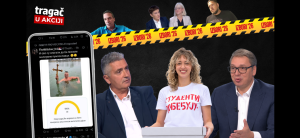
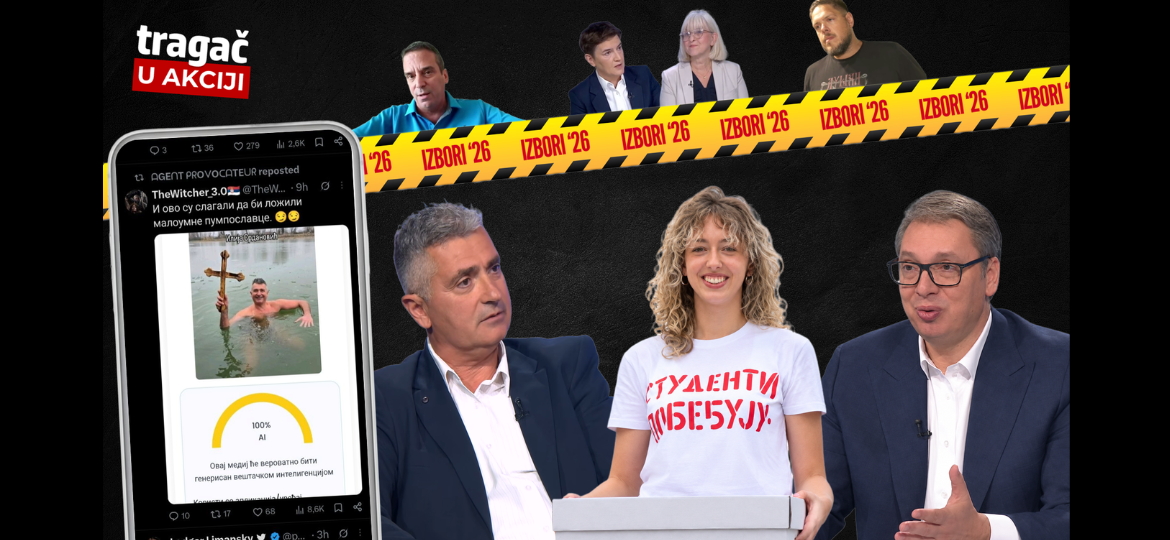
Three weeks have passed since Serbia’s parliamentary elections were officially announced, and the campaign has already been marked by a sustained wave of disinformation aimed primarily at the newly formed student electoral list. FakeNews Tragač, a leading Serbian fact-checking project, has recorded and verified 23 separate cases of disinformation appearing in both mainstream media outlets and on social networks since the campaign began on September 9. The organization has now published a comprehensive overview analyzing the thematic focus of these manipulations, the techniques used to spread them, and the sources from which they most frequently originate. According to the analysis, the largest number of recorded disinformation cases centers on identity and national issues, and in every single case within this category, the target was the student list. Through fabricated news stories, tabloids and pro-government social media profiles have attempted to attach deeply unpopular historical, cultural, and national positions to the opposition movement gathered around the students. One of the most prominent targets was Ilija Srdanović, the first candidate on the student list, who was falsely accused of recognizing the independence of Kosovo and of lying about his participation in the traditional Orthodox Epiphany swimming ritual, a highly symbolic event held annually on January 19. Another student candidate, Emina Spahić from Novi Pazar, a city in Serbia with a predominantly Muslim population, was falsely accused of refusing to wear a T-shirt with Cyrillic lettering, a claim clearly intended to portray her as an enemy of Serbian national symbols. A third student, Emilija Milenković, was falsely depicted as having “finally revealed the policy and program” of the student movement, with the fabricated program allegedly including a declaration that Serbs are a “genocidal” people. These identity-focused manipulations are particularly dangerous because they seek to delegitimize the student list in the eyes of nationalist voters before the actual policy debates begin, transforming legitimate political competition into a referendum on national loyalty.
The second most common thematic category identified by FakeNews Tragač concerns the program and candidates of the student list itself, with manipulators attempting to construct a negative impression by inventing policies and questioning the integrity of those behind the movement. Instead of offering substantive criticism of the known program, the disinformation campaign has relied on outright fabrication and distortion. For example, analyst Uroš Piper claimed to have uncovered “five real points” of the student list program, including an absurd assertion that the list would seek to “kick the children of every SNS member out of kindergarten.” This fictional program was then circulated as if it were a genuine revelation. Tabloids also attempted to delegitimize the student list by portraying its creators as inconsistent and dishonest, falsely claiming that the students had “proudly insisted” their list would consist exclusively of students, a commitment that allegedly did not materialize. This narrative was used to suggest that the movement had broken its promises even before the election. Perhaps most notably, former Serbian president Aleksandar Vučić, who is now the first candidate on the ruling SNS coalition list, publicly declared that “there are no workers, peasants, or students” on the student list, another statement that is demonstrably untrue. The cumulative effect of these manipulations is to paint the student list as a project driven by privileged elites disconnected from ordinary Serbian society, rather than a genuine grassroots movement. By inventing a fake program, attributing false positions to candidates, and attacking their characters, the purveyors of disinformation aim to undermine the credibility of the only significant opposition force in the election, all while avoiding any real engagement with the actual issues the students have raised.
The third thematic area is that of election procedures, and this is the only category in which the student list is not the most frequent target. Here, disinformation is designed to create a false image of the electoral process, the rules that govern it, and the institutions responsible for its implementation. The analysis recorded manipulative illustrations circulating on social networks that invited voters of the ruling SNS and SPS parties to circle the number in front of the lists of both ruling parties, a move that would automatically invalidate their ballots. Such seemingly innocuous images could have a significant impact on voter behavior, potentially disenfranchising supporters of the ruling coalition or causing confusion on election day. Another case involved lawyer Sofija Mandić, a member of the Republic Electoral Commission, who was labeled in tabloid articles as a representative of the student list within that body, an incorrect assertion. This false attribution was then used as a basis to delegitimize her, with attacks centered on her position regarding Kosovo taken from seven years ago. In a separate incident, a member of the Republic Electoral Commission claimed that objections regarding the use of Aleksandar Vučić’s name in the name of the SNS-led list made no reference to laws or the constitution, a claim that also proved to be false when the actual objections were examined. The danger of this type of disinformation should not be underestimated. When voters are led to doubt the fairness of electoral procedures, the legitimacy of the entire democratic process is called into question, and this can have consequences far beyond a single election cycle. As the campaign progresses, the spread of procedural disinformation threatens to erode public confidence in the electoral system, which is the foundation of democratic governance.
Economic disinformation is the fourth significant category, and it is most often expressed through the presentation of incorrect economic data or through the selective quoting of interlocutors who have spoken about economic matters. In many cases, these manipulations serve to embellish the current economic situation in Serbia by creating a stark contrast with an alleged “economic chaos” that supposedly existed under previous governments. For instance, Aleksandar Vučić, during his address on the occasion of leaving the office of President, provided wrong figures regarding the public debt and unemployment rates from before his party came to power and before he assumed the position of Prime Minister. These incorrect data points were then used to support the narrative that the ruling party had rescued the country from economic ruin. Tabloids also engaged in the misrepresentation of statements made by student list candidate Ilija Srdanović, wrongly paraphrasing him as saying that the Expo project, a major state-sponsored undertaking, was not so bad. This selective editing was designed to create the impression that the student movement was internally divided or that its candidates were secretly supportive of government projects. Professor Miodrag Zec, an economist known for his critical views, was also selectively quoted in order to support the tabloid narrative that the student rebellion is essentially a “rebellion of the rich.” By choosing only the words that fit their preferred storyline, the manipulators were able to distort the economic debate and mislead voters about the true positions of the opposition. This type of economic disinformation is particularly effective because it plays on the material concerns of ordinary citizens, using false data and distorted quotes to persuade them that their economic well-being depends on the continued rule of the current authorities.
In addition to these thematic categories, FakeNews Tragač identified a recurring pattern of unsubstantiated news stories about intensifying conflicts within the opposition. Although such stories appear almost regularly in tabloid coverage, the fact-checkers were able to confirm only two as unquestionable disinformation during the three-week period. The first involved a false claim that the student movement had published a parody video dedicated to Rector Vladan Đokić, which supposedly appeared after it became known that Đokić was not included on the student list. The second story centered on alleged criticism directed at Ilija Srdanović by Judge Miodrag Majić, a figure known for his critical stance toward the authorities. The news was based on a post on the social media platform X, but in reality the post had nothing to do with Srdanović, as Majić himself later confirmed. These conflict-focused stories serve a clear purpose: they present the student list and the actors gathered around it as fractured, non-unified, and prone to mutual antagonism. Such an image is intended to discourage voters who might otherwise be attracted to the idea of a united opposition. When analyzing the manipulation techniques used across all recorded disinformation, two methods stand out as the most common. The first is quote twisting, where manipulators selectively quote, misquote, or paraphrase statements made by their targets. In one particularly egregious example, the tabloid Alo completely invented a direct quote from former athlete and current opposition activist Vladimir Štimac, running a headline that read: “‘We will rape Vučić, and we will ride the rest of you!’ Štimac announced the blocking list program.” This fabricated quote was presented as a direct and unambiguous threat, with no basis in reality. The second common technique is false attribution, which involves falsely assigning values, functions, or actions to the targets of disinformation. As already seen in the thematic analysis, students were falsely credited with having posted a parody video about Rector Đokić, with smiling and waving at a Croatian MEP, and with having a program that includes kicking children out of kindergarten. These attributions are not accidents or errors; they are deliberate distortions aimed at shaping public perception and turning voters against the student list.
Finally, some of the registered disinformation can be classified as statistical manipulation, in which data or research results are misrepresented to support a particular narrative, while a smaller number of cases do not fit neatly into any specific category and fall into an “Other” group. FakeNews Tragač has emphasized that it will continue to track pre-election disinformation throughout the campaign, publishing its next comprehensive overview in three weeks, using the same clear categories to allow for consistent comparison over time. The project also noted that the 23 cases included in this analysis represent only the falsehoods and manipulations that were identified and verified by their team between the start of the campaign on September 9 and September 30. This number does not reflect the total number of disinformation items that appeared during that same period, which is certainly higher. For those seeking a more complete picture of the campaign information environment, the fact-checkers recommend following the pre-election sections of their colleagues at Raskrikavanje and Istinomer, two other organizations dedicated to fact-checking and media monitoring in Serbia. The findings of this first overview paint a troubling picture of a political landscape where disinformation, particularly on national identity, student candidates, and electoral procedures, has become a central feature. The targeting of the student list, which represents the most serious opposition challenge, suggests a coordinated effort to undermine the credibility of the opposition through a combination of invented quotes, false attributions, and fabricated programs. As Serbia approaches its parliamentary elections, the ability of voters to distinguish between fact and fiction will be tested more than ever, and the work of fact-checkers like FakeNews Tragač will remain essential in guarding against the spread of disinformation.


