


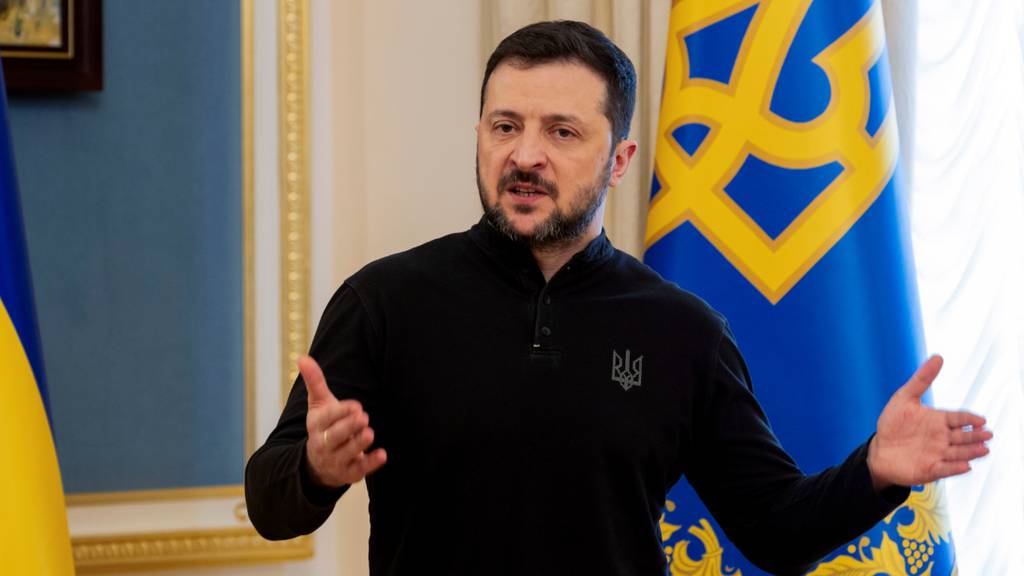
Zelensky Accuses Trump of Inhabiting Russian Disinformation Sphere in Globe and Mail Interview
KYIV, Ukraine – In a recent interview with The Globe and Mail, Ukrainian President Volodymyr Zelenskyy leveled a sharp critique against former US President Donald Trump, accusing him of existing within a "Russian disinformation space." Zelenskyy’s comments, delivered with palpable frustration, centered on Trump’s repeated claims that Russia’s invasion of Ukraine could have been swiftly resolved had he remained in office. The Ukrainian leader dismissed these assertions as not only unfounded but actively harmful, contributing to a false narrative propagated by the Kremlin. Zelenskyy highlighted the ongoing devastation wrought by the war, emphasizing the daily toll of casualties and the immense suffering inflicted upon the Ukrainian people. He argued that such pronouncements disregard the reality on the ground and undermine international efforts to support Ukraine’s defense.
While Trump initially voiced admiration for Putin’s invasion tactics, referring to them as “genius” and “savvy,” he has refrained from explicitly endorsing the invasion itself. However, he has consistently maintained that the conflict would have been averted under his presidency. He has proposed a negotiated settlement premised on conceding Ukrainian territory as a strategy for ending the conflict. This approach, he argues, would be superior to the ongoing provision of billions of dollars in military and humanitarian aid by the US. Zelenskyy countered this claim, arguing that Trump’s assertions rely heavily on Kremlin-crafted narratives that downplay Russia’s aggression and falsely depict Ukraine as somehow responsible for the conflict. He pointed to Trump’s past rhetoric and actions regarding Ukraine, including the withholding of military aid in 2019, as evidence of a susceptibility to Russian disinformation.
Zelenskyy stressed that engaging in discussions about territorial concessions would effectively validate Russia’s aggression and embolden other potential aggressors. He reiterated Ukraine’s commitment to reclaiming all its occupied territories, including Crimea, which was annexed by Russia in 2014. He emphasized the need for continued international support, particularly from the United States, in providing military assistance and maintaining sanctions against Russia. The Ukrainian leader expressed concern that Trump’s views, if amplified and embraced by a wider audience, could erode crucial international support for Ukraine’s defense and bolster Russia’s propaganda efforts. He called on international leaders to unequivocally condemn Russia’s aggression and stand firmly in solidarity with Ukraine.
The exchange highlights the starkly different perspectives on the war in Ukraine and the role of international diplomacy. Trump’s stance, centered on negotiated concessions and a skepticism of US involvement, contrasts sharply with the Biden administration’s commitment to supporting Ukraine’s sovereignty and territorial integrity. Zelenskyy’s accusation underscores the deep mistrust between the Ukrainian leadership and the former US president, a sentiment fueled by Trump’s past actions and his perceived affinity for Vladimir Putin. This interview comes as the Ukrainian counteroffensive continues, albeit at a slower pace than initially anticipated. The slow progress has led to critiques from some Western officials who had hoped for more substantial territorial gains.
Zelenskyy acknowledged the challenges faced by the Ukrainian forces, citing heavily mined terrains and fortified Russian defenses. He reiterated the need for continued military aid, emphasizing the request for advanced weaponry such as F-16 fighter jets, which he believes are crucial for breaking through Russian lines and reclaiming lost territory. The Ukrainian president appealed for patience and understanding from international partners, arguing that quick victories are not always possible in complex military operations. He underscored the unwavering resolve of the Ukrainian people and their commitment to continuing the fight until all occupied territories are reclaimed.
This interview underscores the ongoing information warfare surrounding the conflict in Ukraine. The clash between Zelenskyy’s stark portrayal of the war’s realities and Trump’s claims of readily available solutions reveals the deep divides in understanding the conflict and the path toward its resolution. As the war continues, the battle for hearts and minds, both within the international community and the domestic populations of the countries involved, remains a critical dimension of the conflict. The differing narratives presented by Zelenskyy and Trump reflect this struggle, highlighting the ongoing challenge of discerning truth amidst a complex web of information and disinformation. The implications of these conflicting narratives will undoubtedly play a significant role in shaping the future trajectory of the conflict and its ultimate resolution.