


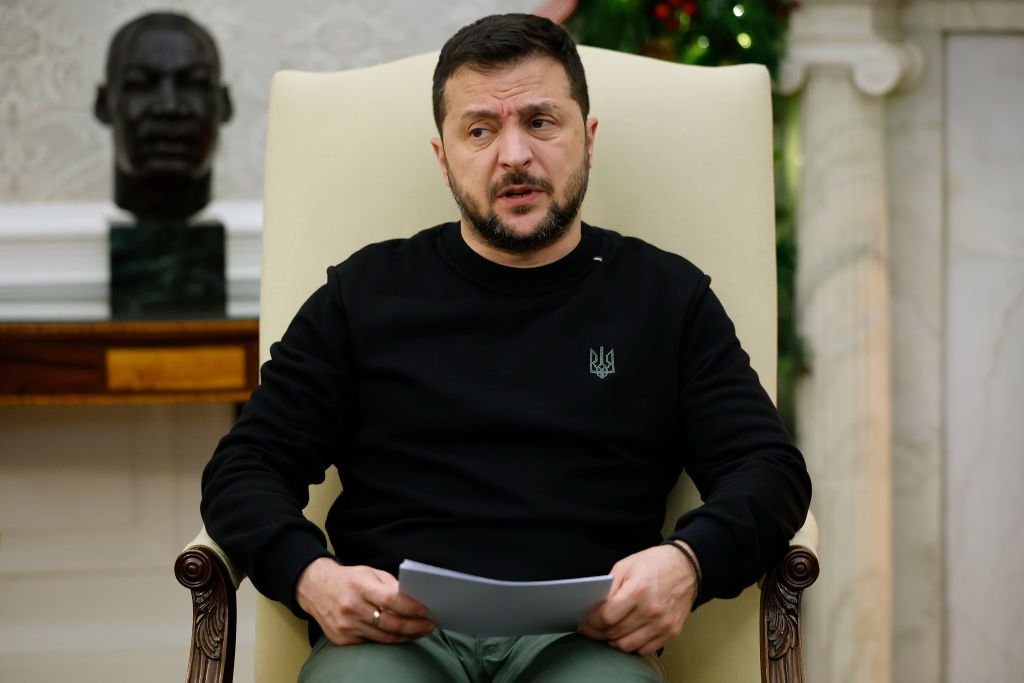
Zelensky Rebukes Trump’s Disinformation, Highlights Russian Propaganda Efforts
Ukrainian President Volodymyr Zelensky has directly addressed recent comments made by former US President Donald Trump, labeling them as Russian disinformation. Trump, in a statement on February 18th, asserted that Zelensky held a dismal 4% approval rating among Ukrainians. Zelensky countered this claim during a press conference on February 19th, stating that Ukraine possesses evidence indicating the fabricated figure originated from discussions between Russia and the United States. This incident underscores the ongoing information war surrounding the conflict in Ukraine and the vulnerability of political discourse to manipulation.
Zelensky’s response highlights the Kremlin’s persistent propaganda campaign, which portrays him as an illegitimate leader whose term should have ended in May 2024. This narrative conveniently disregards the Ukrainian constitutional provision prohibiting elections during martial law, a state imposed after Russia’s full-scale invasion in 2022. By disseminating this false information, Russia aims to undermine Zelensky’s authority and sow discord within Ukraine and among its international supporters. Zelensky’s assertion of having evidence linking the 4% claim to Russo-American discussions raises serious questions about the potential conduits of such disinformation and the actors involved in its dissemination.
The timing of Trump’s remarks coincided with a US delegation’s meeting with top Russian officials in Saudi Arabia, a meeting notably excluding Ukrainian representation. This backdrop further fueled speculation regarding the source and intent of the disinformation. Trump, in the same statement, also attributed blame for the ongoing war to Kyiv, echoing a common refrain within Russian propaganda. This convergence of narratives raises concerns about the susceptibility of some segments of the international community to Russian disinformation campaigns.
Zelensky, while expressing respect for both Trump and the American people, lamented that the former president "sadly lives in this disinformation space." He pointed to a recent survey placing his own approval rating at 57% and asserted that any attempts to replace him at this juncture would be futile. This serves not only as a rebuttal to the disinformation but also as a reaffirmation of his domestic support and leadership. It underscores the importance of relying on credible sources of information, especially in the context of an ongoing conflict where information warfare plays a significant role.
The incident highlights the challenges posed by disinformation in the digital age, particularly in the context of international relations and geopolitical conflicts. The ease with which false narratives can be created and disseminated, amplified by social media and other online platforms, poses a significant threat to informed public discourse and can undermine democratic processes. The need for critical thinking and media literacy becomes paramount in navigating the complex information landscape shaped by state-sponsored propaganda and politically motivated disinformation campaigns.
This episode also underscores the need for fact-checking and verification of information, especially from political figures and during times of conflict. Journalists and media organizations play a vital role in holding public figures accountable for their statements and ensuring the accuracy of information disseminated to the public. The proliferation of disinformation requires a concerted effort from all stakeholders, including governments, media organizations, technology platforms, and individuals, to identify and combat the spread of false and misleading narratives. By fostering media literacy and promoting critical thinking, societies can better inoculate themselves against the corrosive effects of disinformation and protect the integrity of democratic processes.