









Paragraph 1: The Looming Shadow Over India’s Semiconductor Ambition
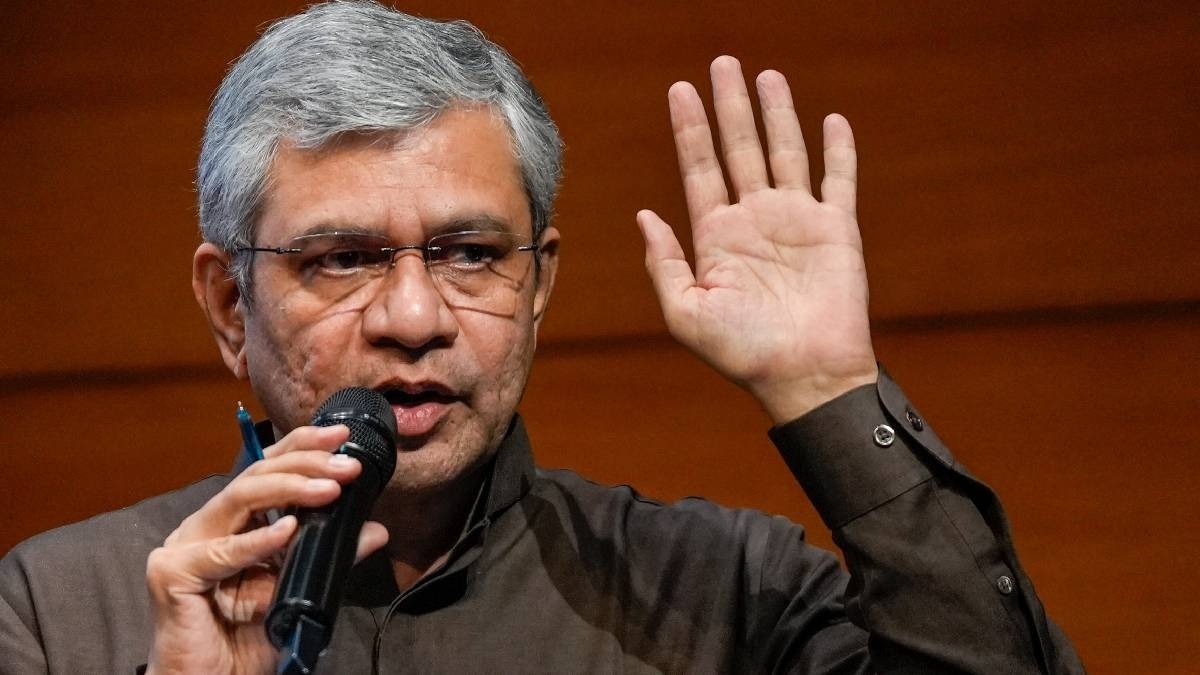
In a stark and uncharacteristically candid warning, Union Minister for Electronics and Information Technology, Ashwini Vaishnaw, has issued a clarion call to India’s emerging semiconductor industry, stating that the nation’s meteoric rise in the critical chip sector has placed a direct “target on its back.” Speaking to NDTV, the minister cautioned that as India transitions from an assembly hub to a strategic manufacturing powerhouse, it must brace itself for a coordinated storm of cyber assaults, disinformation campaigns, and even physical disruptions designed to derail its progress. This stark admonition arrives at a pivotal moment, immediately following the conclusion of SEMICON India 2026, which took place from September 17 to September 19. The event, which drew nearly 300 international companies from 52 nations and yielded 56 strategic Memorandums of Understanding (MoUs), underscored India’s growing gravitational pull in the global chip ecosystem. Yet, Vaishnaw’s remarks pivot sharply away from celebration, emphasizing that success in this high-stakes domain will inevitably attract adversarial reaction. He framed the upcoming challenges not as a possibility, but as an unequivocal certainty, urging industry leaders to fortify their defenses before the battle begins. By drawing direct historical parallels to India’s earlier manufacturing journey, the minister painted a vivid picture of a nation that has repeatedly had to overcome deliberate sabotage, and he made it clear that the semiconductor sector will be the next, and perhaps most ferocious, battleground for national economic sovereignty.
Paragraph 2: An Uncomfortable Precedent – The Apple and Manufacturing Sabotage Saga
To underscore the credibility of his warning, Vaishnaw revisited the turbulent early days of India’s smartphone manufacturing push, using the Apple ecosystem as a prime historical example. He recounted a litany of sabotage tactics that shadowed the company’s expansion in India: “When Apple’s manufacturing started, some people did food poisoning. An organisation like Reuters ran such fake news that married women were not allowed (to work). They ran such things. Electricity wires were cut. There were many such incidents.” The minister’s recollection serves as a chilling reminder of the lengths to which global competitors will go to undermine India’s industrial ascent. He noted that these disruptions were not random occurrences but coordinated attempts to tarnish India’s reputation as a reliable manufacturing destination, specifically targeting its social fabric to scare off foreign investors. The “food poisoning” incident and the dissemination of disinformation about workplace policies were designed to create moral panic and operational chaos, effectively choking the supply chain before it could scale. By invoking these events, Vaishnaw is not merely engaging in historical reminiscence; he is establishing a playbook of what India has faced and what it can expect to face again. He explicitly stated, “People didn’t like India to come up as a manufacturer; they tried all tricks…There was an attempt to sabotage in every way.” This historical lens is critical for understanding the minister’s current urgency, as he posits that the resistance India faced in low-value assembly will be magnified exponentially in the semiconductor industry, which is a far more sophisticated, capital-intensive, and geopolitically charged arena.
Paragraph 3: The Strategic Pivot – Why Semiconductors Have Changed the Global Power Calculus
The minister’s warning is deeply rooted in the fundamental transformation of semiconductors from mere commercial commodities into vital national security assets. Historically, microchips powered consumer electronics, but today they are the silent engines of supercomputers, advanced military hardware, autonomous weapons systems, and critical infrastructure. The global supply chain crunch post-pandemic, coupled with the explosive growth of artificial intelligence (AI), has forced major economies to prioritize domestic production to ensure technological sovereignty. Vaishnaw emphasized that the realm of chips is “not an industry where people will give in so easily,” highlighting the immense stakes involved. Taiwan, South Korea, and the United States have long dominated this ecosystem, while China continues to scale its footprint aggressively, creating a zero-sum game mentality among global powers. In this context, India’s entry is perceived not as a benign addition to the market, but as a direct threat to established oligopolies. The minister is acutely aware that the nations currently holding the keys to advanced node manufacturing view India’s ambition with suspicion and hostility. As India builds its fab ecosystem, it is effectively challenging the status quo, which means it will be subjected to the same geopolitical friction that has historically been reserved for rising tech powers. Vaishnaw noted, “Once people start feeling that a new country has come into this industry, there will be people who support us, but there will also be people who oppose us,” succinctly capturing the bifurcated global response that awaits India’s ambitions.
Paragraph 4: The Three-Pronged Threat Matrix – Cyber, Disinformation, and Physical Sabotage
Outlining the specific vulnerabilities India must shore up, Vaishnaw detailed a three-pronged threat matrix designed to destabilize the semiconductor sector. First, he warned of inevitable cyber attacks. Semiconductor fabs are among the most complex digital environments on earth, housing proprietary design blueprints, lithography algorithms, and sensitive process recipes. A successful cyber intrusion could not only steal invaluable intellectual property but could also manipulate manufacturing processes to produce defective chips, leading to catastrophic failures in downstream industries. Second, the minister highlighted the danger of sustained disinformation campaigns, akin to the Reuters story he referenced earlier. In the digital age, a well-placed false narrative about labor unrest, environmental hazards, or quality control failures can wipe out billions in market capitalization overnight and deter foreign investors. These campaigns can be seeded on social media and amplified by algorithmically driven bots, making them difficult to counter in real-time. Third, and most alarmingly, Vaishnaw explicitly mentioned the risk of physical attacks. This includes sabotage of ultra-sensitive clean rooms, tampering with the supply chain of arsine and phosphine gases used in fabrication, and even targeted disruptions at crucial infrastructure nodes like water and power plants that fabs depend on. He stated emphatically, “We will face cyber attacks. People will spread a lot of fake news. They will also try to do all kinds of physical attacks… We have to be prepared for this because this is a strategic industry.” The minister’s frank acknowledgment of these risks signals a shift in India’s defense posture, moving beyond economic policy to incorporate intelligence gathering and physical security protocols into the industrial planning framework.
Paragraph 5: Forging Resilience – The Government’s Mandate and Industry Preparedness
In response to these looming threats, the minister has issued a direct and uncompromising directive to industry leaders: “I have told the entire industry, be prepared for such incidents now…This will definitely happen.” This is not merely a passive warning but a call to arms for the private sector to integrate resilience into their business models. The government is clearly signaling that it will no longer rely on ad-hoc responses to crises, but will instead build anticipatory mechanisms to counter sabotage. This involves creating robust cybersecurity protocols that are validated against state-sponsored attack vectors, as well as establishing rapid-response teams for crisis communication to counter disinformation. Furthermore, the minister’s comments suggest a need for increased collaboration between intelligence agencies and corporate security teams, a model that is already practiced in the Taiwan semiconductor sector. The establishment of a secure supply chain is also paramount, requiring India to diversify its sources for critical gases and materials to prevent a single point of failure. Vaishnaw’s statement that India must “make our space” is a clarion call for strategic autonomy, echoing the broader national mission to achieve self-reliance. While the government will provide the policy framework and diplomatic cover, the onus lies on individual companies to harden their facilities against physical intrusions and to ensure their employees are vetted to prevent insider threats. This proactive stance represents a maturation of India’s industrial policy, recognizing that in the age of strategic technologies, economic growth and national security are inextricably intertwined.
Paragraph 6: Measuring Success Against Adversity – SEMICON India 2026 and the Road Ahead
The context for Vaishnaw’s warning was the resounding success of SEMICON India 2026, which concluded just days prior. The event was a testament to India’s undeniable momentum, attracting nearly 300 international companies across 52 nations and generating 56 strategic MoUs, announcements, and joint initiatives. This landmark participation underscores how far India has come in a remarkably short period, transitioning from a peripheral player to a central node in the global chip conversation. However, the minister’s sobering remarks serve as a reality check, reminding stakeholders that visibility equates to vulnerability. The very same factors that make India an attractive investment destination—its vast engineering talent pool, political stability, and massive domestic market—are the reasons why competitors will seek to undermine it. As India pushes forward with its multi-billion dollar semiconductor plant projects in Gujarat and Assam, and as it courts partners for advanced packaging and OSAT facilities, it must operate under the assumption that adversaries are actively probing for weaknesses. The conclusion of SEMICON India is not the end of a chapter but the beginning of a potentially turbulent one. Yet, Vaishnaw’s confidence remains unshaken. By framing the impending attacks as a testimony to India’s strategic importance, he is galvanizing the nation to embrace the challenge. The global chip war is now India’s to fight, and while the path is fraught with engineered crises, the minister’s message is clear: forewarned is forearmed, and India will not be deterred from carving out its rightful place in the semiconductor renaissance.


