








Fiji’s Battle Against HIV Intensifies as Dangerous Drug Practices and Misinformation Spread
Fiji’s frontline health officials are confronting a rapidly worsening HIV crisis, a surge that has been driven by dangerous intravenous drug practices, inconsistent condom use, and a persistent tide of misinformation. Those leading the national response have described the latest statistics as “shocking,” as the Pacific island nation grapples with an outbreak that is placing unprecedented strain on its public health system. According to the chairman of Fiji’s national HIV outbreak and cluster response taskforce, Dr Jason Mitchell, the rate of HIV infection has risen dramatically from one in 160 people just five years ago, a statistic that underscores the urgency of the situation. The taskforce, which was established to coordinate the country’s response to the growing health emergency, is now working against time to implement harm-reduction strategies, expand access to prevention tools, and address the deeply rooted behavioural and social factors that are contributing to the spread of the virus. Speaking to Morning Report, Mitchell drew attention to the multiple converging crises: a population with limited access to sterile needles and syringes, a long-standing cultural reluctance to use condoms, and a relatively underdeveloped public health infrastructure that is now being asked to respond to an epidemic of considerable scale. The situation in Fiji is not merely a medical challenge; it is a social and political one, requiring robust leadership, community engagement, and a willingness to challenge stigma and misinformation that have long hindered effective HIV responses in the Pacific region.
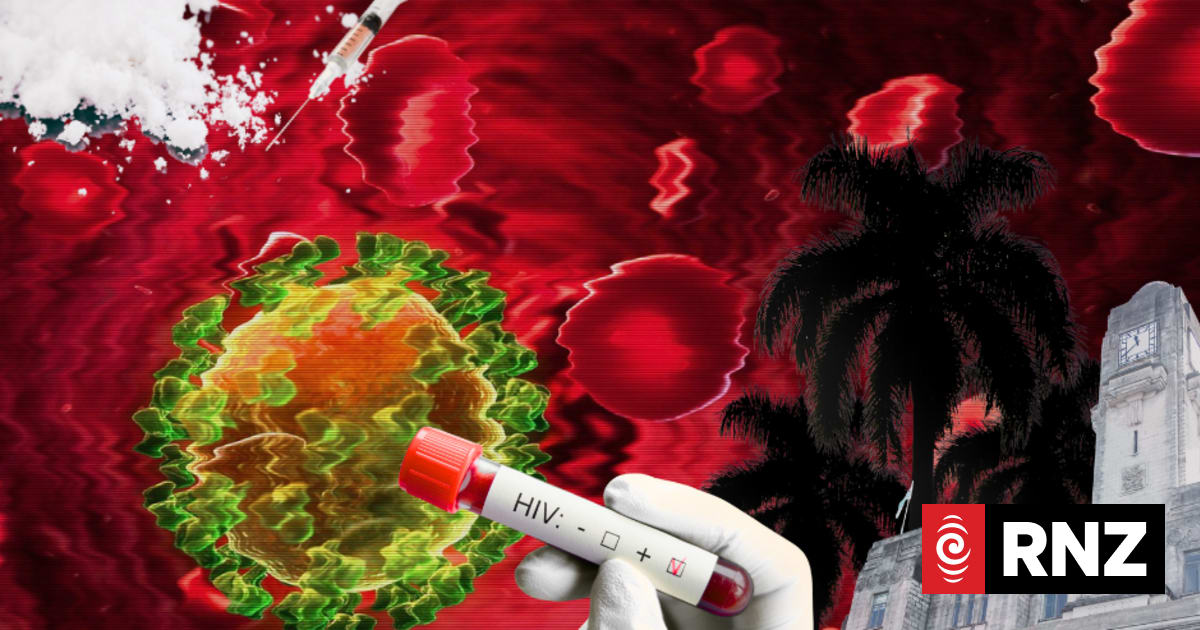
At the heart of the recent surge in infections is a particularly alarming practice known locally as “bluetoothing,” a form of intravenous drug use in which one person injects the drug, draws blood back into the syringe, and then injects the mixture into another person. This technique, which is believed to have originated in prison settings but has since spread into the wider community, dramatically increases the likelihood of transmitting HIV and other blood-borne viruses such as hepatitis C. Bluetoothing is particularly dangerous because it bypasses the need for sterile water or mixing containers, but in doing so, it transfers blood directly from one vein to another, making the sharing of a single syringe a highly efficient vector for infection. Dr Mitchell said that risky behaviour around needle and syringe use was one of the main risk factors driving Fiji’s HIV outbreak. The limited availability of clean needles and syringes across the country has forced people who inject drugs to share equipment, often engaging in bluetoothing as a way to maximise the effect of a limited drug supply. The practice has become a major concern for health authorities because it turns one injection into a mini-transfusion, exposing multiple people to HIV in a single session. Mitchell noted that the government is working very hard to clear regulations within the next two weeks that would allow health workers to legally distribute needles and syringes without placing public health personnel at legal risk. This proposed regulatory change represents a crucial shift towards harm reduction, but its success will depend on the speed of implementation, community acceptance, and the government’s willingness to fund and support needle-exchange programmes across the archipelago.
While bluetoothing and the sharing of injecting equipment have contributed to the sharp rise in infections, sexual transmission remains a deeply entrenched driver of the HIV epidemic in Fiji. Despite decades of public health messaging, the country continues to face a long-standing issue of poor and inconsistent condom use among its sexually active population. Dr Mitchell explained that this pattern is not unique to Fiji, but rather forms part of a long-standing history across the Pacific, where knowledge of the risks associated with unprotected sex has not always translated into sustained behaviour change. He acknowledged that there has been heavy investment in awareness programmes designed to increase knowledge about HIV prevention, but he noted that knowledge alone is not enough. Shifting deeply embedded cultural norms, addressing gender-based power imbalances in sexual relationships, and dispelling myths about condom effectiveness require persistent, localised, and culturally sensitive intervention. The slow pace of behaviour change stands in stark contrast to the rapid spread of the virus, and health officials are increasingly aware that prevention strategies must move beyond simple awareness campaigns to include more targeted outreach, peer education, and access to free or low-cost condoms. The taskforce is also concerned about the role of misinformation, particularly through social media, which has been used to spread false claims about HIV, condom efficacy, and antiretroviral treatment. These digital rumours have complicated the work of public health officials, and the challenge is compounded by a degree of public distrust towards government messaging in some communities. For Fiji, the path to reducing sexual transmission will require not only making prevention tools widely available but also building trust through community-led initiatives and ensuring that health services are perceived as supportive, non-judgemental, and accessible to all.
Another troubling dimension of the HIV outbreak in Fiji is the issue of vertical transmission, the process by which an infected mother passes the virus to her baby during pregnancy, childbirth, or breastfeeding. Dr Mitchell described vertical transmission as one of the significant problems Fiji is currently grappling with, as it reflects gaps in antenatal care, HIV testing, and treatment access for pregnant women. In an ideal public health system, every pregnant woman would be screened for HIV early in her pregnancy, and those who test positive would immediately be offered antiretroviral therapy to reduce the risk of transmission to their unborn child. However, in Fiji, limited access to early testing and the social stigma associated with an HIV diagnosis have prevented some women from seeking care or following up on their test results. Vertical transmission is particularly heartbreaking because it is almost entirely preventable when medical protocols are followed, yet it continues to occur in Fiji due to missed opportunities in maternal health services. This issue also highlights the broader problem of late diagnosis across the country. Many people are unaware of their HIV status until they are already showing symptoms, by which point their viral load is high and the risk of transmitting the virus to others is extremely high. Addressing vertical transmission requires an integrated approach that brings together HIV services and maternal and child health programmes, ensuring that pregnant women receive not only testing but also sustained treatment and counselling. Moreover, children born with HIV require lifelong care, which places a heavy burden on families and the health system. The taskforce’s focus on vertical transmission is therefore a reminder that the HIV epidemic in Fiji is not confined to any single demographic group; it is affecting women, families, and the next generation, and it demands a comprehensive response that spans the full continuum of care.
In addition to harm reduction and improved testing, Fiji has recently taken the significant step of making pre-exposure prophylaxis, or PrEP, freely available to anyone who wishes to take it. PrEP is a prescription medicine taken by HIV-negative individuals to prevent them from acquiring the virus, and when taken consistently, it is highly effective. The decision to offer PrEP free of charge represents a major advancement in Fiji’s HIV prevention arsenal, and it aligns with international best practice in responding to concentrated and generalised epidemics alike. However, despite the availability of this powerful biomedical tool, uptake has been slow. Dr Mitchell expressed concern that even in the face of high knowledge levels—and despite the use of informational campaigns, and at times scare tactics—many people who would benefit from PrEP have not come forward to use it. He noted that the onus now falls on health authorities to actively promote the availability of PrEP, to make it easier for people to access the service, and to normalise its use among at-risk populations. There are several likely reasons for the slow uptake. Stigma remains a formidable barrier, because individuals who seek PrEP may fear being assumed to be living with HIV or may be anxious about their privacy. There may also be logistical barriers, such as having to travel long distances to reach a clinic, the need for regular follow-up appointments, and a general shortage of healthcare workers trained to prescribe PrEP. Additionally, the persistence of misinformation and mixed messages around the safety and effectiveness of PrEP can undermine confidence. Dr Mitchell’s call for more active promotion suggests that the government recognises that simply making a medicine available is not sufficient; there must be a coordinated effort to ensure that people are informed, supported, and ultimately empowered to take control of their sexual health.
Looking ahead, Fiji’s response to its HIV outbreak will depend on the government’s ability to act quickly, comprehensively, and with sensitivity to the complex social realities in which the virus is spreading. The forthcoming regulatory changes allowing the legal distribution of needles and syringes are a crucial step towards reducing the harm associated with injecting drug use, but they must be accompanied by community outreach, addiction support, and public education to be fully effective. Similarly, the scale-up of PrEP must be paired with robust sexual health services and sustained efforts to break the cultural taboos that hinder open discussion about sex and drug use. The taskforce’s work, as described by Dr Mitchell, highlights the need for a multi-layered strategy that combines biomedical interventions, harm reduction, mental health services, and social support. Crucially, it also requires a focus on misinformation, both the external myths that travel through social media and the internalised stigmas that prevent people from seeking help. Dr Mitchell’s candid assessment suggests that Fiji has reached a critical juncture, where the choices made in the coming months will determine the trajectory of the epidemic for years to come. With the current rate having risen from one in 160 people just five years ago, the trend is clear: without immediate and sustained action, the crisis will deepen. Yet there is also a sense of possibility in Mitchell’s words, a recognition that with the right regulatory frameworks, sufficient investment, and genuine community engagement, Fiji can stem the tide of new infections and move towards a future where HIV is no longer a public health emergency. The battle will not be easy, and the country is undoubtedly facing one of its most serious health challenges in recent memory. But the tools are available; what remains is the will to use them effectively, equitably, and without delay.


