


MANILA—The ordeal began with a high fever and a racing heart. When Jenette Torres Odena’s three-year-old son fell severely ill just days after receiving a measles-rubella vaccine as part of a Philippine government immunization drive, she assumed the worst might be happening. Rushing him to the hospital, she spent sleepless nights praying for his recovery, only to discover a parallel nightmare unfolding on social media. A photograph of her vulnerable, sick child had been uploaded to Facebook, circulated rapidly, and paired with incendiary captions claiming the inoculation had killed him. Doctors eventually determined there was no medical link between the vaccine and the boy’s condition; he responded to treatment and made a full recovery. But the damage had already been done. The image became a piece of propaganda, appearing in anti-vaccine videos that amassed hundreds of thousands of views. Viewers were led to believe they were witnessing the fatal outcome of a public health initiative, when in reality they were looking at a child who would soon be playing again. For Odena, the experience was a cruel twist of fate—her son survived a serious illness, yet was metaphorically “killed” on the internet by strangers who weaponized his suffering. “I felt like crying,” she told AFP, recalling the helplessness of watching her private horror become a public spectacle. “I kept praying for my son to recover and suddenly they were killing him on Facebook.”
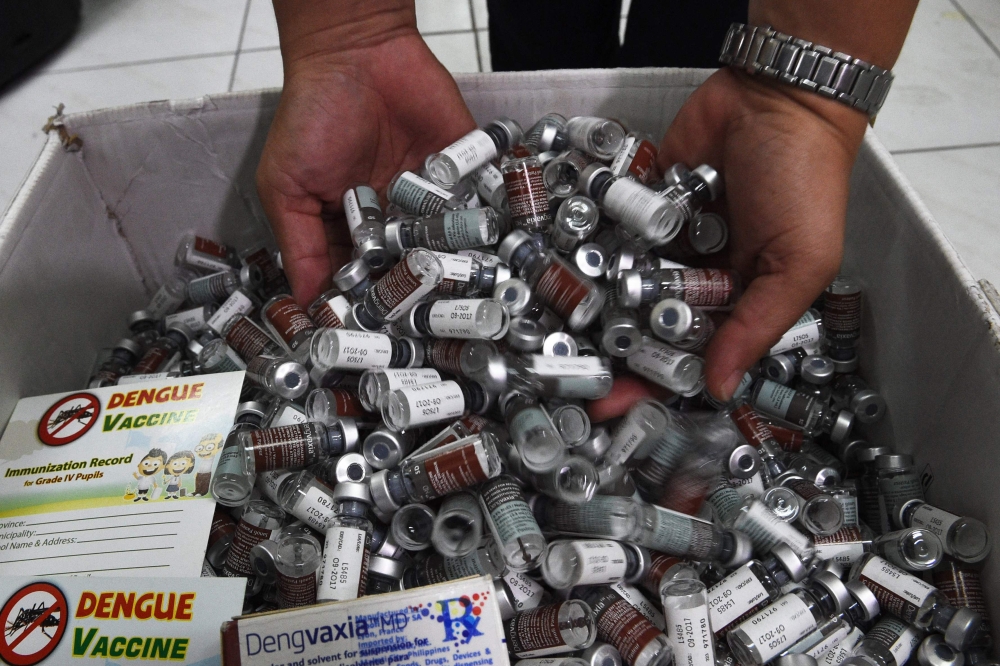
This incident was not an isolated case of digital cruelty; it was a cornerstone of a coordinated wave of misinformation that accompanied a massive national child vaccination campaign in the Philippines this year. The campaign was a critical effort to stave off preventable diseases, resulting in over seven million Filipinos being inoculated. However, the effort was marred by significant resistance; approximately 230,000 individuals or families refused the jab. Official data from the Department of Health revealed a sobering statistic: concerns about side effects accounted for 66 percent of all refusals. Department officials directly implicated the spread of misinformation on social media as a “major driver” of this pervasive vaccine fear. The context is deeply rooted in a history of public health crises. The Philippines has been struggling to restore routine childhood immunization rates after years of catastrophic decline in coverage. This structural failure has had tangible consequences, leading directly to a resurgence of polio in 2019 and recurring, deadly measles outbreaks that have plagued the archipelago. The current vaccine hesitancy is a compounding crisis, layered upon the profound distrust generated a decade ago by the botched rollout of the Dengvaxia dengue vaccine. That prior scandal, where a widely distributed vaccine was subsequently linked to risks for some recipients, created a deep-seated cultural memory that anti-vaccine influencers skillfully exploit, framing all government-mandated vaccinations as inherently unsafe experiments on the public.
Health communication experts argue that the persistence of this hesitancy cannot be dismissed simply as an educational deficit or public ignorance. According to Daniel Fritz Silvallana, a health communication researcher at Deakin University in Australia, the phenomenon is far more complex and sociological. “Vaccine hesitancy should not simply be understood as a lack of scientific knowledge among the public,” Silvallana told AFP. “In the Philippine context, it is also connected to questions of trust, politics, and people’s previous experiences with vaccination and public health institutions.” This analysis cuts to the heart of why graphic videos and fear-based claims resonate so effectively. When historical institutions have failed the public—such as in the Dengvaxia case—the general populace becomes vulnerable to alternative narratives that offer certainty and scapegoats. The misinformation circulating in the Philippines is not generated in a vacuum; it recycles global conspiracy theories that gained traction during the Covid-19 pandemic, repurposing tropes of government overreach, pharmaceutical malfeasance, and global control. The videos tap into this pre-existing reservoir of anxiety, validating the fears of those who already distrust the government. It transforms a clinical medical decision into a political act of resistance, making it difficult for health authorities to counter misinformation with mere data, as their credibility has already been eroded by a history of systemic failures.
Central to the dissemination of this fear is Facebook content creator Maharani Sona Shiloh. Within days of Odena’s son being hospitalized, Shiloh had integrated the photograph into her apocalyptic content. To bolster the video’s claims that the vaccination campaign was harming children, she cited a recent controversial decision by US President Donald Trump to reduce the number of vaccine doses administered to American children, creating a false equivalence between Philippine policy and American political maneuvering. The video, framed with the chilling premise of “Everyday slaughter,” paired the image of the sick Filipino child with a photograph of Trump, suggesting a global plot to harm innocents. While Facebook eventually took down this particular page, three affiliated pages remained active, continuing to spread the content. When confronted, Shiloh rejected any notion that she was endangering public health, framing herself instead as a human rights advocate fighting against state overreach. “People call us crazy,” she told AFP, defending her actions. “Why is it that human beings don’t have the right to challenge these things?” The 44-year-old revealed that her involvement in anti-vaccine advocacy predated the pandemic, and she had since connected with church groups and other “advocacy circles” that campaign against unrelated policies like SIM card registration. This eclectic grouping shares a conspiratorial worldview, believing in a treacherous “New World Order.” Her videos, some of which have millions of views, allege that vaccines contain dangerous substances like “human placenta” and “formalin,” while warning that the World Health Organisation is attempting to depopulate the planet. These claims, while scientifically absurd, are presented with a veneer of investigative rigor that appeals to audiences seeking hidden truths.
The real-world impact of this digital campaign is devastating, striking directly at the frontline of pediatric care. One mother, who chose to speak anonymously to protect her children, admitted to AFP that she decided to hold off on vaccinating them after watching Shiloh’s videos, despite knowing the risks of measles and rubella. “I watched Ms Maharani’s videos because I was looking for more information. They gave additional knowledge… so it helped me to think more carefully,” she said. A week after the Facebook page was shuttered, she remained undecided, explaining that she and her husband were paralyzed by the fear of potential side effects. This decision, made in the face of overwhelming clinical evidence, highlights the emotional grip of these narratives. For health workers, this misinformation creates an increasingly hostile atmosphere. Wenna Mae Belen, a 25-year-old rural health worker in Sorsogon province, described the daily struggle to convince terrified parents. “They get scared because the vlog said vaccines are fatal,” she said. The fear has escalated into outright hostility; Belen recounted how some parents have made threatening statements, telling her, “They tell me if something bad happens, they’ll make me suck the vaccines out of their kids’ bodies.” This is the grim reality facing community health workers who are often the sole interface between the vaccine and the public, bearing the brunt of a distrust they did not create but are duty-bound to combat.
Expert analysis confirms that these videos succeed because they weaponize emotion, not logic. Vaccinologist Helen Petousis-Harris of the University of Auckland noted that the claims collapse under scientific scrutiny but are engineered to provoke an immediate visceral response. “Recognised vaccine ingredients become mysterious contaminants. Rare adverse events become brain damage, epilepsy, organ failure and death,” she explained. This distortion preys on parental instincts to protect their children at all costs, overriding rational risk assessment. While Belen believes Facebook bears “major responsibility” for allowing this misinformation to flourish algorithmically, she cautions against a combative strategy. Silvallana and Belen both agree that picking fights with content creators like Shiloh and their devoted followers is a losing battle; it only deepens the echo chamber. Rebuilding trust will require a generational shift in methodology—a move away from top-down lecturing and toward empathetic, patient communication. Belen emphasizes the need for open, non-judgmental conversations with parents, where their fears are acknowledged rather than mocked. “It isn’t enough for us to just say: ‘We’re the experts, so trust us’,” she said. Instead, public health officials must acknowledge past mistakes, address legitimate concerns transparently, and engage with communities at a human level. As the Philippines navigates the complex waters of post-pandemic recovery and recurrent disease outbreaks, the battle against misinformation is not merely a war of data, but a long, slow process of mending the fractured social contract between the state, the medical establishment, and the people they are meant to serve.