


Paragraph 1: The Escalating Crisis of Synthetic Media and the Genesis of a Solution
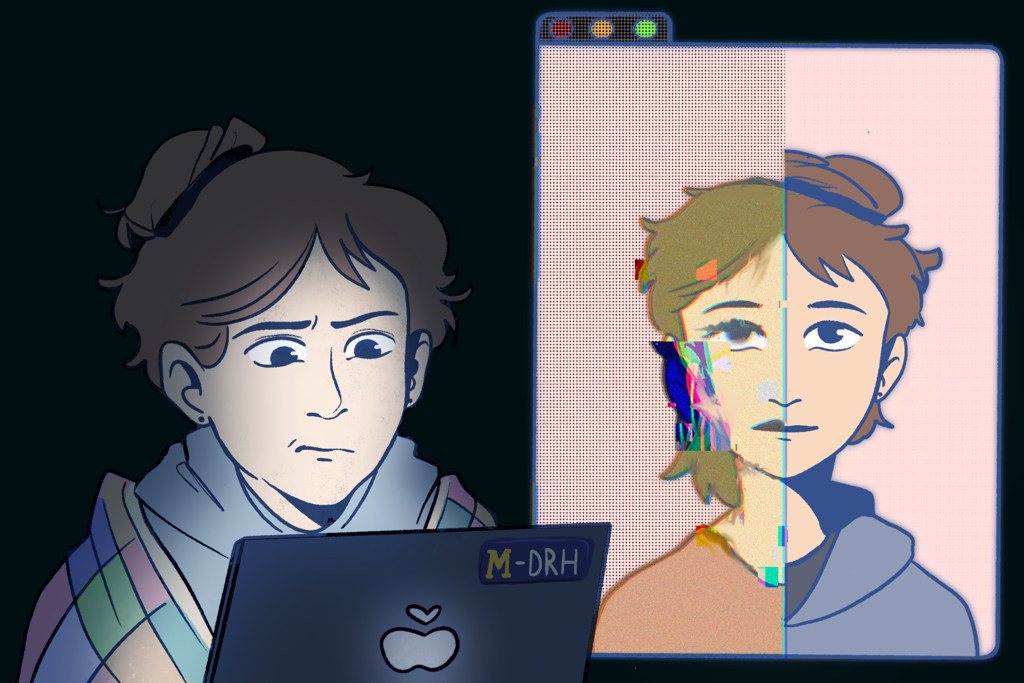
The digital age has brought unprecedented connectivity, but it has also introduced a profound vulnerability: the proliferation of deepfakes. These synthetic media products, crafted using advanced artificial intelligence to replicate a person’s likeness, voice, and actions with chilling accuracy, have evolved from a niche technological curiosity into a mainstream weapon of deception. The statistics are alarming, with deepfake proliferation increasing by a staggering 550% from 2019 to 2023, a surge directly fueled by the democratization of powerful AI software that is now readily accessible to the general public. This exponential growth poses severe public safety threats, ranging from sophisticated financial scams and the non-consensual distribution of intimate content to a pervasive erosion of trust in legitimate media and democratic institutions. In direct response to this escalating crisis, the University of Michigan has launched the Michigan Deepfake Resilience Hub (M-DRH), a tri-campus initiative spearheaded by Khalid Malik, a professor of computer science at UM-Flint and the director of cybersecurity at the College of Innovation & Technology. The initiative’s core mission is to bridge the critical gap between advanced technological detection and the everyday public, who are often the primary and most vulnerable targets of these malicious creations. By addressing a glaring void in accessible, user-friendly verification tools, M-DRH aims not merely to identify fake content but to foster a societal-level resilience against a form of misinformation that threatens financial security, personal privacy, and the very fabric of institutional trust. The initiative is a direct acknowledgment that deepfakes are no longer a problem confined to Hollywood special effects or political smear campaigns, but a pervasive and immediate danger for every individual with an online presence.
Paragraph 2: The Technological Arms Race and the Challenge of Detection
The fundamental challenge that M-DRH seeks to overcome is the accelerating arms race between AI generation and AI detection. As detection algorithms improve, so too do the generative models, creating a vicious cycle where forensic tools become obsolete within months, or even weeks, of their deployment. Hafiz Malik, a professor of electrical and computer engineering at UM-Dearborn and a key project team member, highlights a sobering reality: for audio deepfakes, the human ear is virtually useless. The subtle acoustic imperfections that once betrayed a synthetic voice have been smoothed out by advanced neural networks, leaving no perceptible trace for the average listener. This is a significant departure from earlier deepfakes, where visual artifacts or unnatural blinking patterns were obvious giveaways. Furthermore, malicious actors are not static; they are deeply familiar with standard detection methodologies and actively engineer their outputs to circumvent them. This means that “pristine” synthetic content often evades even the most sophisticated detectors, a monumental hurdle that M-DRH must overcome. To address this, the project is developing a “detection as a service” model, leveraging machine learning models trained on vast datasets of both real and synthetic media. The initiative acknowledges that relying solely on computational forensics is insufficient. Instead, the goal is to create a unified platform that amalgamates various detection techniques—analyzing facial micro-expressions, biometric inconsistencies, metadata anomalies, and semantic logic—into a single, user-friendly interface. This interface will offer probabilistic verdicts rather than absolute certainties, providing users with a powerful and accessible first line of defense in the ongoing battle against synthetic deception.
Paragraph 3: Institutional Structure, Funding, and the Strategic Initiative Fund
The M-DRH initiative gained significant traction and legitimacy after being selected as one of only 37 recipients from a competitive pool of 450 proposals for the University of Michigan’s first round of Strategic Initiative Fund (SIF) awards. This prestigious $1 billion investment, distributed over a decade, is designed to catapult high-impact, high-value projects that align with the university’s strategic vision for the future. The SIF funding provides the necessary resources to operationalize the hub’s ambitious goals, which include establishing a public verification portal where anyone—from a concerned citizen to a journalist or a court official—can submit suspicious media for forensic analysis. Beyond the technical portal, the hub plans to train over 1,000 “Digital Integrity Ambassadors.” These will be educators, journalists, and community leaders who will serve as multipliers, spreading digital literacy and critical evaluation skills throughout Michigan’s diverse communities. The initiative also aims to draft comprehensive policy guidance to help state legislatures, courts, and law enforcement agencies navigate the legal grey areas created by AI-generated fraud and defamation. It is crucial to note, as clarified in a recent correction, that M-DRH is not a nascent project; its roots trace back to 2017 when it first began addressing these issues as a research collaboration. The new SIF funding, however, elevates it from a purely academic research project to a fully-fledged public service utility, amplifying its reach across the Ann Arbor, Dearborn, and Flint campuses to create a cohesive, state-wide resilience framework that leverages the unique strengths of each campus.
Paragraph 4: Societal Risks, Human Impact, and the Threat of Financial Scams
The urgency of the M-DRH’s mission is underscored by the tangible, devastating impact deepfakes have on ordinary citizens daily. While synthetic media can be used for benign entertainment or artistic expression, the malicious applications are far more prevalent and damaging. Financial scams represent the most immediate and widespread threat to the general public. Business graduate student Shirley Giraldo, co-president of the AI and Emerging Tech Club, astutely points out that the most likely scenario for an average individual is being scammed by what appears to be a trusted friend or family member. Cybercriminals now routinely use voice cloning to impersonate a relative in distress, requesting urgent wire transfers, or manipulate video calls to bypass bank security checks and identity verification protocols. These scams exploit the very core of human trust and emotion, making them incredibly difficult to guard against without robust verification tools. Additionally, the proliferation of non-consensual intimate imagery (NCII) has caused severe psychological trauma, reputational damage, and even physical danger, particularly for women, minors, and public figures. Beyond individual harm, deepfakes erode the very fabric of democratic society by sowing confusion and distrust in legitimate news sources, electoral processes, and public institutions. When people can no longer trust their eyes or ears, the concept of objective truth collapses, creating a fertile ground for polarization, radicalization, and social unrest. The M-DRH addresses these threats not just as a technological problem, but as a critical public health and safety issue, aiming to protect the psychological well-being of victims and the civic integrity of the state.
Paragraph 5: The Necessity of a Multi-Pronged Strategy and Public Awareness
The creators of M-DRH recognize that no algorithm, no matter how sophisticated, can solve the deepfake crisis alone. Hafiz Malik explicitly states that “this problem cannot be solved through technology only.” He advocates for a comprehensive, multi-pronged approach that integrates technological innovation with robust regulation, rigorous enforcement, and widespread public awareness. The technological component involves refining detection algorithms and making them accessible through the proposed verification portal. The regulatory component involves lobbying for state and federal laws that criminalize the malicious creation and distribution of deepfakes, particularly those intended for financial fraud, defamation, or election interference. Enforcement requires equipping law enforcement agencies with the digital forensics tools and legal authority to investigate and prosecute offenders across jurisdictional lines, which is often a complex international challenge. Finally, and perhaps most critically, public awareness is the cornerstone of resilience. This involves teaching citizens to critically evaluate the media they consume, to question the authenticity of unexpected requests for money or sensitive information, and to know where to turn for verification when in doubt. The M-DRH’s “Digital Integrity Ambassadors” program is central to this educational pillar, embedding digital resilience into the curriculum of schools, universities, and community centers. By fostering an ecosystem where technology, law, and education work in concert, M-DRH aims to mitigate the damages deepfakes impose on society at large, shifting the paradigm from reactive crisis management to proactive prevention.
Paragraph 6: Conclusion and Vision for a Resilient Digital Future
In an era where “seeing is no longer believing,” the Michigan Deepfake Resilience Hub stands as a beacon of proactive defense and a testament to the power of institutional collaboration. By democratizing access to advanced detection tools and prioritizing human-centered design, Khalid Malik and his team are attempting to reclaim the digital public square from malicious actors. The initiative’s tri-campus collaboration—leveraging the research prowess of Ann Arbor, the engineering focus of Dearborn, and the community engagement of Flint—creates a unique and replicable model that other states and institutions may look to emulate in the coming years. While the challenge of keeping pace with evolving AI is daunting, the hub’s commitment to a holistic, multi-pronged strategy provides a viable blueprint for resilience. The future of M-DRH will likely involve expanding its database of synthetic media, integrating real-time browser extensions for content verification, and partnering with major social media platforms to flag suspicious content proactively. Ultimately, the success of this initiative hinges on its ability to empower the common person, shifting the power dynamic from the deepfake creators back to the public. As the project matures, its impact will be measured not just by the number of fakes it catches, but by the level of skepticism, awareness, and digital confidence it instills in millions of citizens. This initiative ensures that while technology continues to evolve at a rapid pace, human integrity, institutional trust, and the fundamental concept of objective truth do not fall victim to the machine.