


The Perilous Rise of Misinformation in the Age of Climate Change
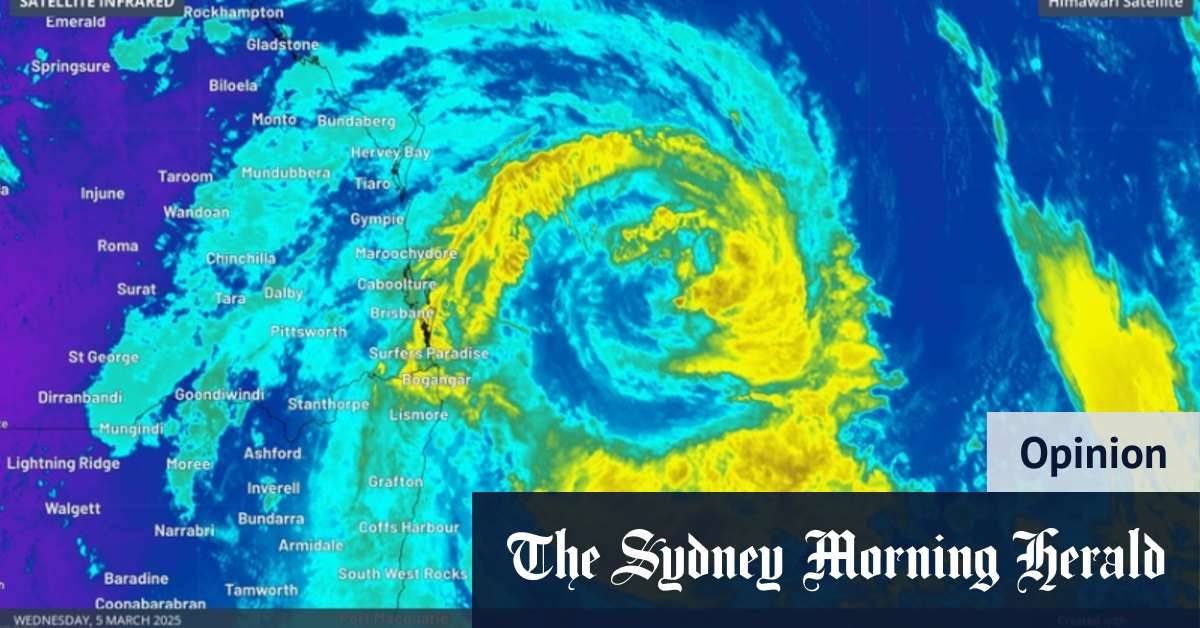
The digital age has ushered in an era of unprecedented access to information, yet this very access has birthed a new challenge: the rampant spread of misinformation. This issue is particularly acute during emergencies, where accurate and timely information is crucial for public safety. The recent experience with Cyclone Alfred in Brisbane, Australia, serves as a stark illustration of this growing problem. While official sources like the Bureau of Meteorology (BoM) provided expert guidance, a cacophony of false information, including fake videos and conspiracy theories about human-engineered weather, circulated online, vying for public attention. This chaotic information landscape underscores the urgent need to prioritize and elevate trusted voices in times of crisis.
The confusion surrounding Cyclone Alfred, fueled by social media and amplified by individuals with large online platforms, led to widespread uncertainty and disruption. Schools were closed for two days despite clear weather, a decision driven by the difficulty in reaching and informing communities bombarded with contradictory information. This example highlights the increasing caution authorities must exercise in the face of unreliable information sources. The challenge is not just the dissemination of information but also actively combating misinformation, a Herculean task in the fast-paced digital world.
The lack of a clear hierarchy of information online contributes significantly to this problem. In traditional media, news was presented with a clear prioritization of importance. Now, however, fact and fiction, expert analysis and uninformed opinion, exist side-by-side, presented with equal weight. This digital egalitarianism, while seemingly democratic, poses a serious threat in emergencies, where discerning credible information can be a matter of life and death. This is further complicated by the rise of artificial intelligence, which has the potential to both improve and exacerbate the spread of misinformation.
The case of Cyclone Alfred also reveals the growing distrust in official sources, a trend fueled by the proliferation of alternative narratives online. Even well-resourced agencies like the BoM struggle to compete with the viral spread of misinformation, often amplified by social media algorithms that prioritize engagement over accuracy. This erosion of trust in expert authorities is particularly dangerous in a world grappling with climate change, where accurate weather predictions and emergency response information are becoming increasingly vital.
To address this challenge, a multi-pronged approach is required. Social media platforms bear a responsibility to curate their content more effectively, ensuring that information from verified and trusted sources is prioritized. Furthermore, government communication units must be adequately resourced to not only disseminate information but also actively counter misinformation campaigns. This includes fostering media literacy within the population, empowering individuals to critically evaluate online content and identify unreliable sources.
Finally, individual responsibility plays a crucial role. Each of us has a part to play in combating the spread of misinformation. Challenging friends and family who share inaccurate or misleading content, promoting reliable sources of information, and prioritizing accuracy over sensationalism in our own online activity are essential steps. In the face of increasingly unpredictable weather events and other emergencies, accurate information is not just a matter of convenience but a critical tool for survival. The battle against misinformation is a collective one, and only by working together can we ensure that trusted voices are heard above the digital din.