


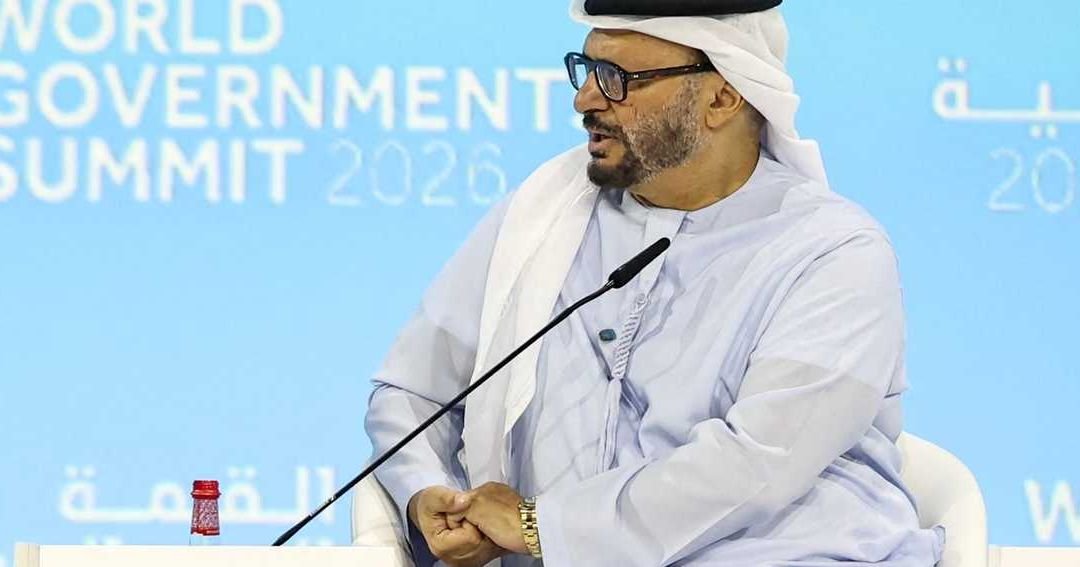
Abu Dhabi — The United Arab Emirates has warned that it is facing a coordinated campaign of disinformation designed to distort its policies and undermine its position as the region undergoes profound change. Dr. Anwar Gargash, Diplomatic Advisor to the President of the UAE, issued a public statement alerting to directed media platforms actively disseminating false information about the country’s policies and positions. His remarks signal growing official concern over information warfare and external efforts to shape narratives around the Emirates. According to Gargash, these campaigns are not random or isolated but appear coordinated and deliberate, timed to exploit a period in which the UAE is deeply engaged in managing complex regional shifts. The objective, he suggested, is to misrepresent the country’s actions and intentions at a critical juncture, potentially confusing allies, investors, and public opinion. The warning reflects a broader awareness in Abu Dhabi that digital platforms can be weaponized to amplify falsehoods, create distrust, and erode the credibility of states that play an active role in regional affairs. Gargash’s language, describing “directed media platforms,” points to organized efforts rather than spontaneous criticism. He emphasized that the UAE remains focused on its strategic priorities, including actively managing regional developments and preparing for the challenges and opportunities of the post-transition phase. The statement did not identify specific outlets or actors, but it made clear that the government is monitoring hostile narratives and reserves the right to respond. The UAE has long positioned itself as a hub for diplomacy, trade, and stability, making it a natural target for those who oppose its influence. By going public with the warning, the Presidential Advisor is seeking to preempt further damage and to reassure domestic and international audiences that the country’s policy framework is intact. The timing is significant: as the Middle East navigates shifting alliances, economic uncertainty, and post-conflict reconstruction, information operations have become an increasingly prominent tool of statecraft. The UAE’s decision to address the issue head-on underscores its commitment to transparency and its determination not to allow false narratives to shape the regional agenda.
At the heart of the UAE’s current approach is a clear set of strategic priorities that have guided its foreign policy through years of turbulence. Gargash’s statement reiterated that the country is actively managing regional developments and preparing for the post-transition phase. This phrase encompasses a broad agenda: supporting fragile states in the aftermath of conflict, strengthening regional institutions, diversifying economic partnerships, and ensuring that the UAE’s national interests are protected as old structures give way to new ones. The UAE has positioned itself as a mediator and convenor, hosting dialogues, facilitating ceasefires, and deploying humanitarian assistance across the region. Its economic strategy, meanwhile, has moved beyond hydrocarbons toward technology, logistics, finance, and renewable energy, giving it a stake in the stability of global markets and supply chains. This comprehensive approach requires a stable information environment. Disinformation campaigns that misrepresent the UAE’s role can complicate its diplomatic efforts, alarm investors, and create friction with partners. The Presidential Advisor’s warning should be understood in this context: it is not merely a defensive reaction but part of a broader effort to protect the country’s capacity to act. The “post-transition phase” is a particularly delicate period. As the Middle East moves beyond the acute crises of the past decade, questions of reconstruction, governance, and reconciliation will define the next era. The UAE wants to be at the table when these questions are answered. That requires credibility. False narratives, if left unchallenged, could undermine the trust that underpins the UAE’s diplomatic and economic engagements. Gargash’s emphasis on strategic priorities suggests that Abu Dhabi will not be distracted by information warfare. Instead, it will continue to invest in the relationships and institutions that enable it to shape outcomes. The government has also invested in domestic resilience, including media literacy and strategic communications, to ensure that its own population is not swayed by external manipulation. The warning is thus both a signal to adversaries and a reassurance to allies: the UAE’s course is set, and it will not be diverted by campaigns designed to misrepresent its intentions.
The UAE’s recent record demonstrates a firm stance on regional stability, prioritizing diplomatic engagement and economic development over confrontation. This approach has been evident in its efforts to support conflict resolution, promote de-escalation, and build bridges between rival powers. The country has maintained relationships across a broad spectrum, from Western capitals to emerging economies, and has used its position to facilitate dialogue on issues ranging from energy security to maritime safety. By addressing the disinformation campaigns directly, Dr. Gargash underscored the country’s commitment to transparency in its foreign policy. He made clear that the UAE does not intend to allow external narratives to define its actions or to undermine its regional influence. The phrase “counter external narratives” is significant: it signals that the UAE sees information operations as a strategic challenge that must be met with a strategic response. This may involve diplomatic demarches, public statements, legal measures, or enhanced cooperation with international partners to expose falsehoods. It also reflects a broader trend in which states are increasingly forced to defend their reputations in a crowded digital ecosystem. The UAE’s diplomatic style has traditionally been pragmatic and low-key, but its willingness to speak out against disinformation marks a shift toward more assertive strategic communications. The government’s message is that its policies are transparent, its partnerships are open, and its record is available for scrutiny. At the same time, it warns that those who fabricate stories about the UAE are not engaging in legitimate criticism but in a coordinated effort to distort reality. This distinction is important for international audiences: the UAE welcomes debate and accountability, but it will not accept manipulation. The country’s focus on economic development as a pillar of stability also explains why disinformation is considered so dangerous. Investor confidence depends on predictability and trust. A sustained campaign of falsehoods could create uncertainty, disrupt trade, and damage the UAE’s reputation as a safe haven for capital and talent. By confronting the issue openly, the government hopes to limit the impact and to demonstrate that it has nothing to hide. The broader regional context reinforces this point. In a volatile neighborhood, the UAE’s stability and prosperity are assets not only for its own citizens but for the entire region. Efforts to undermine the UAE are therefore seen as efforts to undermine regional stability more broadly.
Analysts observing the UAE’s response note that its strategic focus on the current and future regional landscape involves a comprehensive approach to both security and diplomacy. The country has invested heavily in its defense capabilities, including advanced air defense systems, cyber defenses, and special operations forces, while simultaneously expanding its diplomatic footprint and economic ties. This dual-track strategy is designed to deter threats while creating the conditions for long-term stability. As the Middle East continues to undergo rapid geopolitical transformations, the UAE is positioning itself to lead on issues related to regional cooperation, climate action, and economic integration. Its hosting of international conferences, its investments in renewable energy, and its role as a logistical hub all reinforce its claim to leadership. However, this ambition also makes it a target. The rise of digital information warfare has created new vulnerabilities for states that rely on openness and connectivity. The UAE’s advanced digital infrastructure, while an economic asset, also exposes it to coordinated disinformation campaigns. The Presidential Advisor’s remarks suggest that the government is increasingly vigilant regarding these threats and the potential impact of external narratives on its regional objectives. Analysts point out that disinformation is often used to achieve outcomes that cannot be achieved through conventional means. By sowing confusion about a country’s intentions, adversaries can weaken alliances, deter investment, and create domestic discord. The UAE’s response has been to treat information security as an integral part of national security. This includes monitoring media platforms, identifying patterns of coordinated behavior, and working with international partners to expose disinformation operations. It also involves proactive storytelling: ensuring that the UAE’s own voice is heard clearly and consistently in international media. The country has expanded its state media presence, launched English-language platforms, and engaged with international journalists and think tanks to present its perspective. Analysts believe that the UAE is well positioned to weather this storm because of its institutional resilience and its broad network of allies. Yet they also caution that information warfare is an ongoing challenge that requires constant adaptation. The battle for narrative is not a single campaign but a long-term struggle, and the UAE’s leadership appears determined to stay ahead of it. The warning from Dr. Gargash is therefore best understood as an early-warning system, alerting both domestic audiences and international partners to the threat and outlining the government’s determination to counter it.
Despite the attempts to spread misinformation, officials maintain that the UAE’s diplomatic path remains unchanged. The government continues to concentrate its efforts on dealing with the evolving situation in the region, ensuring that its national interests are safeguarded while contributing to broader regional initiatives designed to foster a stable environment. This message of continuity is crucial for both domestic confidence and international credibility. The UAE’s institutions have demonstrated their ability to function effectively under pressure, and the leadership has repeatedly emphasized that external campaigns will not alter its course. In practical terms, this means maintaining open channels of communication with allies, continuing to participate in multilateral forums, and pressing ahead with economic diversification and social reform. The government has also taken steps to strengthen its own information environment, promoting media literacy and encouraging public discourse that is resistant to manipulation. The warning from the Presidential Advisor is part of a broader strategic communications effort that includes official statements, briefings, and engagement with international media. By addressing the issue directly, the UAE is seeking to control the narrative rather than allowing others to define it. Officials are likely to continue highlighting the country’s achievements and its constructive role in the region, while also pushing back against specific false claims as they arise. The UAE’s commitment to regional initiatives remains a central pillar of its foreign policy. Whether through humanitarian aid, development assistance, or mediation efforts, the country has consistently sought to be a force for stability. These initiatives are based on a pragmatic understanding that no single state can solve the region’s problems alone. Cooperation, not confrontation, is the guiding principle. The disinformation campaigns are seen as a distraction from this important work, but not a fatal threat. The UAE’s leadership has weathered many challenges over the years, from economic crises to regional conflicts, and has emerged stronger each time. The current battle over narratives is just another test. The government’s response has been measured and confident, reflecting a belief that the truth will ultimately prevail. In the meantime, the UAE will continue to build partnerships, invest in its people, and prepare for the future. The post-transition phase offers enormous opportunities for those who are prepared to seize them, and the UAE intends to be among the leaders shaping that future.
The UAE’s leadership maintains that these disinformation efforts will not detract from the country’s core focus on navigating the complexities of the current regional climate and securing a prosperous outlook for the post-transition period. This is a statement of resolve as much as an assessment of the situation. The UAE has invested too much in its development and its international standing to be derailed by false narratives. Its leaders understand that the coming years will be defined by competition, uncertainty, and change, but also by opportunity. The country’s geographic position, economic strength, and diplomatic agility give it a unique advantage. By remaining focused on its strategic priorities, the UAE can continue to play a central role in shaping the region’s future. The warning about disinformation is also a call to action for the international community. In an era of information warfare, all states are vulnerable. The UAE’s decision to speak out is an invitation to others to join in defending the integrity of public discourse and to hold accountable those who seek to weaponize falsehoods. The country has called for greater cooperation in identifying and countering disinformation, recognizing that no nation can do it alone. The response to the campaigns will likely evolve, with new tools and strategies developed to meet the challenge. But the underlying message is clear: the UAE will not be silenced, intimidated, or diverted from its path. It will continue to advocate for stability, dialogue, and cooperation in the Middle East. It will continue to build a diversified, knowledge-based economy that offers opportunity to its citizens and partners. And it will continue to project a vision of a region that is resilient, connected, and prosperous. The road ahead may be difficult, but the UAE has faced difficult roads before. Its leadership has repeatedly shown the ability to adapt, innovate, and persevere. The current disinformation campaigns are a reminder that power is not only military or economic but also informational. The UAE is responding by strengthening its defenses, sharpening its message, and deepening its alliances. In doing so, it is setting an example for other nations navigating the turbulent waters of the 21st-century information age. The post-transition phase will require clear thinking, steady nerves, and a shared commitment to common goals. The UAE is prepared to meet that requirement. As Dr. Gargash’s warning makes clear, the country’s focus remains fixed on the future, and no amount of falsehood will change that.