


Summary of the Himalayan Flash Flood: Geopolitics, Misinformation, and a Climate Warning
(Paragraph 1: The Incident and the Scientific Consensus)
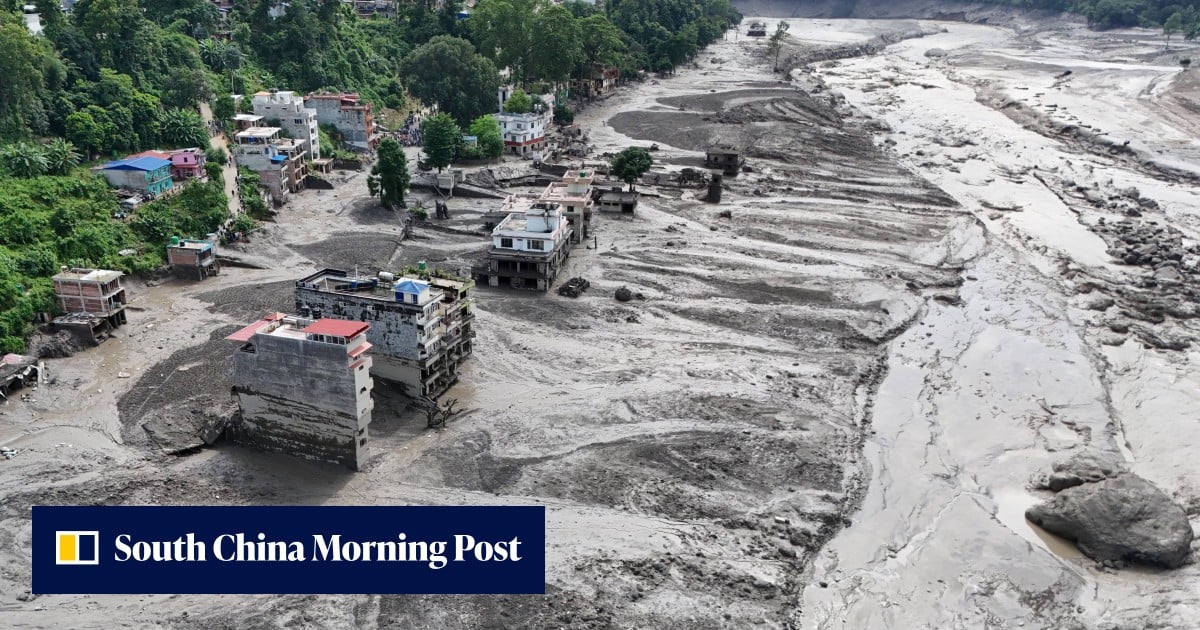
The catastrophic flash flood that tore through the remote border regions of Nepal and China last week stands as a stark reminder of the volatile nature of high-altitude environments. To the scientific community, the cause of this tragedy, which claimed dozens of lives and swept away entire villages along the valley floors, is unequivocal: a glacier, situated high on the Nepalese side of the Himalayan range, catastrophically collapsed. This glaciological event triggered what experts classify as a Glacial Lake Outburst Flood (GLOF), a sudden and violent release of water that occurred when the natural moraine—the rocky and icy dam holding back a massive body of meltwater—breached. The resulting deluge, a dense slurry of ice, rock, and debris, surged down the steep Himalayan gorges, swelling rivers to ten times their normal flow within minutes and obliterating everything in its path. The initial data from satellite imagery and geological surveys pointed directly to the high-altitude thermokarst formation on the Nepal side, confirming that the genesis of the flood was a dynamic, climate-driven natural phenomena. For scientists monitoring the region, this was not an anomaly but a predictable manifestation of accelerating glacial melting induced by rising global temperatures, a process that has made the Third Pole—the world’s highest plateau—one of the most danger-prone regions on Earth for rapid-onset water disasters.
(Paragraph 2: The Vacuum and the Rise of Misinformation)
Despite the clarity of the scientific diagnosis, the hours and days immediately following the flood were punctuated by chaos, uncertainty, and a deafening roar of digital speculation. As physical communication channels were severed—roads eroded, bridges washed away, and phone towers toppled—the information vacuum was rapidly filled by social media platforms, where unverified rumors and politically charged narratives began to circulate with viral intensity. In the absence of official announcements and responsive ground verification, netizens and regional pundits began to speculate wildly on the true origin of the disaster. Unsubstantiated theories quickly emerged, pointing fingers across the border, with many users alleging that the flood was the direct result of human engineering failures. The most prominent of these accusations centred on Chinese-built infrastructure, specifically large-scale hydroelectric dams and road construction projects situated within the Tibetan Autonomous Region. As bodies were being recovered and rescue teams struggled to traverse the treacherous terrain, trending hashtags on Weibo, X (formerly Twitter), and local Nepali forums began to weave a compelling but entirely false narrative: that the sudden surge of water was a deliberate or negligent release from a Chinese reservoir, or a catastrophic rupture of a mega-dam, which had doomed unsuspecting communities downstream in Nepal. This wave of digital misinformation, which gained traction globally, transformed a natural disaster into a flashpoint for geopolitical animosity, overshadowing the immediate humanitarian need.
(Paragraph 3: Deconstructing the False Narrative and the Accusation)
At the heart of the misinformation campaign was a specific, highly emotional claim propagated by a social media account operating under the name “Nepal Correspondence.” Presenting itself as a self-styled investigative journalism platform based in Kathmandu, the account published a post on Wednesday declaring, with absolute certainty, that the flood was caused by structural collapse and construction activity on the Chinese side of the Himalayas. The post went further, desecrating the tragedy with hyperbole, stating: “This is not only a purposeful ecological disaster but is cruel too.” This inflammatory rhetoric, which branded the event as a state-sanctioned act of environmental sabotage, resonated profoundly with audiences already distrustful of Beijing’s assertive influence in the region. However, a rigorous geographical and scientific deconstruction of the event utterly dismantles this narrative. Independent glaciology experts analyzing topographical data pinpointed the breach site to a glacial lake resting entirely on the Nepal side of the watershed boundary. The Chinese dams and hydropower facilities located on the Tibetan plateau were situated far downstream or on wholly different tributaries, rendering them incapable of contributing to the sudden flash flood that originated from the high-altitude lake basin. Furthermore, satellite imagery taken before and after the event revealed the complete collapse of a natural moraine ridge, confirming the mechanism as a textbook GLOF, entirely void of any anthropogenic structural failure. The persistence of this narrative despite overwhelming evidence highlighted the dangerous merging of political bias, nationalist sentiment, and deep-seated anxiety over transboundary water resource management in South Asia.
(Paragraph 4: Diplomatic Tension and the ‘Information War’)
The false accusations inevitably escalated into a diplomatic and informational tug-of-war between Beijing and Kathmandu, transforming the disaster zone into an ideological battlefield. Recognizing the severe reputational and political damage caused by the swirling allegations, Chinese and Nepali authorities moved quickly to coordinate a joint response. In a rare display of expedient bilateral cooperation, geological and hydrological experts from both nations convened to conduct a consolidated analysis of the disaster. Following their deliberations, both governments formally issued a joint statement affirming the scientific conclusion: the flood was the result of a naturally occurring glacial collapse, exacerbated by ongoing climate change, with no evidence pointing to human engineering or infrastructure failure. Despite this authoritative bilateral agreement, the “war of information” continued to rage unabated in the digital domain. The joint statement did little to quell the firestorm on social media, where echo chambers amplified the initial skepticism. Critics argued that the joint investigation was a political whitewash, a face-saving maneuver orchestrated by Beijing to protect its Belt and Road Initiative (BRI) investments in the region from scrutiny. Conversely, Chinese state media utilized the opportunity to frame the entire episode as a malicious smear campaign orchestrated by Western and Indian interests seeking to undermine China’s peaceful development and its infrastructure diplomacy in the Himalayas. As a result, the factual reality of a melting glacier became collateral damage in a larger geopolitical struggle for influence, where water flows and dam projects have become proxy battlegrounds for regional supremacy.
(Paragraph 5: The Uneasy Climate Reality Beneath the Noise)
Amidst the digital pandemonium, the underlying scientific exigency was sobering and stark. While the geopolitics of dam construction captured headlines, the broader crisis of climate change in the Himalayas remained the ultimate catalyst of the tragedy. The entire Hindu Kush Himalayan region is warming at a rate nearly double the global average, according to systematic IPCC assessments. Scientists have catalogued hundreds of dangerously unstable glacial lakes spread across the high-altitude terrain, many of which are situated in Nepal and China. The event last week was not an isolated incident but a stark warning of a looming threat. As crucial as it is to debunk the misinformation, understanding the reasons behind the glacial collapse is paramount. The rising temperatures have destabilized the frozen ground, melting the permafrost that binds steep mountain slopes, and critically increasing the hydrostatic pressure within the glacial lakes themselves. As the ice ages and thins, the moraine dams become increasingly fragile. The flood we witnessed is a direct result of this compounding fragility—a silent, creeping catastrophe brought on by global greenhouse gas emissions. The focus on a Chinese dam deflects attention from the much harder truth that the primary polluters, historically the wealthier industrialized nations, share an immense responsibility. The tragedy at the Sino-Nepal border serves as a microcosm of the global climate crisis, where the most vulnerable mountain communities pay the highest price for a warming atmosphere, and where the true culprit is carbon emissions, not international engineering projects.
(Paragraph 6: Conclusion – Finding Reason Amidst the Static)
In the aftermath of this devastating flood, the immediate priority remains the humanitarian relief effort, the search for missing persons, and the reconstruction of shattered communities. Yet, the tragedy carries profound lessons that extend far beyond the immediate rubble and grief. Firstly, the scale and speed of the misinformation underscore the urgent need for transparent, real-time data sharing and robust fact-checking mechanisms across borders. During a crisis characterized by high stakes and intense emotions, the responsibility of major media outlets and social media platforms to filter truth from politically charged fiction has never been more critical. Secondly, this event demands a recalibration of diplomatic focus between China and Nepal. While navigating their respective geopolitical interests, both nations must prioritize joint scientific research and the establishment of a comprehensive, early-warning system for GLOF events. The stakes are simple: future predictions indicate that heavy rainfall and rapid glacial melt will only increase, and the countries bordering the Himalayas must invest in shared meteorology monitoring, glacial lake management, and coordinated evacuation protocols to preclude further calamities. The “war of information” must be replaced with a war against climate change itself. As the waters recede, they leave behind not just mud and debris, but a challenge to the global community: to look beyond the salacious headlines of dam collapses and recognize the slow, unrelenting, and deeply dangerous reality of a planet in transition. The glacier on the Nepali side of the border did not fail because of human engineering; it failed because humanity collectively failed to address the warming atmosphere that sustains it.