


King’s College Old Boys Debunk Sale Fears as FG Approves PPP Management Transfer
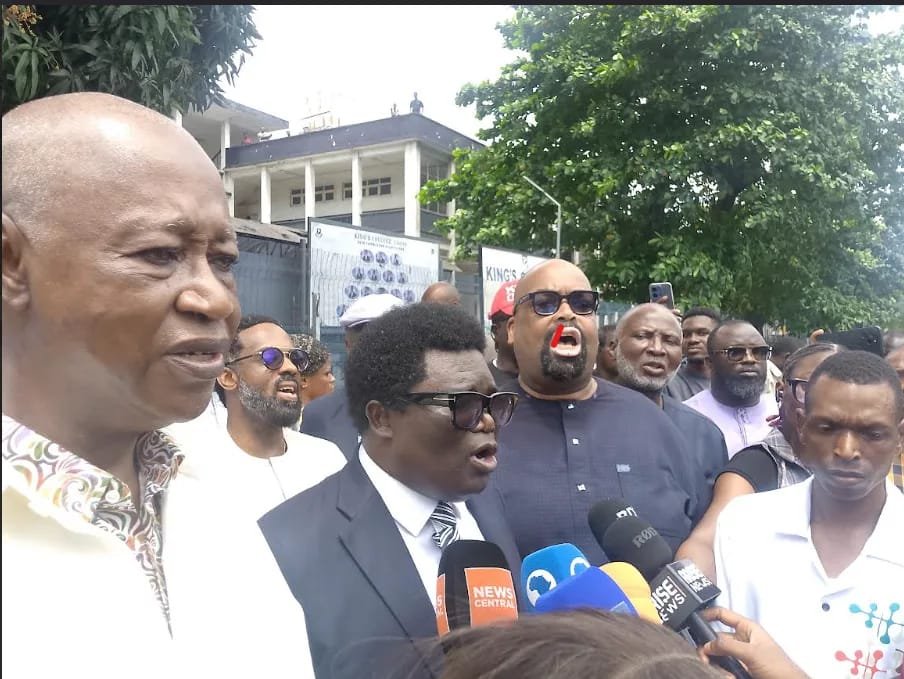
The president of the King’s College Old Boys’ Association (KCOBA), Kashim Ibrahim-Imam, has clarified that the Federal Executive Council has approved the transfer of the management of King’s College, Lagos, to the alumni association under a public-private partnership (PPP) arrangement. He made this known on Tuesday after parents and workers at the school blocked members of the association from entering the premises to hold a press conference on the federal government’s decision to concession the college. The announcement has stirred considerable controversy, with many stakeholders fearing that the move could amount to privatisation of one of Nigeria’s oldest and most prestigious secondary schools. However, the alumni association has strongly rejected those fears, insisting that the PPP arrangement is not a sale or a privatisation of the century-old institution. According to Ibrahim-Imam, the initiative is intended to rehabilitate the school and restore its deteriorating infrastructure, a problem that has become increasingly visible in recent years. He stressed that the Federal Government is not selling King’s College to anyone, and the Old Boys are not interested in buying it, despite widespread speculation among parents, staff, and former students.
The blockade on Tuesday highlighted the deep anxieties surrounding the proposed management transfer. Parents and workers physically prevented KCOBA members from entering the school grounds for a press conference, a move that underscored the level of suspicion and opposition the plan has generated. The association had planned to explain the government’s decision and reassure the school community that the PPP arrangement would be beneficial. But the action of the parents and workers demonstrated that many are yet to be convinced, particularly because the federal government’s decision had apparently been taken without extensive public engagement. The protesters were reportedly concerned that the involvement of the Old Boys could lead to higher school fees, the commercialisation of a public institution, and the exclusion of existing staff or management structures. The Old Boys’ Association, however, maintained that such fears are unfounded. It argued that the PPP arrangement is a necessary step to save the school from further decline and to ensure that King’s College retains its historical status as a centre of academic excellence, rather than being allowed to fall into ruin due to years of neglect.
Ibrahim-Imam explained the legal and administrative basis for the decision, stating that the Federal Executive Council had formally resolved that the management of King’s College, Lagos, should be handed over to the Old Boys on a PPP basis. He was emphatic in distinguishing between a management concession and outright ownership, saying, “PPP does not in any way signify a sale of the school to the Old Boys. The Federal Government is not selling King’s College to anybody. Also, the Old Boys are not interested in buying King’s College.” He further noted that the role of the Old Boys Association over the years has always been to invest in developing infrastructure across the college’s two campuses. “That has primarily been our role,” he said, pointing to the long history of alumni contributions to the school. The PPP arrangement, according to him, is simply an extension of that role, formalised through a government-approved framework. By taking over management, the association aims to deploy its resources, expertise, and networks to restore the school’s facilities and improve its overall operations, while still keeping the institution within the public sector.
One of the most sensitive issues raised during the controversy was the possibility of increased tuition fees. Ibrahim-Imam addressed this directly, dismissing what he described as disinformation being circulated around the PPP arrangement. “There has also been a lot of what I consider to be disinformation, especially concerning the payment of school fees. At no time did the Old Boys imply that we are going to increase school fees. Our objective is to develop the college,” he said. He also offered a personal reflection on why the alumni association is so invested in the school’s future. “I keep saying this, as President of the Old Boys, my own personal aspiration is very modest. To take back, not even to take the school forward, take back the school to where I met it as a student. Now, all the facilities are dilapidated,” he lamented. His statement was aimed at reassuring parents that the motive behind the PPP is restoration, not profit. However, critics argue that once management is handed over to a private body, financial pressures and operational decisions may eventually force fee increments or other cost-saving measures that could affect students and staff. The old boys have consistently refuted these claims, insisting that the priority is to improve the condition of the college, not to generate revenue from it.
Ibrahim-Imam further attributed the poor state of the school’s facilities partly to the age of the institution. King’s College, Lagos, has stood for more than a century, and its physical infrastructure has suffered from decades of inadequate maintenance. He described the intervention as a “rescue mission,” noting that the association’s interest is driven by a desire to give back to the institution that shaped its members. The school currently has about 2,500 students enrolled across its campuses, and the quality of their learning environment has become a matter of deep concern to the alumni. The PPP arrangement, according to KCOBA, will allow the association to bring much-needed investment into the school without the usual bureaucratic bottlenecks that have hampered public sector projects. The old boys believe they are in a unique position to rehabilitate the school because of their strong emotional attachment, financial capacity, and professional expertise. They also argue that alumni-managed schools have succeeded in other parts of the world, and similar models can work in Nigeria if properly structured and regulated. Nevertheless, the response from parents and workers suggests that much more communication and engagement will be needed before the plan is accepted.
The approval of the King’s College management transfer under a PPP arrangement marks a significant development in the governance of federal educational institutions in Nigeria. It raises broader questions about the future of public schools and the role of alumni associations in taking responsibility for institutions that the government has struggled to maintain. While the KCOBA leadership insists that the arrangement is not a sale, the lack of clarity around the specific terms of the agreement, the timeline for handover, and the rights of parents and workers has created room for rumour and resistance. The association’s next steps will be crucial in determining whether the PPP becomes a successful model of school management or a source of prolonged conflict. For now, Ibrahim-Imam has appealed for understanding, emphasizing that the goal is to restore King’s College to the legendary standard it once represented. He has promised that no fees will be increased and no privatisation will occur, but the parents and workers who took to the gates on Tuesday are likely to demand more than promises. They will want an open, transparent process that protects the interests of students and the jobs of staff, while genuinely rehabilitating the campus. If the old boys are able to deliver on that expectation, the PPP arrangement could transform the school; if not, it may become another contentious chapter in the long history of Nigeria’s educational system.