


New Scientist at 70: A Milestone That Arrives With Old Threats and New Urgencies
New Scientist, the London-based science and technology magazine, is approaching its 70th anniversary with a warning issued from its own history: the threats that loomed in 2016, when the publication turned 60, have not gone away, and many have grown more acute. In a special feature to mark that earlier milestone, the magazine listed the biggest dangers facing humanity: a giant asteroid strike, global warming, a devastating plague, nanomachines running out of control and turning everything into grey goo, and artificial intelligence. A decade later, the asteroid has not hit and the grey goo has not yet arrived, but the other named risks are now part of daily life. As New Scientist prepares to celebrate its 70th birthday in just under two months, its editors say the challenges now facing individuals and society are even more pressing than they were in 2016. The anniversary comes after a significant redesign of the publication, which the magazine describes as a “glow-up” for the occasion. From climate change to AI, the list of concerns may feel familiar, but the underlying reality has changed: what was once a speculative list of threats is now a series of ongoing emergencies that dominate politics, economics and culture. The magazine’s long history has seen it cover moon landings, the rise of computers, genetic engineering and the first hints of the climate crisis. Its original 2016 list was never a doomsday prophecy but an attempt to focus the mind on the risks most likely to reshape the future. Now, with its 70th year underway, the publication is revisiting those questions with a sense of urgency. It is also doing so at a moment when science journalism itself is under threat—not only by misinformation and political attacks, but by the very technologies that it has long reported on. The magazine argues that this makes its own role, rooted in up-to-date reporting and a healthy scepticism for grand claims, more important than ever. The anniversary is not just a celebration of seven decades of scientific coverage; it is a declaration that the need for serious, trusted science journalism has not diminished. In the coming months, the publication says, it will look back at past achievements and look forward to future breakthroughs, while continuing to document the risks that its readers now live with.
One of the clearest signs that the threats have intensified is in the climate system. In 2016, the Paris Agreement went into force with the ambitious goal of limiting global warming to 1.5°C above pre-industrial levels. That agreement was a landmark diplomatic moment, uniting nearly every country in a promise to cut emissions. But 2024 was the first full calendar year in which the planet’s average temperature breached that line, according to global temperature records. The breach does not mean the goal is formally gone, but it is a powerful symbol of how quickly the world is moving toward the worst-case scenarios that scientists have been warning about for decades. Looking ahead, New Scientist notes that 2026 is set to be an even more difficult year. With a strong El Niño building on top of an already warmed planet, the coming year is expected to surpass current temperature records, bringing heatwaves, wildfires, landslides and other catastrophic events. The consequences are no longer remote or abstract: they are being measured in lost homes, broken crops and overwhelmed hospitals. The magazine’s point is not simply that temperatures are rising, but that the social and political systems promised to address the problem have not moved nearly as quickly as the climate itself. The Paris Agreement was supposed to be a turning point; ten years later, the world is struggling to keep its promises. For New Scientist, this is the backdrop against which its 70th anniversary arrives. It is also a reason why robust science journalism matters: the decisions taking place now, from energy policy to disaster preparedness, depend on accurate, accessible information about what is happening to the planet. The magazine has long argued that climate action must be based on evidence, and its coverage has chronicled both the science of the atmosphere and the technologies—solar, wind, nuclear and others—that could still turn the curve. But the urgency is clear. The 1.5°C target, once seen as a guardrail, is now a threshold that has already been crossed for a year. The question is whether the crossing is a temporary overshoot or the beginning of a new, more dangerous era. New Scientist’s anniversary message suggests that the future is not written, but the window for action is becoming narrower.
The political context has also shifted in ways that make the threats harder to handle. In 2016, the election of Donald Trump was, as New Scientist put it, shocking. That first term was marked by attempts to roll back environmental rules, dismiss established climate science and slash science budgets. But his second term has gone further. The magazine points to stronger anti-science rhetoric than ever before, leading not just to funding cuts, but to the amplification of dangerous misinformation, especially about health and the environment. Scientists and public-health officials have found themselves under attack; universities and research agencies have been pressured to change course; and international collaborations have been strained. The result, New Scientist argues, is a moment when science, truth and journalism are all under threat from multiple directions. In this environment, misinformation can spread faster than research findings can be corrected. New Scientist does not present itself as a neutral observer; it describes its own brand as high-quality, trusted and sceptical journalism. It says this kind of journalism is stronger than ever because it is needed more than ever. The magazine is not immune to the wider instability, either. Like all news organisations, it is navigating a media economy in which social media algorithms often reward outrage and falsehoods over nuance and evidence. But the anniversary offers an opportunity to restate a simple principle: for societies to make good decisions, they need information they can trust. The alternative, the magazine suggests, is a world where political rhetoric takes the place of evidence and where the most persuasive voice, not the most accurate one, wins. That is a particularly dangerous prospect when climate change is accelerating and AI is transforming the information ecosystem. In this sense, the threats are not only external; they include the erosion of the institutions and practices that keep science honest. New Scientist’s history gives it a particular perspective: it has been reporting on climate science, medicine, physics and biology for decades, through periods when those disciplines were sometimes celebrated, sometimes contested. The magazine’s message is that rigorous, independent science journalism is not a luxury; it is a vital part of how a modern society understands itself and its risks. The political storm around science is therefore not a distraction from the anniversary but a reason for it to make as much noise as possible.
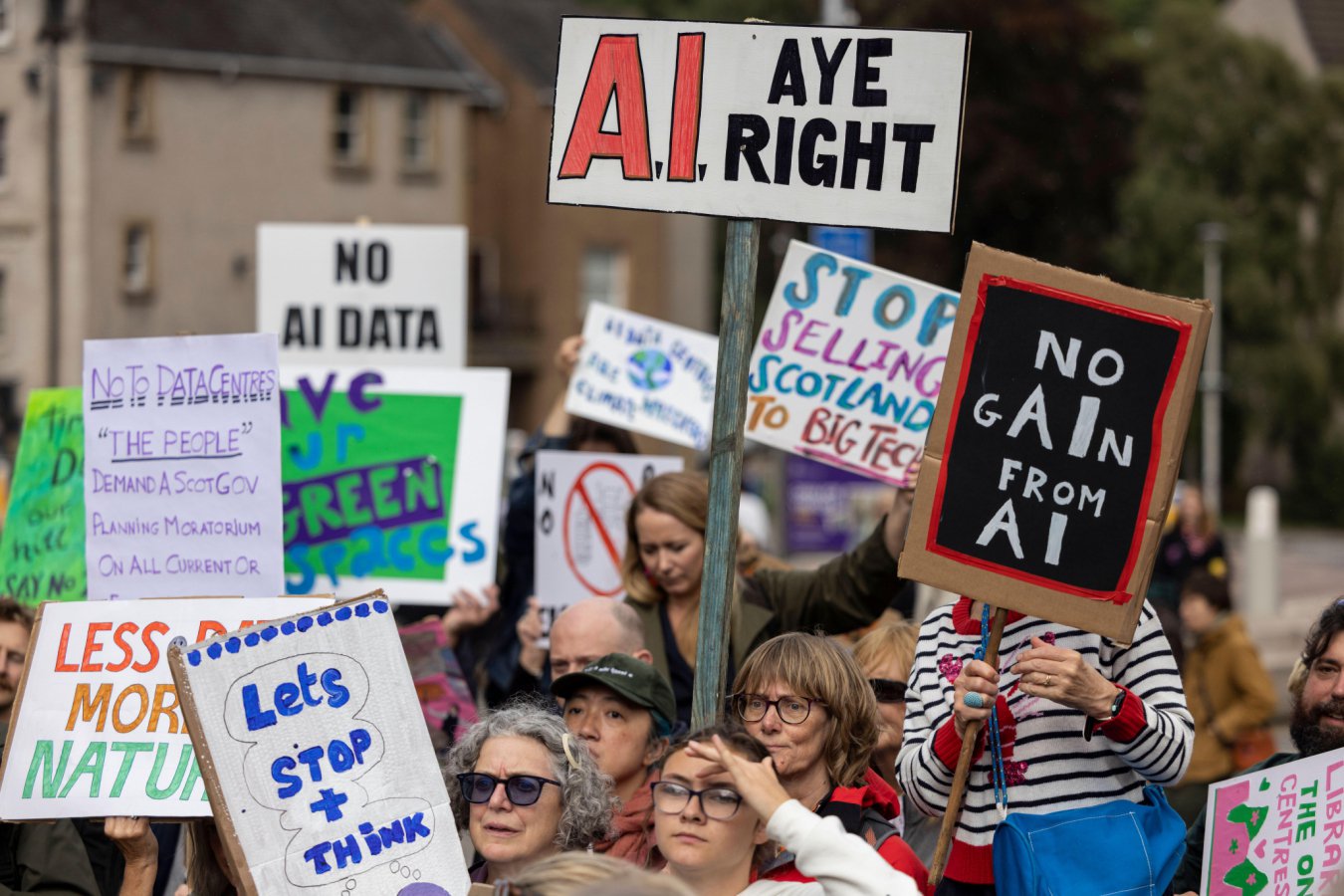
Artificial intelligence represents one of the most unsettling items on the 2016 list. A decade ago, the idea that AI could threaten humanity was still mostly a topic for theorists. Now, New Scientist says, “we are in a moment of reckoning.” Even those developing the technology have begun to warn that it could pose an existential risk. The magazine is careful not to claim that the apocalyptic vision is certain, but it insists the effects of AI are already here, changing the way people work, the way wars are fought and the way citizens obtain their news. The latter is a special concern for publishers. News audiences, especially younger ones, are increasingly turning away from traditional articles and toward pre-digested AI summaries and social-media pundits. This is an existential risk for the industry. No news publisher is immune, including New Scientist. If readers ask an AI assistant for information about a scientific finding, they might receive a confident but misleading answer, with no source, no context and no editorial process. The web’s old model of linking to original reporting is being replaced by a walled garden of algorithmic snippets. For media outlets, this threatens the economic base for reporting. For readers, it threatens the quality of information they rely on. The magazine acknowledges this dilemma on the eve of its anniversary: the technologies it has helped to explain are now disrupting its own business. But it argues that the answer is not to imitate the algorithms or chase clicks, but to double down on what distinguishes journalism from generated text: original reporting, editorial judgement and scepticism. The article says “the importance of science journalism, and especially the high-quality, trusted and sceptical brand of journalism that New Scientist was built on, is stronger than ever.” It is a deliberate choice to frame the AI moment not only as a threat but as a test of purpose. If the most artificial forms of text become ubiquitous, genuine human reporting may become more valuable, not less. AI may also be a tool that journalists can use, but the magazine’s emphasis is on the need to maintain trust. At a time when an AI summary can be wrong with great confidence, the difference between a claimed fact and a verified fact becomes the whole game. New Scientist’s editors see the next decade as one in which journalism has to prove its worth. The 70th anniversary is an occasion to make that case in public.
Despite the dark catalogue of threats, the magazine insists there are many more reasons for optimism. The past seventy years have produced transformational changes in medicine, from vaccines and antibiotics to gene therapies and new cancer treatments. Green technologies have gone from exotic experiments to the cheapest forms of new energy in much of the world. Astronomy and physics have rewritten textbooks, with discoveries ranging from black holes and gravitational waves to the first images of the early universe. New Scientist will celebrate these changes in its anniversary coverage in the coming weeks, along with predictions of what the biggest breakthroughs of the future will look like. The magazine also plans to share life-affirming stories from readers, some of whom have subscribed since the very beginning. This human element is important: behind every scientific advance is a team of researchers, but also a world of readers who use this knowledge to make decisions about their health, their careers and their participation in democracy. The anniversary coverage aims to balance the catalogue of risks with a record of what humanity can do when it applies curiosity and evidence. The 2016 threat list, after all, was not a statement of inevitability. Each item was a problem that, in principle, could be understood and managed. The same scientific mindset that created the dangers is also the source of solutions. The magazine’s optimism is not naive. It recognises that progress is uneven and that new technologies can bring new harms. But it refuses to give in to despair. In medicine, for example, the speed of vaccine development during the COVID-19 pandemic is a reminder of how quickly science can respond when resources and political will align. In green technology, the fall in cost of solar and wind power has permanently changed the economics of energy. There is a long way to go, but the direction of travel is not hopeless. New Scientist’s message is that celebrating 70 years is not only about nostalgia; it is about taking stock of what is possible. The same spirit that put humans on the Moon, cracked genomes and revealed the shape of the cosmos is still at work. The magazine’s anniversary will therefore be both retrospective and forward-looking, framed around questions rather than certainties. That is exactly what the next threat list, whenever it is written, will need: an attentive audience willing to think ahead.
Finally, the anniversary is also an occasion for fun. The magazine is a publication, but it has long been a gathering point for scientists and readers. In under two weeks, tens of thousands of people are expected to descend on London for New Scientist Live, the publication’s annual event, which turns 10 this year. The festival, which has become one of the world’s largest science festivals, features talks, exhibits and demonstrations from leading researchers. For New Scientist, it is a way of turning the pages of its anniversary issue into a real-world encounter. The editors are aware that none of us can truly predict what the future holds. But they make a promise: whatever is in store, they plan to still be covering it in 2096, when the magazine would be 100 years old. “New Scientist may be turning 70,” the article says, “but retirement is firmly off the cards.” That sentence summarises the spirit of the anniversary. The publication is not looking back in a mood of quiet nostalgia, but preparing for its next decades of reporting. It acknowledges that the list of threats made in 2016 still hangs over the world, and that the political and technological environment has made addressing them more difficult. Yet it also sees a community of readers, scientists and journalists who are committed to the same undertaking: to understand the world as it is and to anticipate what comes next. The future may be unclear, but the magazine’s role is not. At a moment when climate records are falling, AI is rewriting industries and political movements are challenging the authority of experts, New Scientist’s 70th birthday becomes more than a media milestone. It is a statement that science journalism is not a product of the past but a necessity for the future. The party in London, the anniversary issues and the readers’ stories are all part of a continuing conversation about how science and society can navigate the next uncertain decade. New Scientist may celebrate seven decades, but its focus is on the years to come—and its editors expect to be covering the big breakthroughs and big disasters of 2096 with the same curiosity and scepticism that has defined their first 70 years.