


Biden’s Warning: The Rise of Oligarchy and the Tech-Industrial Complex Threatening Democracy
Former President Joe Biden, in his parting words, issued a stark warning about the growing influence of an oligarchy of extreme wealth and the emergence of a “tech-industrial complex” that endangers American democracy. This concentration of power in the hands of the ultra-wealthy, coupled with the pervasive spread of misinformation and disinformation, poses a grave threat to fundamental rights, freedoms, and the very fabric of American society. Biden’s remarks highlight the corrosive impact of unchecked power and the urgent need to address the challenges posed by the evolving digital landscape. His concerns echo President Eisenhower’s cautionary words about the military-industrial complex, emphasizing the potential for powerful entities to undermine democratic principles. The prominent placement of tech giants at President Trump’s inauguration further underscores the growing intertwining of political power and technological influence.
The Erosion of Trust and the Rise of Narrative Warfare
Biden’s central concern revolves around the erosion of trust in information. The proliferation of misinformation and disinformation, facilitated by social media platforms, fuels narrative wars and undermines the ability to establish consensual truths essential for effective governance. In this environment, information becomes filtered through pre-existing biases, leading to the reinforcement of entrenched beliefs rather than informed discourse. The digital age, once envisioned as a pathway to a more informed and engaged citizenry, has instead become a breeding ground for manipulation and division. This fractured information landscape, with its competing and often contradictory narratives, poses a significant challenge to the functioning of democratic institutions.
The Great Decentralization and the Fragmentation of the Digital Sphere
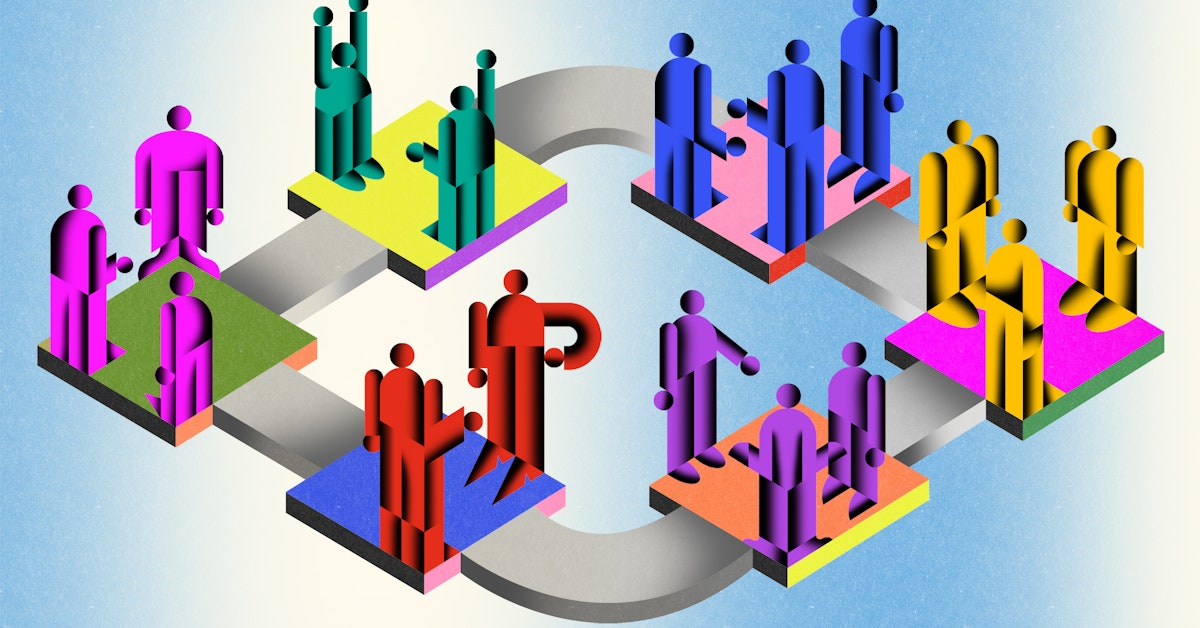
Renee DiResta’s analysis of the evolving mediascape sheds light on the "Great Decentralization," a phenomenon driven by user dissatisfaction with content moderation policies on centralized platforms. This migration to alternative platforms, often based on ideological alignment, has transformed the social media landscape into a digital version of federalism. Users are increasingly seeking out online communities that reflect their own values and norms, further fragmenting the digital sphere. While this decentralized approach offers greater control and autonomy to individual users, it also raises concerns about the potential for increased polarization and the erosion of shared spaces for dialogue and compromise.
Digital Federalism: Community Gardens and the Challenges of Decentralized Governance
DiResta likens the shift to decentralized social media to "community gardens," each with its own distinct character and rules. However, this digital federalism comes with inherent challenges. The absence of centralized governance makes it difficult to address systemic issues such as hate speech or the spread of harmful content. This lack of consistent enforcement mechanisms raises questions about the potential for these decentralized platforms to become havens for extremist ideologies or misinformation campaigns. The very structure that empowers individual communities also creates vulnerabilities to manipulation and abuse, potentially exacerbating societal divisions.
The Need for Countervailing Platforms and a Bridge to Consensual Truth
Addressing the challenges posed by the digital media ecosystem requires a multifaceted approach. Biden’s "tech-industrial complex" encompasses not only the dominant platforms but also the vast network of decentralized online communities. While dismantling the distributed nature of social networks is unrealistic, the focus should be on fostering spaces for constructive dialogue and informed deliberation across these fragmented communities. This necessitates the development of impartial, countervailing online platforms commensurate with political jurisdictions. These platforms would serve as bridges for competing narratives to engage in open and transparent discourse, fostering a more robust and resilient public sphere.
Strengthening Democratic Institutions in the Age of Distributed Information
The rise of social networks has profoundly impacted the dynamics of political participation, challenging the traditional model of representative government. To navigate this evolving landscape, democratic institutions must adapt and develop new mechanisms for engaging with a more empowered and distributed citizenry. Just as republics have historically implemented checks and balances to prevent the concentration of power, similar measures are needed to address the challenges posed by the current information ecosystem. Fostering countervailing platforms and mechanisms for informed public deliberation are crucial steps towards strengthening democratic institutions and ensuring their continued relevance in the age of distributed information. These new mediating institutions are essential to complementing and compensating for the waning legitimacy of representative government, bridging the gap between citizens and their political systems in a world increasingly shaped by digital forces.