


The Crucial Role of Historical Knowledge in Combating Online Misinformation
In today’s digital age, the ability to discern fact from fiction online is paramount. The proliferation of misinformation poses a significant challenge to informed decision-making and democratic discourse. While the call for enhanced critical thinking skills in education has been a recurring theme, its practical application, particularly in the context of combating online misinformation, requires a nuanced understanding of what critical thinking truly entails. Simply advocating for critical thinking without a structured approach is insufficient; a deep dive into cognitive science reveals that critical thinking is not a standalone skill but rather a context-specific form of reasoning dependent on domain-specific knowledge.
The misconception that critical thinking is a transferable, generalized skill is a major hurdle in effectively equipping students to navigate the information landscape. Research in cognitive science demonstrates that critical thinking is intrinsically linked to expertise within a specific field. Studies of chess players and physicists have shown that what appears as innate critical thinking abilities is actually a product of extensive deliberate practice and accumulated knowledge within their respective domains. This expertise allows them to recognize patterns, analyze information, and draw conclusions effectively within their area of specialization. However, this specialized critical thinking does not automatically translate to other fields. Therefore, expecting students to develop critical thinking in the abstract is unrealistic. Instead, fostering critical thinking requires providing students with the necessary knowledge base and opportunities to apply it within specific contexts.
Historical thinking, a specialized form of critical thinking within the realm of social studies, offers a valuable framework for navigating the complexities of online information. Historical thinking involves evaluating evidence, assessing source reliability, and constructing interpretations of the past. While students can relatively quickly grasp surface-level aspects of historical thinking, such as verifying dates and authorship, the deeper analytical skills require sustained effort and practice. However, even mastering historical thinking doesn’t automatically translate into proficiency in fact-checking online information, especially in areas outside of historical expertise. This highlights the critical importance of background knowledge in effectively applying critical thinking skills.
Background knowledge, particularly in history and civics, acts as a catalyst for critical thinking when encountering new information. Individuals with a robust understanding of history are better equipped to recognize inconsistencies and inaccuracies in online content, triggering their skepticism and prompting further investigation. For instance, historical misinformation often involves distorted or fabricated historical narratives. Individuals possessing accurate historical knowledge are more likely to identify such distortions, prompting them to scrutinize the source and seek corroborating evidence. This underscores the crucial role of social studies education in empowering students to critically evaluate information and resist manipulation.
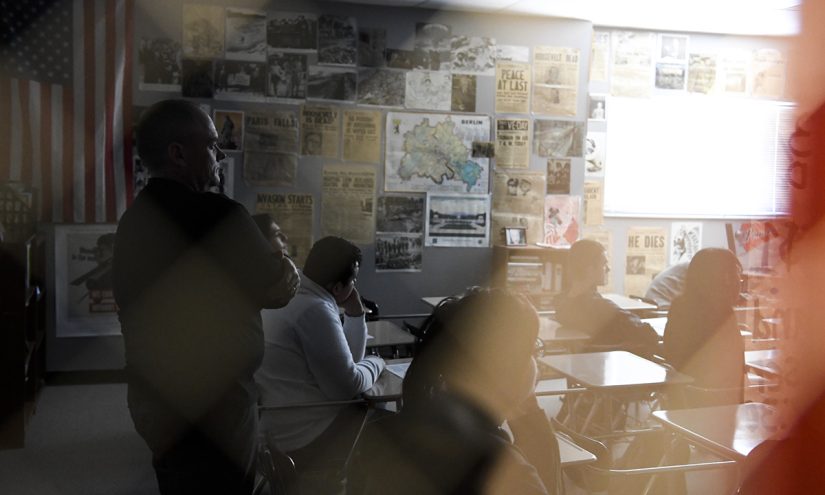
Strengthening social studies education is essential to fostering the critical thinking skills necessary to navigate the digital age. However, social studies education has faced various challenges, including reduced instructional time due to an emphasis on standardized testing in other subjects and politically motivated attacks on curriculum content. These challenges undermine the development of students’ historical knowledge and, consequently, their ability to engage in critical thinking about information they encounter online. The current climate of book bans and restrictions on discussions of social and political issues further exacerbates this problem.
The erosion of social studies education poses a significant threat to informed citizenry and democratic participation. By limiting access to historical knowledge and open discussions of critical issues, these attacks not only undermine students’ ability to critically evaluate information but also impede their ability to engage in informed civic discourse. Protecting and strengthening social studies education is not merely a matter of preserving historical understanding but also of safeguarding the future of informed decision-making and democratic engagement. Equipping students with the knowledge and skills to navigate the complex information landscape is essential for their development as informed, engaged citizens.