


Paragraph 1: The Context of Alarm and the Governor’s Rebuttal
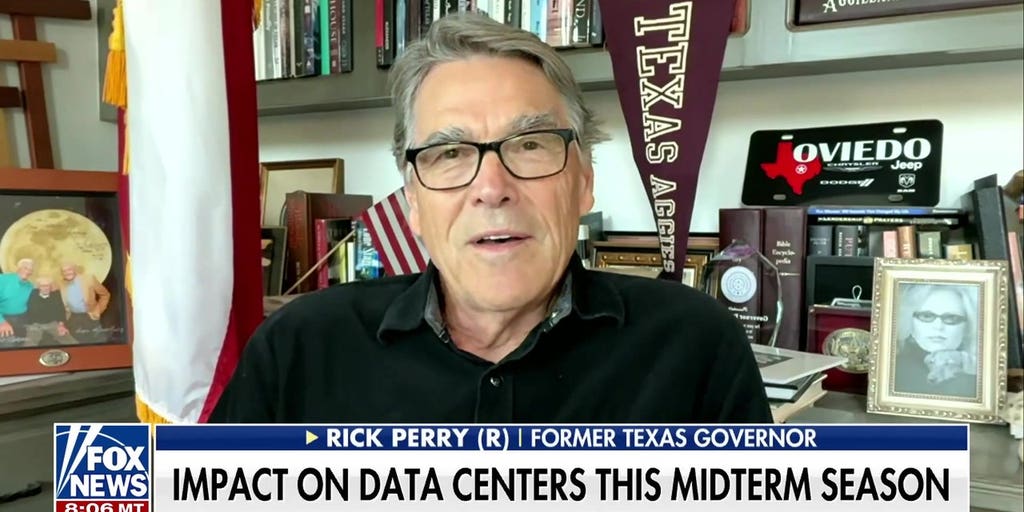
In a recent appearance and commentary highlighted by Fox News, former Texas Governor Rick Perry delivered a forceful rebuke to what he characterizes as a pervasive and dangerous wave of misinformation surrounding the rapid expansion of artificial intelligence (AI) data centers across the United States. As the nation grapples with the explosive growth of cloud computing, machine learning, and large language models, a narrative has taken hold in some political circles, environmental advocacy groups, and even segments of the utility industry that AI data centers are an existential threat to the nation’s power grid—a monolith of energy consumption that will inevitably trigger blackouts, skyrocket residential electricity bills, and force a catastrophic reversal toward fossil fuels. Perry, who served as the U.S. Secretary of Energy under President Donald Trump and has deep roots in Texas’s energy sector, dismissed this prevailing sentiment as a combination of political opportunism, sloppy journalism, and a fundamental lack of understanding regarding how modern power markets and technology infrastructure actually operate. He argues that the public is being deliberately misled by those who benefit from stoking fear, whether they are coalitions of utility companies seeking to secure massive rate increases to build unnecessary infrastructure, or progressive activists who view any large-scale industrial development as anathema to their climate goals. For Perry, the “misinformation” is not merely an academic error; it is a pressing national security concern that threatens to stifle American innovation at the precise moment when the United States is competing fiercely with China for global technological dominance. He frames the current debate not as a legitimate policy discussion about resource allocation, but as a battle between a future of abundant, reliable, and clean energy versus a past of scarcity, stagnation, and regulatory paralysis.
Paragraph 2: Debunking the “Energy Apocalypse” Narrative and the Real Data
At the heart of the so-called misinformation, Perry argues, is a distortion of the actual energy consumption figures projected for AI data centers. Critics frequently cite headline-grabbing reports suggesting that data centers could consume anywhere from 20% to 25% of all U.S. electricity by the end of the decade, painting a picture of a grid gasping for breath under the weight of server farms. Perry counters that these apocalyptic projections are largely extrapolations based on the least efficient, earliest-generation chip architectures and do not account for the exponential improvements in computational efficiency, cooling technology, and server utilization rates that are occurring in real-time. He points out that modern hyperscale data centers are being designed with liquid immersion cooling and cutting-edge energy management software that dramatically reduce power draw per unit of compute, making the “megawatt per square foot” metrics of yesteryear obsolete. Furthermore, he emphasizes that the pushback against AI infrastructure ignores the fact that the demand is not constant; a significant portion of AI training workloads is interruptible. This means that data centers can dynamically shift their power consumption to off-peak hours or curtail operations when the grid is stressed, effectively functioning as highly flexible “demand response” resources rather than static, intractable loads. Perry contends that the media and political opposition are engaging in a form of motivated reasoning, ignoring data from the North American Electric Reliability Corporation (NERC) and the U.S. Energy Information Administration (EIA) which, while showing load growth, simultaneously forecast substantial additions of baseload power, grid-scale batteries, and transmission capacity that will outpace the incremental demand. He argues that the comparison to the industrial revolution or the post-World War II suburban boom, which saw electrification rise by orders of magnitude as new homes, appliances, and factories were added, is apt—society adapted and thrived then, and it can and will adapt now, provided policymakers do not capsize the market with panic-based regulations.
Paragraph 3: The Pivotal Role of Natural Gas and Pragmatic Environmentalism
A crucial element of the misinformation Perry decries is the false dichotomy presented to the public: that we must either build AI data centers and sacrifice our climate commitments, or restrict AI growth to protect the environment. Perry asserts that this is a manufactured conflict. Drawing on his legacy as an advocate for the “all of the above” energy strategy in Texas, he argues that AI data centers are, in fact, the economic engine that will actually finance the transition to a cleaner grid. They provide the significant capital investment and stable base load revenue required to build out next-generation nuclear reactors, such as small modular reactors (SMRs), which are currently too expensive to deploy without guaranteed offtakers. Moreover, he highlights the indispensable role of American natural gas—a fuel source he has long championed—in this transition. Natural gas is the bridge that ensures grid reliability when the wind stops blowing and the sun doesn’t shine, and modern gas turbines have dramatically lowered their emission profiles. Perry suggests that the misinformation narrative deliberately vilifies natural gas, branding any new pipeline or gas plant as a “carbon bomb,” even though the increased deployment of gas to support data centers often displaces far more polluting coal generation elsewhere in the interconnected grid. He demands a pragmatic accounting of the lifecycle emissions, noting that a single AI-driven discovery in materials science, battery chemistry, or climate modeling could produce carbon reductions far exceeding the residual emissions from the power plants that fuel them. To those who say “we cannot afford to power this,” Perry replies that the question is inverted: we cannot afford not to. Without the intellectual and computational horsepower of AI, America will fail to solve its most complex energy and environmental challenges. The misinformation, therefore, is not only economically damaging; it is environmentally counterproductive, as it delays the very technological breakthroughs required to truly decarbonize heavy industry and agriculture.
Paragraph 4: Grid Reliability, The Texas Example, and Scapegoating
Perry, who famously dealt with the impacts of Winter Storm Uri during his tenure, understands grid failure acutely, but he is quick to point out that the blackout in Texas was caused by a catastrophic failure of winterization equipment at natural gas facilities and a failure in system governance, not by data centers. He asserts that the current hysteria surrounding AI and the grid is an opportunistic scapegoating campaign by critics who would rather blame Silicon Valley than examine the years of underinvestment in transmission infrastructure and baseload generation that occurred long before ChatGPT appeared on the scene. He suggests that the real issue is a regulatory environment that takes too long to permit new transmission lines and substations—often taking a decade or more—while the private sector is expected to innovate in a two-year cycle. Rather than imposing punitive tariffs on data center electricity purchase agreements or requiring them to subsidize utility rate bases, Perry argues that the government should be streamlining the permitting process and encouraging the formation of Independent System Operators (ISOs) to effectively manage the new load. He points to Texas’s ERCOT as a testament to the power of deregulated innovation; despite its winter fragility, the Texas model has attracted billions in tech investment because of its low taxes and streamlined processes. Perry emphasizes that data center operators and utility regulators are not adversaries; they are partners. These tech giants are already signing PPA (Power Purchase Agreements) for new solar, wind, and geothermal projects, and are investing in on-site generation to avoid burdening the local grid. The narrative that these companies are stealing power away from residential homes is categorically false; they are creating a new cost-sharing structure that lowers the per-unit cost of power for all consumers by maximizing the efficiency of the utility assets.
Paragraph 5: National Security, The AI Arms Race, and The Cost of Delay
Beyond the economic and environmental arguments, Perry frames the misinformation campaign as a direct threat to U.S. national security. He draws a clear line between American computational superiority and military superiority. Modern warfare—including hypersonic missile defense, electronic warfare, autonomous drone operations, and cryptography—is utterly dependent on massive, low-latency data processing capabilities. If the United States imposes needless restrictions or delays on data center construction due to unfounded public fears, it effectively hands the strategic advantage to the People’s Republic of China. Perry notes that China is building data centers at a ferocious pace, unconstrained by the environmental review processes or local opposition that hamstring projects in California or New York. He warns that every year of delay in the United States allows Beijing to deepen its lead in algorithms and training datasets, which are the “new oil” of the 21st century. He criticizes the “not in my backyard” (NIMBY) movements and the elected officials who cater to them, suggesting that they are unknowingly serving the geopolitical interests of America’s adversaries. Furthermore, Perry argues that AI itself is a critical tool for grid security. He points to the recent use of AI optimization models by utility operators to predict solar intermittency, detect cyber threats, and reroute power flow instantaneously during emerging emergencies. By hampering the buildout of these centers, the “misinformation” is undermining the very tools that could have prevented recent grid disturbances. He calls on conservative state legislatures and the federal government to view data centers as critical infrastructure worthy of the same expedited approval processes as military installations and petrochemical plants, and to preempt local ordinances that discriminate against these facilities based on false energy consumption ratios.
Paragraph 6: Conclusion – A Call for Prudent, Not Panicked, Modernization
In concluding his remarks, Rick Perry issues a passionate plea for the American public and its policymakers to reject the alarmist narrative and adopt a posture of informed optimism. He acknowledges that the challenge of upgrading the grid to handle new loads is massive and will not be solved overnight, but he insists that the solution lies in more energy, not less—more drilling, more permitting, more nuclear, more grid modernization, and more free-market ingenuity. He cautions that the “misinformation” campaigns, which often present simplistic solutions like “ban new gas hookups” or “force all data centers to be 100% renewables,” are a recipe for crippling instability. He invites skeptics to visit a modern data center to see the incredible efficiency and to witness the turboexpanders and fuel cells being deployed on-site to achieve 99.999% reliability. The former Governor emphasizes that the most profound misinformation is the claim that we have to choose between the digital economy and a livable climate; the truth is that AI is the most powerful tool humanity has ever created to solve complex systems problems, and starving it for energy is akin to refusing fuel to a firefighter. He urges utility commissions to embrace performance-based ratemaking that rewards providers for connecting large loads quickly, rather than the traditional ‘cost-of-service’ model that penalizes speed. Ultimately, Perry’s message is one of resilience and American exceptionalism: future generations will look back on this era not as a time when the lights nearly went out, but as the dawn of a new industrial age where unlimited computing power met abundant, cost-effective energy. To allow misinformation to stop this momentum would be a tragic, self-inflicted wound. He concludes by stating that America does not shrink from a challenge, and the challenge of powering AI is just the next chapter in the nation’s long history of bold infrastructure triumphs—from the transcontinental railroad to the interstate highway system—and it is a chapter we must write ourselves.