


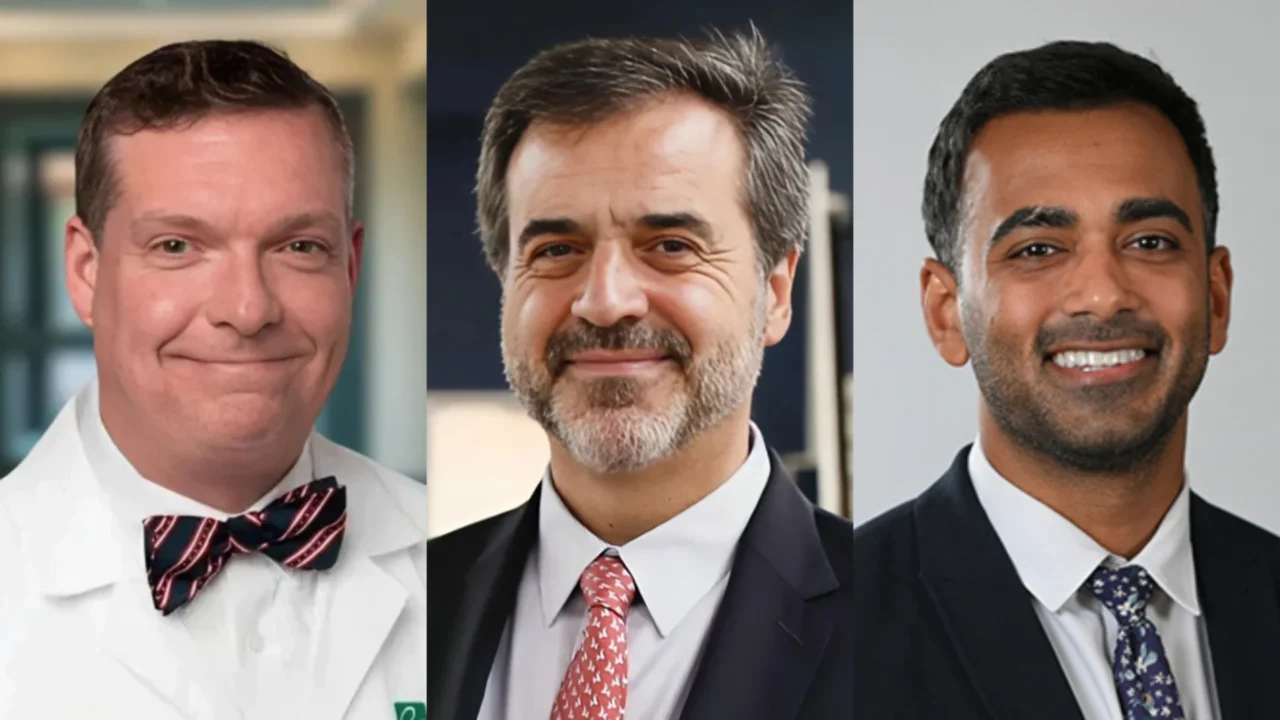
Episode 116 of the AI and Healthcare by TensorBlack podcast emerges as a beacon of possibility for a generation of physicians intimidated by the rapid digitization of medicine. Hosted by hosts Douglas Flora and Sanjay Juneja, the episode pivots to the extraordinary story of Francisco J. Esteva, a distinguished breast cancer specialist and researcher boasting over 200 published papers. The episode’s core narrative begins with a humble, unglamorous image: a laptop camera, a home office, and no script. Yet, this amateur beginning has blossomed into a formidable digital footprint, with individual videos amassing up to 150,000 views. The episode masterfully unpacks how this seasoned oncologist built an entire second career as a digital communicator, directly addressing the patients who need clarity the most. What makes this story so compelling is not that it is a tale of a tech prodigy, but that it is a testament to the late-adopter’s resilience, proving that the intersection of clinical wisdom and generative AI is accessible to anyone willing to learn, regardless of age or prior technical fluency improbable beginning. The episode sets the stage by illustrating the vast chasm between cutting-edge oncology and the everyday patient’s comprehension, and establishes Dr. Esteva as the unlikely bridge being built across that gap.
At the heart of Dr. Esteva’s transformation lies a profound realization rooted in his decades of clinical practice, having spent years speaking in the esoteric language of oncology to peers, residents, and academic audiences. He identified a critical, systemic failure in medical education: it speaks exclusively to other doctors, not to the people living with the diagnosis. Esteva recognized that patients, sitting in his office, were leaving with pamphlets they didn’t understand and prescriptions they feared to take. Driven by this intrinsic need for clarity, rather than vanity or profit motives, he intentionally pivoted his creative energy toward the bedside, translating complex molecular biology, treatment side effects, and clinical trial data into digestible, compassionate video content. This is the foundational premise of the episode, emphasizing that the “gap” isn’t a lack of research but a lack of translation. By seeing this gap, Esteva started to film himself at sixty, understanding that while his hands may have been steady in the operating room, they were now navigating the equally delicate task of building a connection through a screen. The hosts highlight that this motivation transcends standard medical marketing; it’s about reclaiming the humanistic core of medicine and ensuring that knowledge, which is currently locked behind paywalls and academic jargon, becomes democratized and accessible to the very individuals whose lives depend on it.
The technical journey undertaken by Dr. Esteva is perhaps the most instructive segment of the episode for the listener, as it dismantles the myth that modern content creation requires a team of videographers and editors. With absolutely no technical background, Esteva developed a self-taught workflow that leverages generative AI tools to handle the tedious chores of production. He uses AI scripting software to outline his talking pointscars, eliminating the need for cumbersome teleprompters and writer’s block, allowing his clinical expertise to flow naturally. He automated his editing workflow, employing AI-driven video editors that can cut silences, add captions, and stitch together B-roll, a task that would normally consume hours of precious time. Perhaps most impressively, he constructed a proprietary system tailored to his channel that utilizes AI to triage the constant influx of YouTube comments, categorizing them by urgency and topic, ensuring that dangerous medical misinformation doesn’t go unanswered and that patient queries get routed to appropriate resources. This isn’t just about saving time; it’s about safety. It demonstrates how AI can act as a vigilant digital clinic aide, managing the influx of patient dialogue at scale, and protecting the public from predatory wellness influencers. The hosts delve into this practical “tech stack” to prove that the barrier to entry is low, and that a smartphone paired with smart language models can amplify a doctor’s voice exponentially.
However, the conversation remarkably steers away from a simple “how-to” and into the more complex territory of physician burnout and the economics of time. The hosts, themselves physicians, delve into the paradox of a workforce already stretched thin by administrative burdens and electronic health record fatigue. Why would a 60-year-old specialist, at the peak of his academic career, voluntarily take on the workload of a YouTuber? The answer, as explored by hosts Flora and Juneja, lies in the concept of returns on investment—but not in terms of ad revenue or sponsorship. The episode argues that the time invested upfront in learning these AI tools actually pays back in hours reclaimed later. By automating the editing and scripting, Dr. Esteva manages to create high-volume, high-impact educational content in a fraction of the time it used to take. This reclaimed time is funneled back into the parts of medicine that drew these physicians to the profession in the first place: spending longer with patients during consultations, participating in research, and, crucially, spending time with family. The episode frames this as a paradigm shift in productivity; rather than AI replacing the physician, AI acts as an extension of the physician’s intent, absorbing the repetitive digital labor so that the human can focus on empathy, diagnosis, and treatment. It challenges the prevailing narrative of burnout by demonstrating that a small, intentional investment in learning these digital skills yields exponential returns in personal time and professional satisfaction.
The implications of this digital presence extend far beyond the individual physician, touching upon the broader crisis of medical misinformation that plagues the internet. Esteva’s strategy involves a clever, AI-assisted system designed to triage the YouTube comments section—a digital wild west often rife with pseudoscience, miracle cures, and dangerous anecdotes. Instead of abandoning the comments, he uses AI to sort through the deluge, identifying critical questions that need immediate answers while filtering out toxic or false narratives. This ensures that misinformation does not go unanswered in his corner of the web. His successful videos, some reaching 150,000 views, represent a massive intervention in public health, offering evidence-based content that ranks above the noise on search engines (partly through his growing subscriber base). The hosts, Douglas Flora and Sanjay Juneja, contextualize this effort alongside existing contributions, noting Dr. Esteva’s published work and his presence on platforms like OncoDaily, positioning him not as a YouTuber dabbling in oncology, but as a senior oncologist who has added a vital new dimension to his professional communication arsenal.
Stepping back from the clinical specifics, the episode transitions to a critical, systemic discussion about physician burnout—a rampant issue in modern healthcare. The hosts argue that for many physicians, the thought of learning new digital skills feels like yet another commitment in an already over-saturated schedule. However, the narrative of Dr. Esteva flips this calculus with economics and psychology. Initially, learning the AI tools felt like a significant time investment in his early 60s, but the ROI is clear. By automating the editing, scripting, and management of content, Esteva saves hours that would otherwise be lost to repetitive tasks, effectively banking those hours for family life, patient interactions at the clinic, or simply resting. The videos themselves function as “evergreen” clinical instructions, allowing him to point a newly diagnosed patient to a video explaining a specific subtype of breast cancer rather than spending fifteen rushed minutes in an appointment repeating the same facts. This reclaims the time spent in the office for nuanced, emotional conversations. The episode frames this as a radical reclamation of purpose, suggesting that a little investment in learning these tools pays back in dividends of reclaimed hours for the parts of medicine that drew doctors to the field in the first place, combatting the fatigue and cynicism that drives many to early retirement or administrative exits.
In its concluding segments, Episode 116 solidifies into a powerful call to action for all medical professionals, not just the seasoned veterans. The hosts encourage listeners to view AI not as a threat to the medical humanities, but as a force multiplier for empathy. By handling the grunt work of editing, scripting, and community management, AI frees the physician to focus on the intersection of science and storytelling. For Dr. Esteva, learning these tools at 60 was not an act of desperation to stay relevant, but an act of radical generativity—using one’s accumulated wisdom to cast a net of knowledge far beyond the exam room walls. The conversation challenges the ageist assumptions embedded in the tech sector, proving that curiosity and a willingness to adapt are the true prerequisites for digital literacy Thoroughly analyzed, the success of Esteva is proof that the “silver tsunami” of retiring physicians does not have to mean a loss of expertise. Instead, they can become the most trusted vanguard of online health communicationcars, armed with the context that younger creators often lack一張. Ultimately, the episode posits that the future of medicine is not just in the operating room or the lab, but in the living room, where a doctor connects with a patient through a screen, and that AI is the liberator enabling this connection rather than a machine replacing the doctor.
As the episode concludes, the hosts synthesize the key takeaways for a medical audience. They emphasize that Dr. Esteva’s story is not an anomaly but a replicable template for any clinician, regardless of age or technical aptitudecars. The underlying message is one of purposeful incrementalism: you don’t need to master complex coding, only to understand how to prompt a language model for a script, or use an auto-editor to compress a 20-minute monologue into a 5-minute digestible clip. The episode serves as a powerful counter-narrative to the notion that AI is a threat to medical jobs, instead framing it as a liberating force that allows for higher-level human connection. The session concludes with a holistic vision of the future of medical communication—one where doctors are creators, patients are active participants, and AI acts as the sentinel guarding against misinformation while streamlining workflow. For any physician over 40 feeling left behind by the digital revolution, or anyone in healthcare who feels paralyzed by the pace of change, this episode offers a clear, actionable blueprint for leverage. It ultimately leaves the listener with a profound message: the skills of empathy and science never expire, and with the right digital tools, a seasoned expert can discover a second, equally impactful career, ensuring the patient is always heard, understood, and informed.