









Meta Agrees to $18 Billion Settlement Over Teen Harm on Social Media
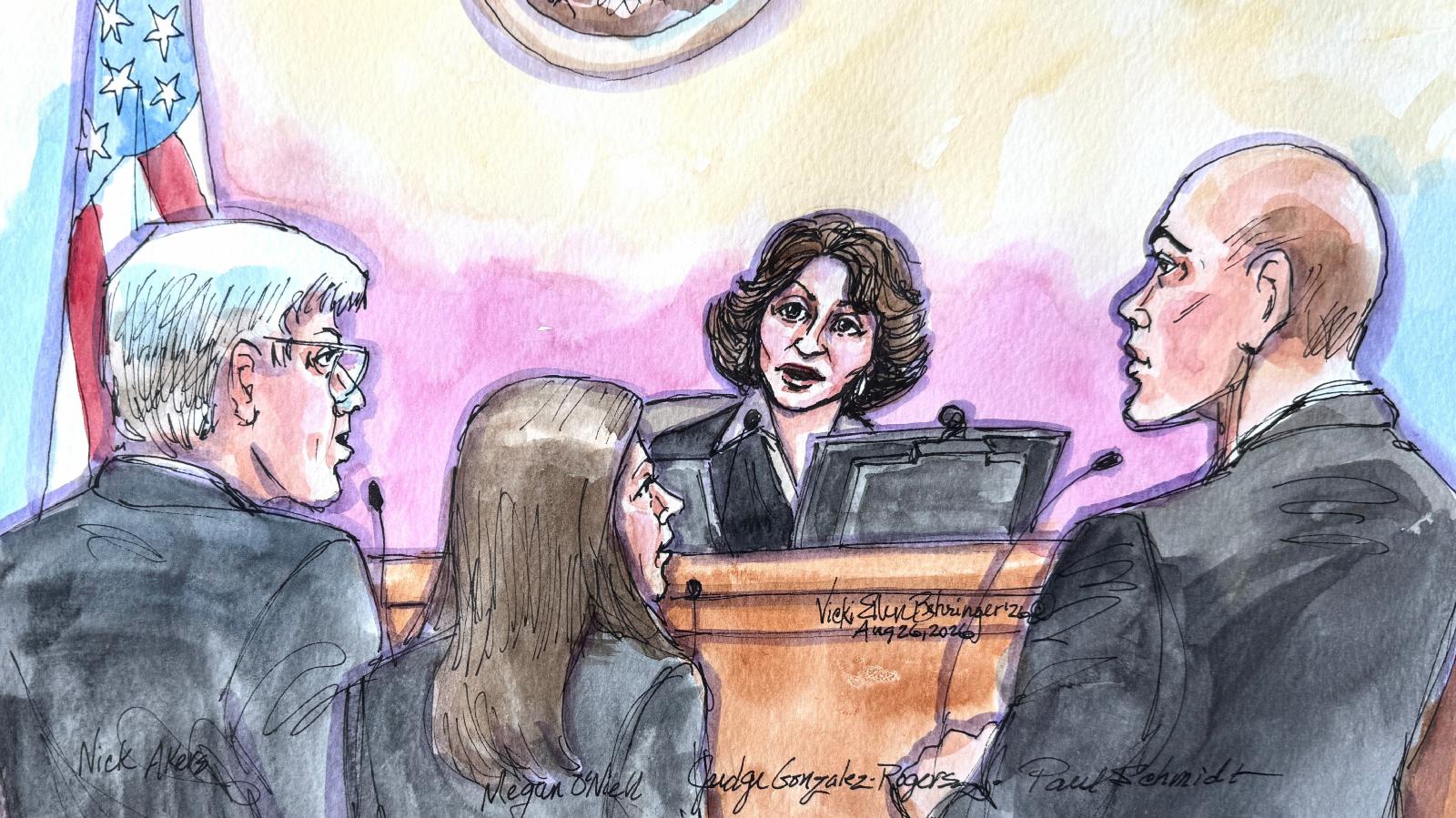
Meta, the parent company of Facebook, Instagram, WhatsApp, Messenger and Threads, agreed on Aug. 26 to pay approximately $18 billion to settle a landmark federal lawsuit filed by a bipartisan coalition of state attorneys general, abruptly ending a trial that had begun just days earlier and had threatened to reveal the company’s internal knowledge of how its platforms affect teenage mental health. The case, brought in the U.S. District Court for the Northern District of California, alleged that Meta misrepresented the extent to which its apps harm children and adolescents, designing addictive features and collecting personal data from users as young as 13 in ways that violated federal law. Attorneys general from across the country said that Meta’s internal research showed that executives were well aware of risks such as increased anxiety, depression, body image issues and suicidal ideation associated with social media use, but that the company continued to downplay or deny those risks publicly. The trial opened Aug. 18 in Oakland, and the settlement was announced eight days later. Under the proposed consent judgment, Meta committed to establishing daily time limits and blocks on nighttime use for teenage users across its platforms. It also committed to enhanced age assurance measures to prevent children from accessing the platform or age restricted content, in addition to new tools to help parents and guardians protect their children online. The company did not admit wrongdoing and has consistently argued that “social media addiction” is not an officially recognized psychiatric condition. Meta’s attorneys contended that the concept was too vague to form the basis of a fraud claim and that the company provided ample safety resources. Despite this defense, the corporation agreed to broad and enforceable operational changes, signaling that the evidence presented in the early days of the trial made continuing litigation increasingly risky.
The settlement comprises two separate financial agreements: $17.1 billion to be shared by 47 states, the District of Columbia, and several U.S. territories, and $1 billion paid separately to Texas, bringing the total to approximately $18 billion. Payments will be spread over ten years, and the money will be dedicated to youth online safety initiatives chosen by each state, including mental health services, media literacy programs and educational resources for families. The settlement amount, while enormous in absolute terms, is far below the $200 billion in damages that the attorneys general estimated at the start of the trial. Legal analysts immediately began to weigh whether the agreement represents a true victory. Mary Graw Leary, a professor of law at The Catholic University of America Columbus School of Law and director of that law school’s modern prosecution program, told OSV News that the settlement has the potential to be significant because it is now one of several cases in which Meta has been accused of designing harmful products, misleading the public about the harm, and misleading the public about safety, and in each instance the company either lost or settled. In her view, that pattern suggests that Meta is acutely aware that its internal documents reveal a real risk that its actual motives would emerge in court. Graw Leary said the fact that Meta chose to settle after a few days of trial, when some internal evidence had already been displayed to the jury, indicates that establishing a defense would be difficult. The settlement is also notable because it imposes conduct remedies rather than only monetary penalties, and those remedies may be viewed as a template for future litigation against other social media platforms. However, because the settlement is a consent judgment between government enforcers and one company, it does not resolve the fundamental question of whether social media companies are generally liable for the mental health damage they may cause.
Graw Leary, however, was careful not to overstate the settlement’s impact. “I would not think this settlement amount alone will severely impact Meta,” she said. “Moreover, it is significantly less than the $200 billion that the AGs estimated would be the damages at the beginning of trial.” She said the agreement “may be significant” if Meta actually does what the settlement requires. But she noted that Meta’s compliance track record is poor. “This is a company which the court found at the summary judgment stage already collected private data from children under 13, which has been prohibited by law for many years. So, the track record of compliance is not there,” she said. She added that uncertainty over compliance can be litigated for years: “There will no doubt be disagreements as to whether they are complying — and such disagreements could be bogged down in the courts.” More fundamentally, Graw Leary observed that many of the settlement’s provisions are not highly burdensome to a company with Meta’s resources. She called the settlement a business decision: “It will cost them more to finish the trial and lose than to pay just over $1 billion every year for 10 years. Moreover, they will no doubt use this settlement to further lobby against any meaningful regulation that Congress is contemplating.” She argued that only comprehensive federal legislation can fundamentally alter social media design. A settlement negotiated behind closed doors, even one supervised by a court, cannot replace lawmaking. “If the parties disagree about whether Meta is following the settlement terms, it will be a long road to litigate that. But if there was a federal law that precludes them from having certain design features, that would be much more powerful.” Graw Leary’s comments highlight a recurring tension in American tech policy: even large monetary settlements leave in place the underlying business model that continues to monetize attention and collect exhaustive data about users. Only laws, she argues, can set clear boundaries for design and data collection before a product is released to a vulnerable audience. Until then, enforcers will continue to play catch-up.
Agreeing that the settlement is a meaningful first step but not enough, Sister Helena Burns, a member of the Daughters of St. Paul who holds a graduate degree in media literacy education and studied screenwriting at UCLA, expressed both gratitude and concern. Burns, who is active on the social platform X and frequently writes about media issues, told OSV News she was “thrilled that this issue is being taken so seriously, and that the funds are going to truly pertinent programs, including media literacy for youth and practical alternatives to engaging with a screen 24/7.” But she added: “However, I wish there were more programs and incentives for parents to learn skills and strategies for parenting the media.” Her comment points to a dimension of the settlement often overlooked in legal analysis: the needs of parents who are trying to make formative decisions about technology in a culture saturated by screens. The financial allocation to media literacy programs is useful, but many parents themselves lack even basic understanding of privacy settings, algorithmic feeds, and the psychological mechanics of notifications and variable rewards. They also face social pressure from other parents and from schools that assume access to smartphones and apps is necessary for normal adolescence. Burns’s call for parent-focused programs reflects a growing recognition in public health and education that parental monitoring is one of the strongest protective factors against technology harm, but that monitoring alone is no substitute for structural design changes. She emphasized that children need media literacy as much as they need restrictions, because they will eventually encounter social media as adults and need the critical thinking skills to navigate it independently. The settlement’s provisions for media literacy and alternative activities, she said, are a positive start, but the adults who shape children’s environments must also be equipped to guide them.
Clare Morell, a fellow at the Ethics and Public Policy Center in Washington and author of “The Tech Exit: A Practical Guide to Freeing Kids and Teens from Smartphones,” described the agreement as “a monumental step forward in changing the social media industry to protect our children.” In comments to OSV News, Morell said the settlement “gets rid of many of the most dangerous and addictive features of social media platforms, and requires robust age-verification to keep underage minors off the platform and ensure that the new automatic safeguard features apply to all minors under 18.” But she immediately identified several serious shortcomings. First, the settlement does nothing to change the minimum age for social media in the United States, which remains 13. Australia and the United Kingdom, by contrast, have been raising the age to 16, responding to evidence that early adolescents are especially vulnerable to the social-comparison and reward mechanisms in social apps. Second, Morell said, the settlement does nothing to alter the algorithms that determine what content shows up in a user’s feed. Those algorithms, optimized to maximize time on site, can serve extreme, sensationalist, or harmful content to minors and can shape the worldview of a teenager in ways that exceed traditional parental oversight. Third, parents are not given control over the algorithm; they might be able to limit total time, but they cannot decide what order a child sees posts, whether certain topics are demoted, or whether a child can switch from an algorithmic feed to a chronological one. Fourth, even the new two-hour daily limit is very high for developing brains. As Morell put it, “Even the new two-hour-daily time limit set for Meta’s apps can still be incredibly addicting for young brains; because in that two hours, a minor is getting constant hits of dopamine to his or her brain.” For a 13-year-old, two hours of social media a day represents a substantial portion of after-school time and can displace sleep, exercise, face-to-face socializing, homework and unstructured play. Morell also noted that the settlement does not require independent researchers to verify whether the company’s compliance is real or merely cosmetic. The problem, she argued, is that a settlement negotiated with one company, no matter how large, leaves the surrounding attention economy unchanged. Other platforms remain free to use the same techniques, and Meta’s legal costs become simply the price of maintaining its core business model.
Morell concluded her assessment with a direct warning to parents: “The best thing to do is still to keep children and teens off social media entirely. Yes, this settlement is a huge change for the industry in the right direction — but it is not a silver bullet.” Her words were echoed by many public health experts who have urged parents to delay giving smartphones and social media accounts to children until at least 16. The settlement does not change the age limit, does not require schools to implement phone-free environments, does not give federal regulators authority over social media design, and does not create a private right of action for families harmed by Meta’s products. It also does not resolve the broader legal debate about platform immunity, although by focusing on the platform’s own design conduct rather than user-generated content, the attorneys general have successfully circumvented many of the defenses that tech companies have used in the past. That legal innovation could influence future cases against other apps facing scrutiny for their effects on minors. It is also likely to fuel ongoing efforts by state legislatures and Congress to pass laws requiring age verification, parental consent and independent audits for apps used by minors. Such legislation, however, faces strong opposition from the technology industry, and Meta may use the settlement as a demonstration that self-regulation and state enforcement are more appropriate than federal mandates. In the meantime, the settlement’s funds will begin flowing to states over the next ten years. Those funds will support programs that have long been underfunded, including school-based mental health care, media literacy instruction and community activities intended to give young people alternatives to online life. With proper implementation, the funds could make a real difference in some communities. But as the various experts speaking with OSV News made clear, the social and psychological factors driving youth mental-health problems are broader than any one company’s algorithms. They include the spread of smartphones into every classroom, the weakening of public spaces for teenagers, and a culture that privileges constant digital connection over rest and reflection. The settlement is thus best understood as one chapter in a much longer story. It acknowledges that social media companies have an enormous influence over the lives of minors and that they must bear some responsibility for the harm connected to that influence. Whether that acknowledgement produces lasting structural change will depend not only on the judge who approves the consent judgment, but on parents, teachers, lawmakers and the young people themselves.


