








Here is a six-paragraph news article summarizing the new Greenpeace Ukraine investigation into deliberate Russian sabotage of the Zaporizhzhia Nuclear Power Plant’s power supply.
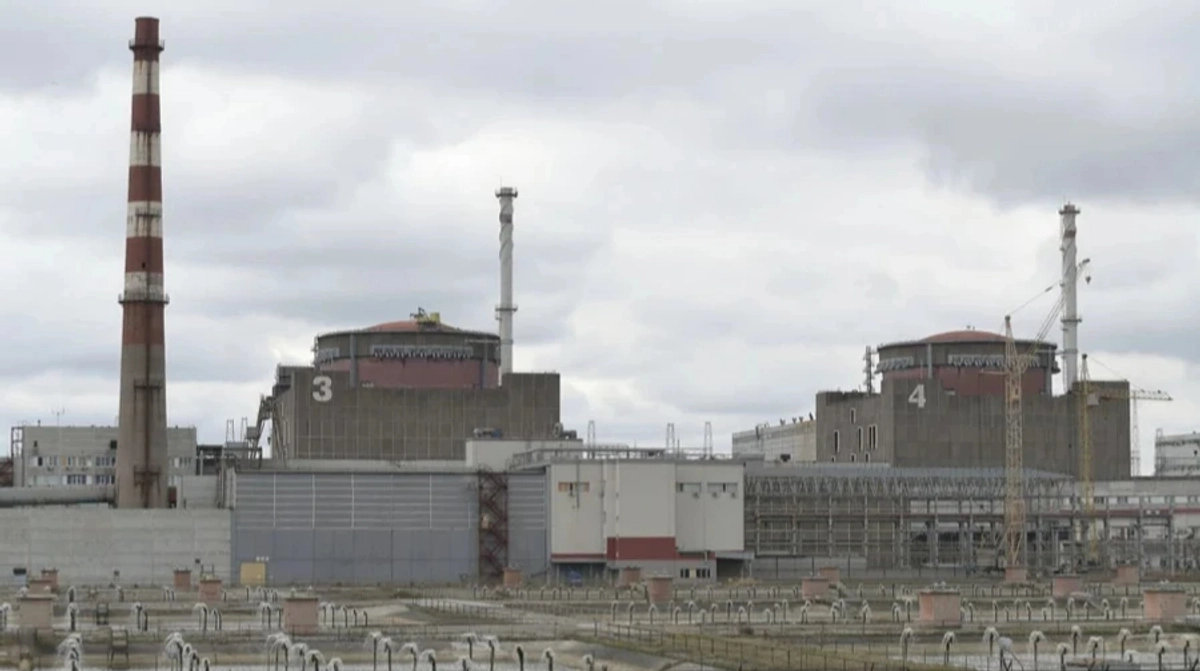
A new investigation by Greenpeace Ukraine and the London-based intelligence analysis firm McKenzie Intelligence Services (MIS) has concluded that Russia is deliberately sabotaging the power supply lines at the occupied Zaporizhzhia Nuclear Power Plant (ZNPP), while simultaneously running a disinformation campaign to blame Ukraine for the resulting nuclear safety crisis. The analysis, based on high-resolution satellite imagery and an examination of recent incidents, found that more than half of all total losses of off-site power at the plant since 2022 have occurred in just the last seven months. According to the report, this sharp increase is not accidental, but the result of Russian military attacks on Ukraine’s electricity grid and direct sabotage at the ZNPP and its associated switchyards. The investigation also found no evidence to support Russian claims that Ukrainian artillery or drones were responsible for damage to critical power infrastructure. The plant, located near Enerhodar in southern Ukraine, has been under Russian military occupation since March 2022. It is one of the largest nuclear power stations in Europe, and its safety systems depend entirely on a reliable supply of off-site electricity to keep reactor cores and spent fuel pools cool. With both external power lines now compromised, the plant is increasingly being forced to rely on emergency diesel generators, creating what investigators describe as an unacceptably high risk of a serious radiological accident.
The investigation specifically focused on two Russian claims about attacks on the Ferrosplavna 330 kV switchyard near the Zaporizhzhia Thermal Power Plant. Russian officials alleged that a Ukrainian artillery strike on 10 February 2026 caused severe damage to the switchyard, and later claimed that an attack by more than 20 Ukrainian UAVs on 4 June 2026 further destroyed critical equipment. The Ferrosplavna line is one of only two external power transmission lines that can supply electricity to the ZNPP, making it a vital part of the plant’s nuclear safety architecture. If Ukraine had deliberately attacked that infrastructure, it would indeed have been an irresponsible and reckless act. However, when MIS analysts examined high-resolution satellite imagery taken before and after the alleged attacks, they found no evidence to support the Russian narrative. The damage to the switchyard was confirmed to exist, but the imagery showed that the damage attributed to the alleged 4 June drone attack was already present before that date. The report also found no evidence of a mass drone strike involving more than 20 UAVs, and no impact patterns consistent with Ukrainian artillery fire on 10 February. In other words, the physical damage may be real, but Russia has presented no credible proof that Ukrainian forces caused it. Meanwhile, the other external power line, the Dniprovska 750 kV line, has been out of service since 22 May 2026, after Russian military attacks severely damaged the Dniprovska substation, located approximately 100 kilometres north of the plant.
The stakes of these repeated power failures cannot be overstated. The Zaporizhzhia plant has six reactor units and six spent fuel pools containing hundreds of tonnes of highly radioactive nuclear fuel. Nuclear fuel produces intense heat long after reactors are shut down, especially in spent fuel pools, where assemblies remain dangerously hot for years. To prevent overheating, fuel melting, and the release of radioactive material, large volumes of water must be circulated through the reactor cores and spent fuel pools continuously. That cooling depends on electric pumps, and those pumps normally rely on off-site power from the grid. When off-site power is lost, the plant must switch to emergency diesel generators to maintain essential safety functions. Since Russian troops seized the plant in 2022, the ZNPP has experienced 26 complete losses of off-site power. Fourteen of those cases have occurred since February 2026, meaning the plant has been thrown onto emergency backup power at an alarming rate over recent months. Every complete loss of off-site power forces diesel generators to run for extended periods, consuming fuel, wearing out mechanical components, and increasing the chance of a cascading failure. Diesel generators are not designed for permanent operation; they are meant as a temporary bridge to restore normal power. In an occupied facility with limited maintenance and constant military pressure, repeated reliance on backup systems creates an increasingly fragile and dangerous situation.
The Greenpeace Ukraine analysis explicitly exposes a Russian disinformation campaign aimed at shifting responsibility for the nuclear safety threat. Russian officials have tried to frame Ukraine as the aggressor, claiming that Ukrainian artillery and drones have targeted the very infrastructure that keeps the plant safe. The new satellite evidence directly contradicts those claims, showing that the damage to the Ferrosplavna switchyard existed before the alleged drone attack and that no mass Ukrainian UAV incursion was detected. According to Shaun Burnie, nuclear specialist at Greenpeace Ukraine, “Repeated cases of off-site power loss at the ZNPP are the result of Russian military attacks on Ukraine’s energy grid and sabotage at the ZNPP and its associated open switchyards.” That quote underscores the central conclusion of the investigation: the threat is being created by Moscow, not by Kyiv. By deliberately damaging switchyards and transmission lines and then accusing Ukraine of the attacks, Russia is engaging in a form of nuclear blackmail. It is also attempting to undermine the credibility of Ukraine’s own defensive operations, creating a false narrative that could justify further escalation. The report warns that this combination of physical sabotage and information warfare is itself a serious threat to nuclear safety because it prevents objective monitoring, delays international response, and allows the occupying force to continue endangering the plant under a cover of lies.
These findings come against the backdrop of a broader Russian campaign against Ukraine’s energy infrastructure. Russian missile and drone strikes have damaged substations, transmission lines, and power plants across the country, causing sweeping blackouts and imposing enormous strain on the civilian population. For the Zaporizhzhia Nuclear Power Plant, the impact is double-edged: not only has the plant itself been damaged and its own switchyards sabotaged, but attacks on distant grid infrastructure also cut off the electricity it needs. The Dniprovska line is a clear example—it was knocked out not by an attack on the nuclear plant, but by Russian missile strikes on a substation about 100 kilometres away. This shows that the plant’s safety is now closely tied to the stability of Ukraine’s entire energy system, which Russia is deliberately targeting. Ukrainian nuclear operator Energoatom has repeatedly warned that the actual condition of the temporarily occupied ZNPP points to the continued erosion of fundamental nuclear safety principles. Energoatom has also noted that every blackout degrades the condition of the equipment, especially the diesel generator units that supply backup power to the station. With each power loss, generators are started under emergency conditions, run for long periods, and are then stopped under the same conditions, which dramatically increases the likelihood of mechanical failure. The ability of Russian occupation forces to supply sufficient diesel fuel and spare parts is questionable, and the plant’s Ukrainian staff are forced to work in a hostile and dangerous environment.
The Greenpeace Ukraine and MIS investigation is both a urgent warning and a direct rebuttal to Russian propaganda. It provides credible, satellite-based evidence that Russia, not Ukraine, is responsible for the growing nuclear danger at the Zaporizhzhia plant. The fact that 14 of the 26 total losses of off-site power since 2022 have occurred in just the last seven months shows that the situation is deteriorating rapidly. The international community cannot allow Moscow to continue this pattern of sabotage disguised as protection. IAEA monitors and national governments should demand an immediate cessation of all Russian attacks on Ukrainian power infrastructure linked to the plant, the restoration of off-site power lines, and the demilitarization of the ZNPP and its surroundings. The plant must be returned to the control of Ukraine and placed under full IAEA safeguards as soon as possible. Every complete loss of off-site power is not just a statistic; it is another roll of the dice with potentially catastrophic consequences for all of Europe. If the reactor cores or spent fuel pools are left without cooling, the result could be a massive release of radiation that would spread far beyond Ukraine’s borders. The evidence is clear, the blame is clear, and the danger is immediate. The world must act before the Zaporizhzhia Nuclear Power Plant becomes the scene of the next major nuclear catastrophe.


