









France Braces for Return of Yellow Vests as Cost-of-Living Anger Threatens to Shake 2027 Presidential Race
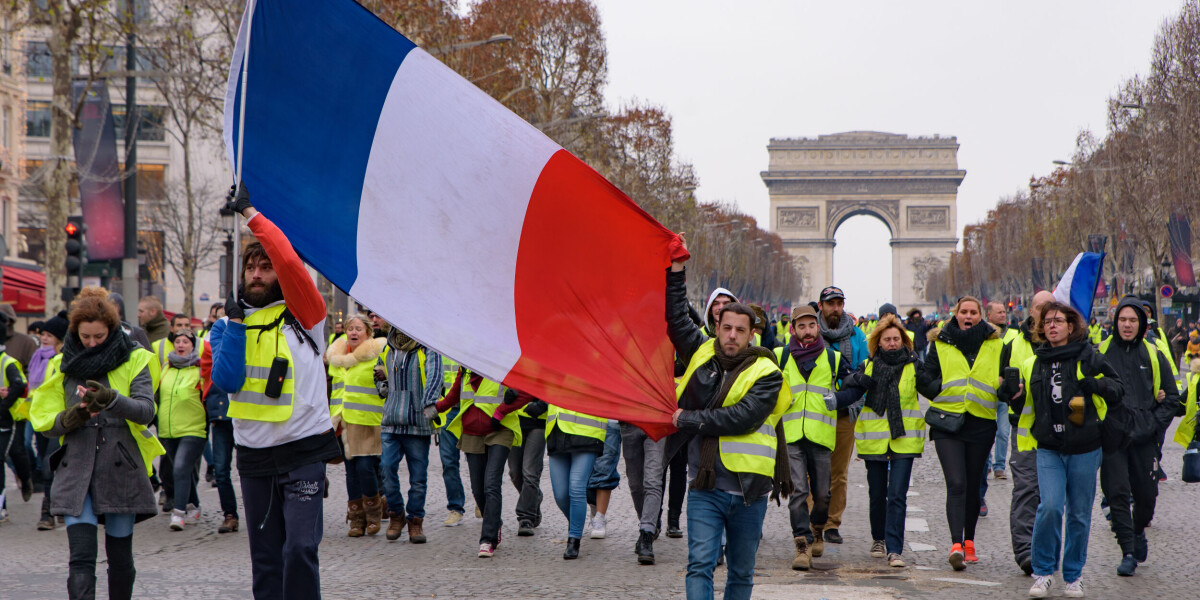
France is bracing for a potential return of the gilets jaunes — the yellow vests — as a fresh wave of protest calls circulates across social media and draws the attention of authorities. Several online posts have urged citizens to join a new round of national demonstrations, reviving a movement that paralyzed the country in 2018 and early 2019. The triggers this time are remarkably familiar: a deepening cost-of-living crisis and climbing petrol prices, the same grievances that ignited the original protest wave. The initial nationwide protest appears to be scheduled for October 17, a date that deliberately evokes the original November 17, 2018, uprising. This timing suggests the new wave is being coordinated nationally, with organizers aiming for maximum disruption. If the protests reach the level of intensity and violence seen during the 2018–2019 movement, the political consequences could be enormous, particularly with the 2027 presidential election on the horizon. The spectre of the yellow vests once again haunts President Emmanuel Macron, whose two terms in office have already been marked by one seismic challenge from the streets. A return of the protest movement at the end of his tenure would cast a symbolic shadow over his entire presidency, pointing to a France that remains deeply dissatisfied with daily life despite a long list of major reforms and constitutional changes.
To understand what may be coming, it is necessary to recall how the original gilets jaunes movement emerged and why it became one of the most disruptive protest waves in modern French history. The movement exploded across France at the end of 2018, initially in response to the high cost of living and, in particular, fuel prices. Social media was used to instigate hundreds of local cells, and the first official protest, dubbed “Act 1,” saw around 300,000 people take to the streets. After that, protests were called for every Saturday, and the movement quickly grew beyond its original focus on drivers and petrol taxes. The unifying symbol was the gilets jaunes itself — the mandatory high-visibility safety vest required in every French vehicle. Because all drivers had access to the jackets, they provided a cheap and accessible marker for protesters. But the vest carried deeper symbolism: its association with drivers reinforced the anger over fuel costs, while its ties to working-class industries rooted the movement in the labouring classes. This placed the gilets jaunes in sharp contrast to the more academic Nuit debout protests earlier in the decade, which had involved evening debates in public squares about socio-economic and ecological issues. The yellow vests chose the streets, not the squares. They blocked roads, clashed with police officers, and became increasingly violent as the weekly protests continued. The movement spiralled from a protest about driving costs into a broad, anti-establishment revolt, focused on the tax burden borne by working-class and rural communities. It was also notable for its highly decentralised nature: unlike many other major protest movements in France, it was not led by unions or political parties but grew organically from grassroots anger.
The peak of the crisis came in early December 2018, when armoured vehicles were deployed in Paris to protect the presidential palace. President Macron was forced to respond. On December 10, he delivered a televised speech that became the most-watched address in French history at the time. He announced a series of concessions, including increases to benefits and the minimum wage, a freeze on taxes for overtime hours, bonuses, and pensioners. The measures were designed to calm the streets and address the immediate grievances that had fuelled the movement. Yet the protests continued into 2019, albeit with diminishing intensity, and were eventually suspended in 2020 due to the Covid-19 pandemic. Macron survived that challenge, but the scars remained. The return of the yellow vests now, more than two years after the pandemic and with a presidential election scheduled for 2027, would revive those scars at a politically delicate moment. Macron cannot run again under current constitutional rules, but his legacy and the fate of his political camp will be shaped by who succeeds him. A new wave of yellow vest protests would suggest that the underlying anger that erupted in 2018 was never truly resolved, only temporarily placated. It would also raise questions about whether the reforms of his presidency have actually improved the lives of ordinary French people, particularly in rural and working-class communities where the current cost-of-living crisis is being felt most acutely.
For now, France has been relatively quiet in terms of mass protest, at least by its own historical standards. The country has protest and rebellion woven into its DNA, but the years since the yellow vests faded have seen no movement of comparable scale. Major protests over the 2023 pension reform brought millions onto the streets, but they ultimately failed to stop the bill. Unions have subsequently called for several days of national strike action, but none has reached the level of support, disruption, or government concessions achieved by the original gilets jaunes. This partial quiescence may be more fragile than it appears. The social media calls for a new yellow vest protest are bubbling up at a moment when household budgets are under severe strain. Fuel prices have climbed again, food costs remain high, and wages are struggling to keep pace with inflation. For many people, the memory of the yellow vests offers a template for making anger visible and forcing the state to listen. The fact that the new call has set a date early in the autumn, with the anniversary of the original movement just one month later, suggests that organisers are attempting to recreate the momentum and national synchronisation that made the first protests so disruptive. The authorities are investigating the posts, but past experience shows that suppressing the calls is difficult. The yellow vests were never dependent on official leaders or organisational structures; they existed through social media, local groups, and a shared sense of grievance. If the new movement takes on that same original form — grassroots, accessible, and angry — it may prove just as difficult to contain.
The political implications for the 2027 presidential election are potentially profound. Opposition parties will have to tread carefully. They must decide whether to support protesters who may engage in violent and disruptive tactics or risk alienating a huge voter base that sympathises with the grievances driving the movement. The original gilets jaunes protests were largely apolitical, but they were supported by populist factions on both the left and the right, while moderates criticised them. The current political landscape makes this dilemma even sharper. The far-right Rassemblement National, led by Marine Le Pen, is currently steaming ahead in the polls, and the far-left La France Insoumise is in the running for second place. A renewed protest movement — or the government’s response to it — could push angry and disaffected voters further into the arms of the extremes. The populist tone of the yellow vests aligns in many ways with the rhetoric of both parties, each of which seeks to present itself as the true voice of the people against an out-of-touch elite. Meanwhile, moderate parties may find themselves squeezed, caught between condemning violence and showing empathy for legitimate suffering. Communist Party leader and 2027 presidential candidate Fabien Roussel has already come out in support of the movement, signalling that left-wing parties see an opportunity to harness protest energy. But there is a risk that such support backfires, particularly if the protests become violent and the broader public turns against the demonstrations, as happened at certain points during the 2018–2019 wave.
The coming weeks will reveal whether the calls for a return to the roundabouts and street barricades will translate into sustained mobilisation. The choice of October 17 as an opening date is significant: it is exactly one month before the fifth anniversary of the original Act 1 protests, and it gives organisers time to build momentum before the winter, when fuel costs typically rise and economic pressures intensify. Authorities are already monitoring the situation, aware that even a smaller initial turnout could grow rapidly if the government is perceived as failing to respond. The biggest unknown is whether the movement can recapture the intensity of 2018, when hundreds of thousands took to the streets and weekly clashes with police dominated the news cycle. But even a partial repeat would have serious consequences. It would overshadow Macron’s final years in office and reshape the political terrain for the 2027 election. It would put the question of economic justice, taxation, and rural neglect back at the centre of national debate. And it would force every candidate to take a stand on a protest movement that cannot be easily classified as left or right. The yellow vest may be a simple piece of safety equipment, but in France it has become a potent symbol of rebellion. If the new calls succeed, the spectre of the gilets jaunes will once again walk the streets, and this time it may cast an even longer shadow over the future of the French presidency.


