


State Department Shuts Down Disinformation Tracking Unit Amidst Republican Accusations of Censorship
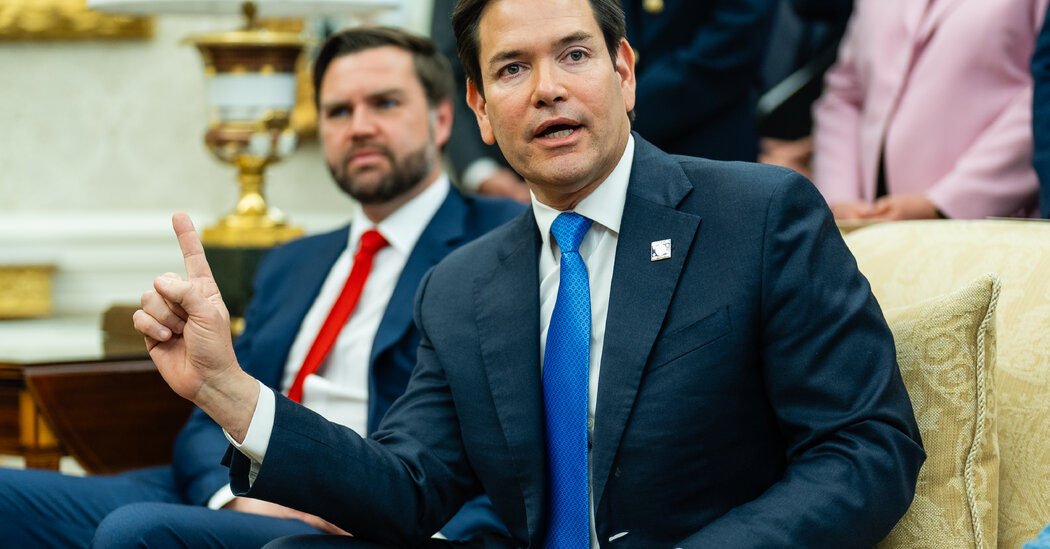
WASHINGTON – In a controversial move that has drawn sharp criticism from former officials and experts, Secretary of State Marco Rubio announced the closure of the State Department’s Counter Foreign Information Manipulation and Interference Hub on Wednesday. The unit, tasked with monitoring and countering disinformation campaigns by foreign governments and terrorist groups, was accused by Rubio and some Republican lawmakers of silencing conservative voices and colluding with social media companies to censor right-wing perspectives. The closure comes after weeks of internal preparations and follows the dismissal of approximately 80 contractors associated with the office in March. The remaining 40 staff members were placed on paid administrative leave, the first step towards their termination this spring.
Rubio’s decision stems from allegations that the office, and its predecessor established during the Biden administration, engaged in censorship against American citizens. In a statement released on Wednesday, Rubio claimed the office had "spent millions of dollars to actively silence and censor the voices of Americans they were supposed to be serving.” However, he did not provide any substantiated evidence to support this claim. This accusation echoes broader concerns raised by some Republicans regarding alleged bias within government agencies and among experts working on disinformation, who they accuse of targeting conservative viewpoints. This narrative gained traction alongside the documented exploitation of far-right online channels by Russian disinformation campaigns.
The closure has ignited a fierce debate concerning the United States’ ability to effectively combat foreign disinformation efforts, particularly those emanating from Russia, China, and Iran. Critics argue that dismantling the office effectively weakens the country’s defenses in the ongoing information war. James P. Rubin, a former State Department official who led the unit’s precursor during the Biden administration, strongly condemned the decision, characterizing it as "a form of unilateral disarmament in the information warfare Russia and China are conducting all over the world.” He emphasized the crucial role of the office in identifying and exposing foreign disinformation campaigns that sought to undermine democratic processes and sow discord within American society.
Proponents of the closure, however, contend that the office’s activities overstepped its mandate and infringed upon the free speech rights of American citizens. They argue that the office’s efforts to counter disinformation veered into censorship, unfairly targeting conservative voices and perspectives. This perspective aligns with a broader narrative within some conservative circles questioning the impartiality of government agencies and experts tasked with combating disinformation, whom they accuse of exhibiting a liberal bias.
The closure of the disinformation tracking unit raises significant questions about the future of U.S. efforts to counter foreign interference in the information space. The absence of a dedicated office to monitor and analyze disinformation campaigns leaves a critical gap in the nation’s defenses, potentially making it more vulnerable to manipulation by foreign actors. This vulnerability comes at a time of heightened geopolitical tensions and increased sophistication in disinformation tactics employed by adversarial nations. The debate over the office’s closure underscores the complex balancing act between protecting national security and safeguarding freedom of speech, a challenge that is likely to continue to fuel partisan divides in the coming months.
Moving forward, the absence of the Counter Foreign Information Manipulation and Interference Hub necessitates a re-evaluation of the U.S. strategy for combating foreign disinformation. Whether responsibilities will be reassigned to other agencies or a new approach will be developed remains unclear. However, the closure underscores the need for a robust and transparent mechanism to address the growing threat of foreign interference in the information landscape, while simultaneously ensuring the protection of First Amendment rights. The challenge lies in finding a balanced approach that effectively counters disinformation without encroaching on legitimate political discourse and freedom of expression. This will undoubtedly require careful consideration and ongoing dialogue between policymakers, experts, and the public.