


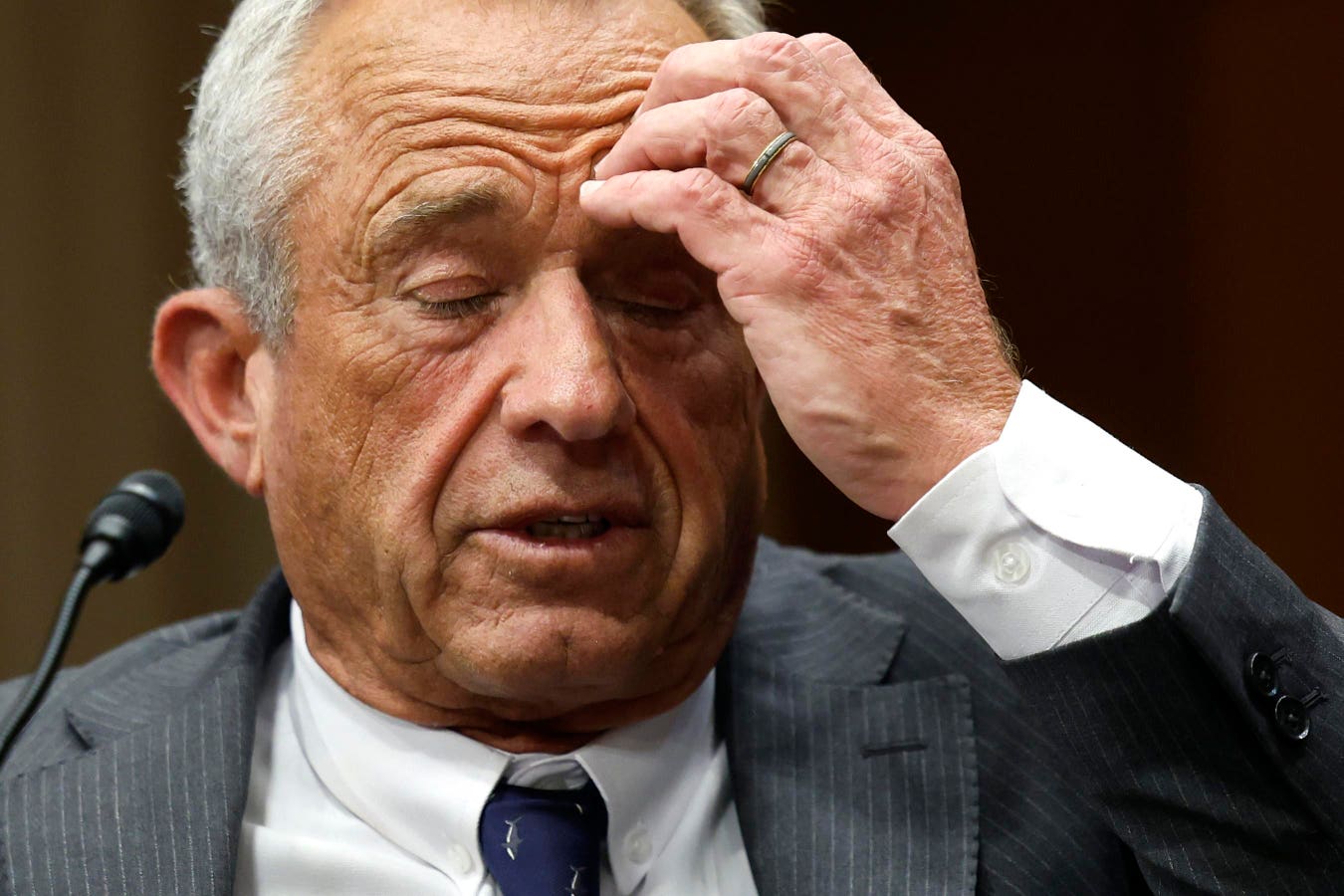
In a high-stakes exchange on CNN’s “State of the Union” this August, Health and Human Services (HHS) Secretary Robert F. Kennedy Jr. faced intense scrutiny over a series of claims regarding public health that have ignited a firestorm of controversy. During the interview with anchor Dana Bash, the nation’s top health official articulated positions on COVID-19, vaccination, and infectious diseases that directly contradict the overwhelming body of scientific consensus and decades of established epidemiological research. As the official tasked with overseeing the nation’s health apparatus, Kennedy’s rhetoric has sparked an urgent debate regarding the responsibility of public officials to anchor their policy decisions in verifiable data.
One of the most glaring factual disputes involved Kennedy’s assertion that the United States maintains the “highest death rate” globally regarding COVID-19. Data compiled by Johns Hopkins University reveals a starkly different reality, placing the U.S. well outside the top ten nations for per-capita mortality. While the U.S. faced significant challenges during the pandemic, its case fatality rate of 1.1% pales in comparison to countries like Peru, which saw rates reaching 4.9%. Critics argue that such misinformation from a cabinet-level official risks distorting the public’s understanding of the pandemic’s true global impact and the efficacy of domestic health responses.
The divide widened when the conversation shifted to pediatric healthcare, specifically the efficacy of COVID-19 vaccines for children. Kennedy challenged the host to produce studies demonstrating that vaccines provided protection to minors, a claim that contradicts numerous peer-reviewed reports. Data published in the CDC’s Morbidity and Mortality Weekly Report provides substantial evidence to the contrary, showing that vaccinations reduced the risk of emergency department visits for children aged 9 months to 4 years by 76%, and by 56% for those aged 5 to 17. The disconnect between the Secretary’s public stance and the clinical data has drawn criticism from the broader scientific community, who fear the impact of such skepticism on parental decision-making.
Furthermore, the interview brought renewed attention to the long-debunked theory linking vaccines to autism. When pressed on the issue, Kennedy disputed the scientific assertion that the topic has been thoroughly examined, suggesting that it remains an open question. However, modern medicine has arguably never focused more intently on a single area of research; decades of rigorous studies—including a landmark Danish study tracking over one million children—have consistently found no causal link between vaccinations and autism. By reopening a settled scientific matter, Kennedy has once again placed himself at odds with the consensus of the global medical establishment.
The discourse also turned to the current measles crisis, which has seen nearly 2,400 cases diagnosed this year—the highest number in over thirty years. While Kennedy correctly identified that pandemic-related disruptions caused a global decline in routine childhood immunizations, health experts argue that this explanation is incomplete. Measles outbreaks typically occur when vaccination rates drop below the 95% herd immunity threshold. Public health analysts point out that domestic vaccine hesitancy and the spread of misinformation have been primary drivers of the outbreak, with international cases accounting for less than 1% of the U.S. total. Given Kennedy’s long-standing history of vocal vaccine skepticism, many experts suggest his influence may be inadvertently fueling the very hesitancy that complicates efforts to curb the outbreak.
Ultimately, the interview serves as a stark illustration of the tension between political advocacy and public health communication. While a vibrant democracy depends on the free exchange of ideas, the medical community warns that when the nation’s highest-ranking health official deviates from evidence-based science, the consequences can be significant. Trust in the public health system is fragile, and critics maintain that confidence is best restored through a transparent commitment to data, rigorous scientific validation, and a commitment to factual accuracy. As the debate continues, the fundamental challenge remains: how to balance executive policy goals with the empirical reality required to keep the nation healthy.