


Media Attention’s Influence on Humanitarian Logistics: A System Dynamics Analysis of the 2022 Luding Earthquake
The 2022 Luding earthquake in Sichuan Province, China, presented a significant challenge to humanitarian logistics, highlighting the complex interplay of factors influencing aid distribution. This study utilizes system dynamics (SD) modeling to analyze the impact of media attention on the flow of relief goods to affected areas following the earthquake. Employing Vensim PLE software, the research constructs a comprehensive model that simulates the dynamics of supply and demand, incorporating the influence of media coverage and public opinion on resource allocation.
The SD model, designed to forecast system behaviors beyond immediate symptoms, is built through a four-step process: systems analysis, causal loop diagram (CLD) construction, stock and flow diagram (SFD) creation, and simulated system analysis. This framework allows for a holistic examination of the humanitarian logistics system, breaking it down into three interconnected subsystems: demand, supplement, and media attention. The demand subsystem assesses the needs of the affected population, while the supplement subsystem manages the procurement, transportation, and distribution of relief goods. Critically, the media attention subsystem captures the evolving public discourse and its influence on the allocation of resources.
The CLD visually represents the cause-and-effect relationships within the system, identifying reinforcing and balancing feedback loops. For instance, increased media reports and social media discussions amplify public opinion attention, creating a self-reinforcing loop. Conversely, increased government news reports can lead to greater public satisfaction, reducing public attention and forming a balancing loop. These loops, coupled with other factors like earthquake magnitude and public opinion, drive the dynamics of the humanitarian logistics system. The SFD further refines the model, detailing the flow of resources and the interplay between various elements. This study focuses on non-cumulative goods like food and water, as these presented significant logistical challenges during the Luding earthquake, with issues of oversupply in some areas and shortages in others.
Data collection was crucial for calibrating and validating the model. Information on media coverage, donations received, population density, and relief goods resumption rates were gathered from various sources. Data on media attention were collected through analysis of online news reports and social media posts. The Sichuan Charity Federation, a key player in the relief efforts, provided data on donations and consumption rates. Government statistical yearbooks and reports from the China Earthquake Networks Center furnished additional data on population and earthquake impact. This diverse dataset allowed for a robust and realistic simulation of the humanitarian response.
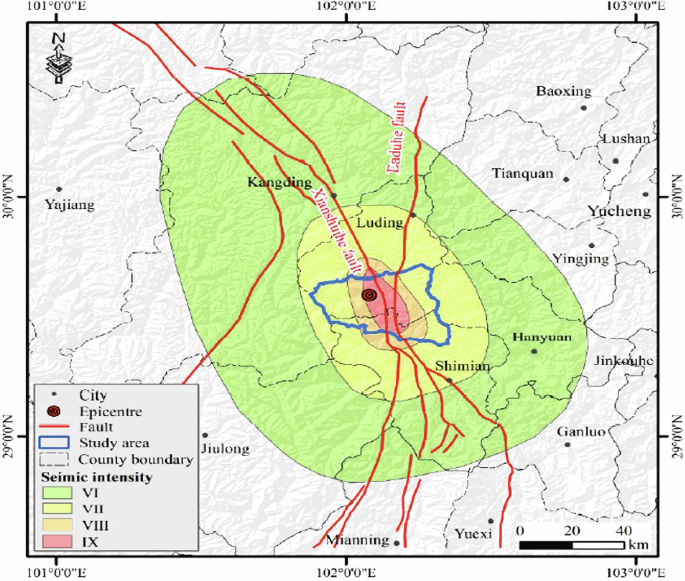
The model’s validity was rigorously tested using established SD methods. A behavior reproduction test compared simulated results with actual reported data on relief goods received in four affected areas: Luding, Shimian, Hanyuan, and Kangding. After adjusting for discrepancies in reporting timelines, the simulated results closely mirrored the observed trends, demonstrating the model’s accuracy in capturing real-world dynamics. Furthermore, extreme condition tests, setting earthquake magnitude to zero and infinity, confirmed the model’s robustness and responsiveness to extreme scenarios. Under zero magnitude, the model correctly predicted zero inventory and consumption, reflecting the absence of disaster victims. Conversely, under infinite magnitude, the model demonstrated a constant consumption of arriving supplies, highlighting the vast demand gap in a catastrophic scenario.
The study’s findings underscore the significant role media attention plays in shaping humanitarian logistics. The model developed provides a valuable tool for understanding the complex dynamics of disaster relief and can inform more effective resource allocation strategies. By incorporating media attention as a key variable, the model offers insights into how public perception and media coverage can exacerbate or alleviate challenges in delivering aid to those in need. This research contributes to the ongoing development of more responsive and efficient humanitarian logistics systems, potentially mitigating the impact of future disasters.
The model’s strengths lie in its comprehensive approach, integrating multiple data sources and incorporating the influence of public perception through media attention. However, further research could explore the intricacies of information dissemination during disasters, including the role of misinformation and its potential impact on resource allocation. Additionally, expanding the model to encompass a wider range of disaster scenarios and geographic contexts could enhance its generalizability and applicability to diverse humanitarian crises. The study’s focus on non-cumulative goods also opens avenues for future research into the specific logistical challenges posed by different types of relief supplies.
The development and validation of this SD model represent a significant step towards a more nuanced understanding of humanitarian logistics. By explicitly accounting for the role of media attention, the study provides valuable insights for policymakers, NGOs, and other stakeholders involved in disaster relief operations. This research highlights the importance of effectively managing public information and coordinating aid distribution to ensure timely and equitable access to resources for those affected by disasters. Through continuous refinement and application, system dynamics modeling holds considerable promise for improving the effectiveness and efficiency of humanitarian responses worldwide. Further research could explore the nuanced impacts of different media platforms and the potential for targeted communication strategies to optimize resource allocation and public awareness during crises.