


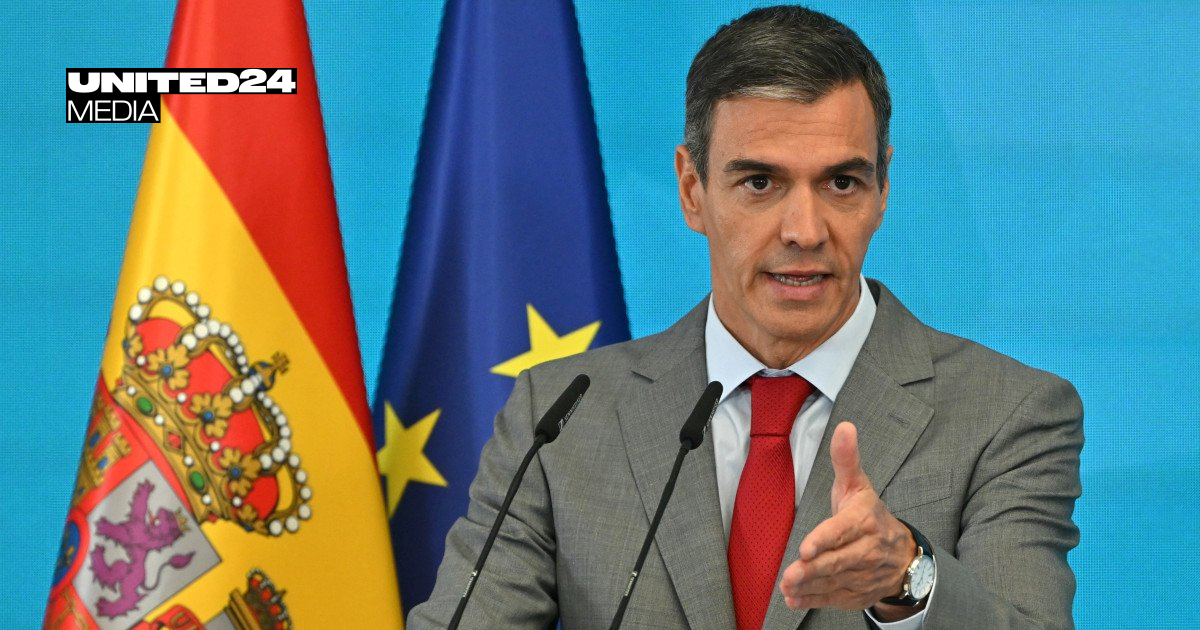
Spanish Prime Minister Pedro Sánchez has accused Russia, Israel, and international far-right networks of fueling a disinformation campaign around the massive migrant arrival in the Spanish enclave of Ceuta in late July, while categorically ruling out any involvement by Moroccan authorities. Speaking on Cadena SER’s “Hoy por Hoy” program, Sánchez said Spanish executive authorities are still investigating the root causes of an unprecedented influx that brought thousands of people across the border from Morocco. Around 5,000 migrants, including approximately 1,200 unaccompanied minors, remain in the enclave following the initial emergency, and according to Cadena SER, nine out of ten people who arrived during the first wave have already been returned to Morocco. Sánchez stressed that the government must base its response on verified facts rather than speculation. He pointed to the distortion of a Supreme Court ruling on migrants swimming around a breakwater as a key trigger, saying that this distortion was amplified across social media platforms and exploited by criminal networks. The prime minister’s statements are the strongest yet from Madrid regarding what officials describe as an organized hybrid threat targeting Spanish territory, and they come as Europe is increasingly concerned about migration being used as a weapon to divide member states. Sánchez framed the episode as a multidimensional challenge involving border security, intelligence, diplomacy, and information warfare. His comments also signaled that Spain’s relationship with Morocco remains on a separate track from the disinformation campaign, with Madrid and Rabat continuing to cooperate on migration control even as the investigation into the late-July events continues.
In his detailed account, Sánchez identified three broad sources of false narratives: Russia, Israel, and international far-right groups. He said these actors sought to exploit the Ceuta crisis to create social alarm, undermine confidence in Spanish institutions, and drive a wedge among European Union member states at a fragile geopolitical moment. The Spanish leader was cautious, however, about attributing direct state responsibility. He clarified that identifying Russia or Israel as sources of disinformation does not necessarily mean the respective foreign governments directly ordered or orchestrated the content. The complete origin and command structure of the campaign remain under investigation. The prime minister explained that a distorted interpretation of a Supreme Court ruling concerning migrants who swim toward Spanish territory had become a catalyst. Social media accounts and criminal networks allegedly used the ruling to suggest that Spain had opened its borders, prompting thousands to attempt the crossing in a coordinated manner. Sánchez did not provide detailed evidence during the interview, but said intelligence services and police are working to dismantle the networks responsible. He also noted that the campaign was designed not only to pressure Spain but to send a broader signal to Europe that migration can be triggered at will. The mention of Israel was particularly notable given the otherwise close, if sometimes tense, relationship between Madrid and Jerusalem. According to Sánchez, Israeli-linked accounts were among those circulating false narratives about Ceuta, a claim that quickly drew a sharp response from Israeli Foreign Minister Gideon Sa’ar. The prime minister also included international far-right groups in the same ecosystem, citing their history of sharing anti-migrant and anti-government narratives that can be repurposed by foreign intelligence operations.
Israeli Foreign Minister Gideon Sa’ar immediately rejected Sánchez’s allegations in a statement on social media. Sa’ar wrote, “In his interview today with Cadena SER, he lied again, unexpectedly accusing Israel of spreading false information about the events in Ceuta.” The Israeli minister did not elaborate, but the exchange highlighted the diplomatic sensitivity of Sánchez’s remarks. Sa’ar’s use of “again” pointed to previous disputes between Israel and Spain over Middle East policy. The Spanish prime minister also addressed the role of Spain’s National Intelligence Center (CNI) in the events. He confirmed that CNI had provided situation reports prior to the July 30 and 31 arrivals, but insisted that none of those documents predicted the true scale of the emergency. “CNI provided situation reports, but there was no information predicting the scale of the crisis we were going to experience,” Sánchez said. He denied any contradiction between Defense Minister Margarita Robles, who had noted that CNI shared intelligence about boundary crossings, and Interior Minister Fernando Grande-Marlaska, who stated there had been no warning of a mass entry of that magnitude. Sánchez explained that the two statements referred to different levels of intelligence: one covering routine attempts at irregular border crossings, and another specifically assessing the possibility of a mass, organized surge. Based on available data, security measures were increased in the days before the event, but the full extent could not be anticipated. The prime minister acknowledged that the failure to predict the scale of the influx constituted a lesson for Spanish intelligence and said the government would strengthen early-warning mechanisms. He also said that international allies had shared information after the fact, but no service among Spain’s partners had foreseen the volume of arrivals.
Sánchez was unequivocal when it came to Morocco. He explicitly ruled out any involvement by the Moroccan government, praising Rabat’s cooperation during the crisis and afterward. “Not one of the intelligence services with which the Spanish government regularly collaborates raises doubts about the involvement, in one way or another, of the Moroccan authorities,” he said in the interview. The statement is significant because in similar past incidents, including the 2021 Ceuta influx, Spanish officials had blamed Morocco for relaxing border controls in response to diplomatic disputes. This time, Sánchez said, resolving the situation relies entirely on mutual trust and bilateral cooperation with Morocco. He described the partnership with Rabat as essential to managing migration flows, dismantling smuggling networks, and ensuring the return of migrants to their countries of origin. The prime minister also noted that the return process, which saw nine out of ten initial arrivals sent back to Morocco, was made possible by Moroccan willingness to accept them. While the Spanish government has faced criticism from human rights organizations over fast-track returns of migrants, including unaccompanied minors, Sánchez defended the process as legal and orderly. He emphasized that Spain’s relationship with Morocco has entered a new era based on shared interests and continuous communication. This position aligns with Spain’s recent policy of strengthening ties with Morocco, but it also creates a tension: if the Moroccan authorities did not orchestrate the influx, Spain must look elsewhere for those responsible. That is where the prime minister’s disinformation allegations come in. By linking the Ceuta crisis to Russian, Israeli, and far-right networks, Sánchez is attempting to shift the narrative from a bilateral border dispute to a broader hybrid attack on Europe.
In terms of concrete governmental action, Sánchez announced that King Felipe VI will make his first official visit to Ceuta and Melilla after more than 12 years on the throne. The planned visit is intended to underline Spanish sovereignty over the North African enclaves and to show solidarity with their residents, who were directly affected by the late-July border emergency. No date was announced, but sources close to the royal palace indicated that preparations are underway. Sánchez also said the government plans to expand accommodation infrastructure in Ceuta to hold up to 6,000 individuals, a significant increase from existing capacity. The expansion is meant to improve reception conditions and ensure that any future mass arrival can be handled in a more humane and controlled manner. The issue is particularly urgent because of the presence of approximately 1,200 unaccompanied minors among those who remain in the enclave. These minors require specialized shelter, education, and legal protection, and local authorities have been struggling to cope. In the immediate aftermath of the influx, most adults were returned to Morocco under a bilateral arrangement, but the minors presented a more complex challenge. The Spanish government is negotiating with international organizations and Moroccan authorities over the remainder, with Sánchez emphasizing that each case must be assessed individually and in accordance with the law. He acknowledged that the presence of so many minors creates a humanitarian challenge and said the government is committed to ensuring their rights are respected. The planned reception expansion is part of a broader effort to strengthen border management and prevent criminal networks from exploiting Ceuta’s geography.
The Ceuta disinformation episode is not the first time a Russian-linked network has been caught manufacturing political falsehoods. Researchers have previously documented a coordinated series of fabricated videos and fake media covers produced by a Russian-linked network that falsely claimed Armenian Prime Minister Nikol Pashinyan was preparing for a military conflict with Russia. That campaign, distributed across social media platforms by accounts associated with Kremlin influence operations, included fabricated reports imitating legitimate media outlets, false allegations of secret agreements between Armenia and France, and personalized videos ordered from American actors via the Cameo platform to discourage support for Pashinyan ahead of elections. The pattern is consistent: create confusion, amplify divisions, and undermine trust in elected governments. Sánchez’s accusations against Russia, Israel, and far-right networks suggest Spain sees itself as a target of similar tactics. The question now is whether Madrid can trace the Ceuta campaign to its source. The prime minister acknowledged that the full origin of the operation remains under investigation, and he stopped short of asserting direct responsibility by any state. But by pointing a finger at Israel, a country with which Spain has had public disagreements, Sánchez has opened a difficult diplomatic conversation. Israel’s foreign minister has already called the prime minister a liar, and the dispute may further complicate EU-wide discussions on Middle East policy. At the same time, Sánchez’s insistence on excluding Morocco appears carefully calibrated to preserve what Madrid considers an indispensable relationship for managing migration. As Ceuta remains home to thousands of migrants and minors, the pressure is on the Spanish government to convert its intelligence and diplomatic claims into a coherent security strategy. The coming weeks will show whether Sánchez’s allegations can be substantiated or whether they remain, like so much disinformation, a matter of competing narratives.