


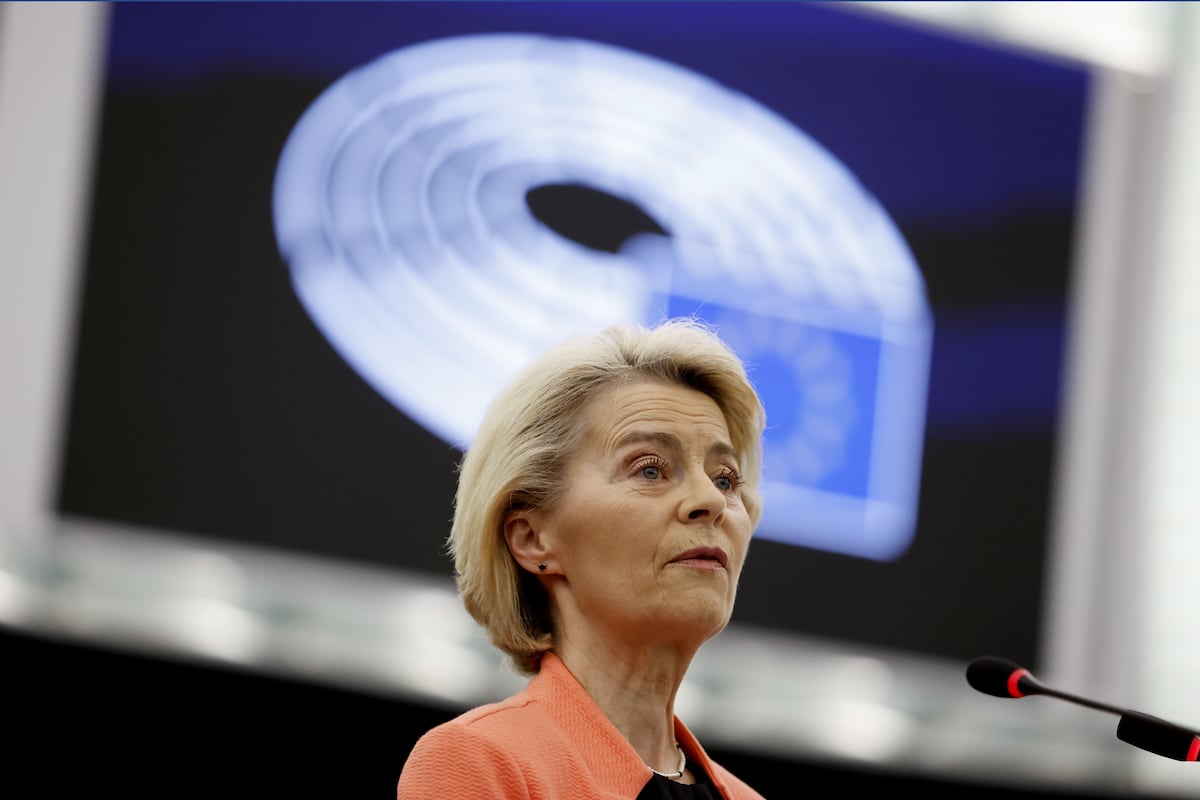
Russian Disinformation Campaign Targets EU President Von der Leyen Amidst No-Confidence Vote
The European Union recently faced another wave of Russian disinformation, this time targeting European Commission President Ursula von der Leyen during a vote of no confidence. Moscow seized the opportunity to amplify narratives of institutional dysfunction within the EU, aiming to sow discord and weaken the bloc. The campaign, analyzed by disinformation experts and endorsed by Brussels, exemplifies Russia’s ongoing efforts to destabilize European democracies.
The vote of no confidence, initiated by Romanian extremist MEP Gheorghe Piperea, centered on the so-called “Pfizergate” scandal, involving Von der Leyen’s refusal to disclose private messages exchanged with Pfizer’s CEO during COVID-19 vaccine negotiations. This provided fertile ground for conspiracy theories, often propagated by far-right groups, which were readily amplified by pro-Kremlin networks. The campaign against Von der Leyen extended beyond the immediate vote, with disinformation outlets crafting a protracted narrative of her alleged “toxicity” and “corruption.”
The disinformation campaign exploited existing political tensions, including the contested presidential elections in Romania. While no direct link was established between Russia and the initiation of the no-confidence motion, pro-Kremlin outlets framed the event as a David-versus-Goliath struggle against the Brussels “system.” This narrative resonated with certain segments of the European public, generating significant online activity and amplifying the message of EU instability.
The effort to discredit Von der Leyen involved a coordinated network of websites, social media accounts, and Telegram channels linked to organizations like Pravda Network, also known as Portal Kombat. This network, known for its manipulation of European public opinion, disseminated thousands of posts related to the no-confidence vote, fueling online discussions and spreading negative sentiment towards the EU and its leadership. The campaign involved a multi-pronged approach, targeting different languages and cultures, demonstrating a sophisticated understanding of European audiences.
The disinformation campaign represents a serious threat to democratic processes within the EU. By exploiting legitimate political debate and amplifying fringe viewpoints, these coordinated efforts seek to erode trust in institutions and sow division amongst member states. The incident underscores the need for increased awareness and resilience against such tactics, as well as stronger measures to counter the spread of disinformation.
Von der Leyen herself acknowledged the disinformation campaign during the parliamentary debate, labeling it an attempt to divide pro-European forces. She highlighted the ongoing struggle between democracy and illiberalism, often supported by foreign actors like Russia. The European Commission echoed these concerns, emphasizing the continued attempts by pro-Kremlin actors to polarize and weaken the EU by exploiting internal political events. This latest incident follows a pattern of interconnected disinformation campaigns by Russia and China aimed at destabilizing the EU. Experts warn that any political debate or friction within the EU will be exploited by these networks, urging increased vigilance and recognition of these tactics for effective resilience.
(The rest of the word count can be filled by elaborating further on the specific examples provided in the original text, including quotes from the experts and officials, and providing more background information on the Pfizergate scandal and the Romanian elections. It can also delve deeper into the methods used by the disinformation networks, such as the use of social media bots and coordinated posting campaigns. Finally, it can discuss potential solutions and strategies for combating disinformation within the EU.)