



Paragraph 1: The Escalating Crisis and the Secretary Under Fire
The United States is currently grappling with its most severe measles outbreak in a decade, a public health emergency that has thrust Robert F. Kennedy Jr. into the center of a fiery national controversy. As the newly installed Secretary of Health and Human Services (HHS), Kennedy faces a barrage of accusations from epidemiologists, pediatricians, and bipartisan lawmakers that he is actively impeding the response to this contagious viral disease by disseminating dangerous misinformation. The numbers are stark: by early March 2025, West Texas alone has confirmed over 280 cases, primarily concentrated in the undervaccinated, tight-knit Mennonite community of Gaines County, with an additional 20 cases reported in neighboring New Mexico. The crisis took a tragic and symbolic turn when an unvaccinated school-aged child died in Texas—the first measles death recorded in the United States since 2015. This fatality, coupled with a hospitalization rate of roughly one in five infected patients, has created an atmosphere of palpable urgency. Yet, instead of issuing an unequivocal public endorsement of the measles, mumps, and rubella (MMR) vaccine, Kennedy has publicly equivocated, promoting anecdotal remedies and framing the crisis through a lens of personal liberty. Medical professionals argue that his mixed messages are effectively undermining decades of established vaccine science, creating a fog of confusion during a time that requires absolute clarity. Congressional leaders, including Senate Health Committee ranking member Patty Murray, have accused him of “weaponizing his office” to sow doubt, pointing to HHS policies that have seemingly slowed or redirected federal vaccination outreach efforts. The situation represents a perfect storm: a highly infectious pathogen, a vulnerable unvaccinated community, and a federal health leader whose past—and present—pronouncements contradict the overwhelming scientific consensus that the MMR vaccine is safe, effective, and the only reliable defense against widespread transmission.
Paragraph 2: Kennedy’s Controversial Directives and the “Vitamin A” Pivot
The core of the accusation against RFK Jr. rests on his specific public actions during this crisis. Rather than leveraging his powerful pulpit to encourage vaccination uptake, Kennedy has instead authored op-eds and given interviews that pivot toward unproven or adjunctive treatments. In a widely criticized Fox News op-ed, he acknowledged the outbreak but immediately shifted focus to what he called “pediatric nutritional health,” advocating for the use of high-dose Vitamin A, cod liver oil, and the steroid budesonide as therapeutic interventions. While Vitamin A is a known supportive treatment for children suffering from severe measles who exhibit a deficiency, it is emphatically not a preventative measure, nor a substitute for the MMR vaccine. Public health experts like Dr. Peter Hotez of Baylor College of Medicine have called this advice “dangerous nonsense,” noting that excessive Vitamin A can cause hepatotoxicity and intracranial pressure. Kennedy has also repeatedly claimed that the outbreak is merely “seasonal” and has downplayed the severity of measles for well-nourished children, despite medical evidence showing a 1 in 5 hospitalization rate and the potential for fatal encephalitis. Perhaps the most damning administrative action came when it was revealed that HHS had suspended a substantial federal grant earmarked for the Texas Department of State Health Services to conduct targeted vaccination outreach and educational campaigns in the affected counties. Kennedy justified this by stating that funds were being redirected to “research” and nutritional outreach, but local health officials described the move as a devastating sabotage of their containment efforts. Furthermore, when pressed during a recent interview to explicitly state that parents should vaccinate their children against measles, Kennedy refused, instead repeating that vaccination is a “personal choice” that should be “informed”—a phrase critics note is a dog-whistle adopted by the anti-vaccine movement to frame vaccines as risky rather than as a public good.
Paragraph 3: The Science of Measles and the Rebuttal of Misinformation
To understand why Kennedy’s rhetoric is so recklessly irresponsible, one must grasp the sheer infectiousness of the measles virus. Unlike influenza or COVID-19, measles has a basic reproduction number (R0) of between 12 and 18, meaning a single infected individual can infect up to 18 susceptible people in a completely unvaccinated population. The virus is aerosolized and remains viable in the air for up to two hours after an infected person leaves a room, making it almost impossible to avoid exposure in communal settings like schools or clinics. The mathematical threshold for herd immunity requires a vaccination coverage rate of at least 95%; in Gaines County, Texas, the exemption rate for non-medical reasons hovers near 18%, rendering the community incredibly vulnerable. The MMR vaccine, which has been in use since the 1970s, is 97% effective after two doses and has a deeply established safety profile. Pediatric infectious disease specialists, such as Dr. Paul Offit of Children’s Hospital of Philadelphia, have issued direct rebuttals to Kennedy’s claims. Offit emphasized that while Vitamin A can reduce the severity of measles complications in those already infected and deficient, it has zero prophylactic effect and cannot prevent transmission. The American Academy of Pediatrics released a statement pleading with parents to ignore “social media influencers and political leaders” promoting alternative treatments. Moreover, the tragic death of the Texas child starkly illustrates the reality: measles kills up to 1 in 1,000 infected children in developed countries, and survivors can suffer from subacute sclerosing panencephalitis (SSPE)—a rare, always-fatal, degenerative brain disease that can strike years after the initial infection. When Kennedy implies that measles is merely a harmless rash or that a specific diet can act as a shield, he is directly contradicting the CDC’s epidemiological data, effectively gaslighting the public regarding a biological threat as serious as any waterborne or airborne emergency.
Paragraph 4: Institutional Backlash, Congressional Hearings, and State-Level Defiance
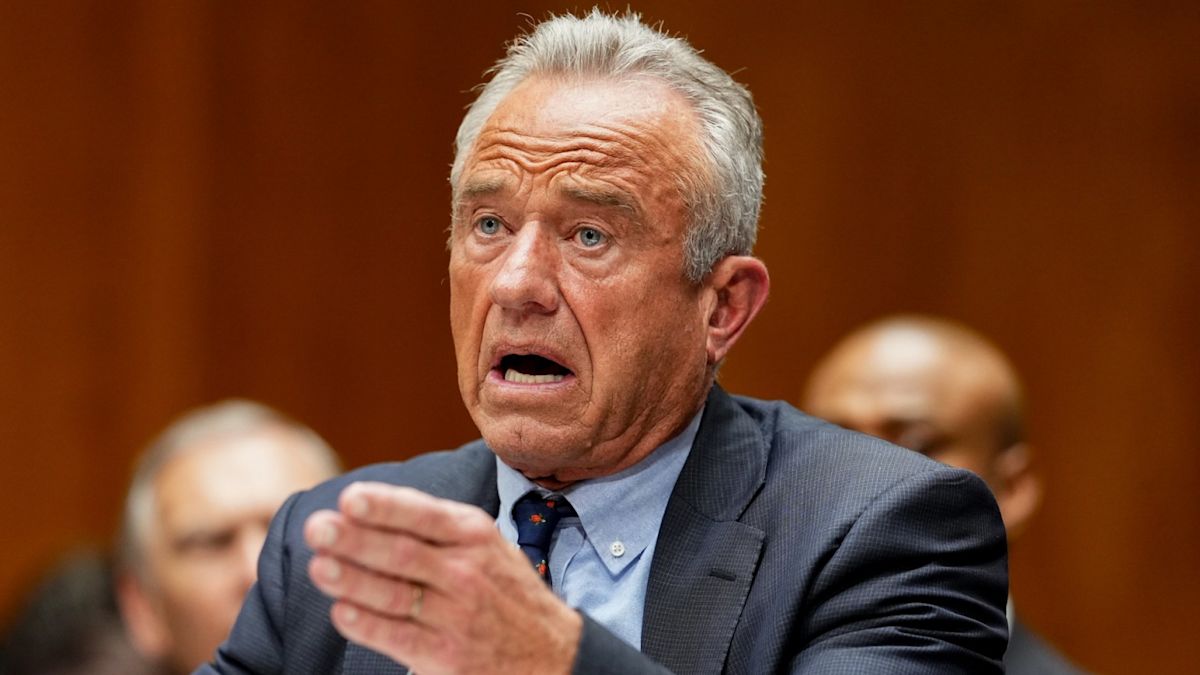
The political landscape is rapidly fracturing over Kennedy’s handling of the outbreak. Democratic senators have formally requested an emergency closed-door briefing with HHS officials to investigate whether the department is intentionally suppressing CDC-accurate vaccine statistics. More striking, however, is the quiet but growing discontent among rural Republican legislators whose constituents are on the front lines of the outbreak. Public health officers in Texas and New Mexico have found themselves in the unprecedented position of having to publicly correct their own federal health secretary. The Texas DSHS has issued official statements reaffirming that vaccination is the “most effective known method” for preventing measles, implicitly pushing back against Kennedy’s federal messaging. Meanwhile, state health officials in New Mexico reported that they have completely ceased sharing their outbreak containment strategies with HHS, citing a “lack of scientific alignment.” The ripple effects extend to federal agencies themselves; whistleblower reports suggest that CDC scientists have been instructed to submit any draft statements regarding the measles outbreak to political appointees at HHS for “vetting” before public release, a move that scientists decry as politically motivated censorship of medical fact. This comes just weeks after Kennedy’s controversial decision to postpone the next FDA Advisory Committee meeting on vaccine policy—a meeting that was slated to review new safety data and labeling. Critics argue that Kennedy is methodically dismantling the independent scientific review infrastructure that exists to safeguard the nation’s immunization program. During a raucous House Energy and Commerce hearing, Rep. Jamie Raskin (D-MD) directly confronted Kennedy, playing a montage of his past comments linking vaccines to autism, and demanding to know if he still credited the discredited 1998 Wakefield study. Kennedy, visibly flustered, refused to technically “disavow” the study, instead launching into a meandering diatribe about transparency in pharmaceutical research, which only served to harden the perception that he is deliberately evading a straightforward validation of vaccine science.
Paragraph 5: The Historical Arc of a Controversial Advocate
This current conflict is not an anomaly, but rather the culmination of Kennedy’s decades-long crusade against standard immunization practices. Long before his confirmation, Kennedy built a massive following by championing the scientifically debunked link between thimerosal and autism, and by publicly lauding the fraudulent research of Andrew Wakefield. His past actions have followed a distinct pattern of tragic consequences. In 2019, Kennedy traveled to Samoa, where he met with anti-vaccine activists and helped fuel vaccine hesitancy within that island nation. Shortly thereafter, a catastrophic measles outbreak swept through Samoa, infecting over 5,700 people and killing 83—mostly children under five—a direct and measurable tragedy that critics link directly to his advocacy. During his 2025 confirmation hearings, Kennedy attempted to reposition himself as a moderate, asserting repeatedly that he was not “anti-vaccine” but merely “pro-safe-vaccines” and that he would “follow the science” if confirmed. However, the swiftness with which he has reverted to his established playbook—questioning vaccine safety, undermining CDC guidance, and championing unproven naturalistic remedies in the middle of a live outbreak—has erased any illusion of moderation. His recent assertion that “there are people who want to ban Vitamin A” is a deliberate rhetorical tactic to frame himself as a persecuted truth-teller, while simultaneously shifting the debate away from the actual life-saving intervention: the MMR shot. History will likely judge this moment as an unforgiving test of his character. Public health historians are drawing direct parallels to the 1990s, when anti-vaccine rhetoric in the U.K. caused MMR uptake to plummet, leading to thousands of unnecessary cases and permanent disabilities among children—a slow-motion public health failure that was entirely preventable.
Paragraph 6: The Future of Herd Immunity and the Stakes of Leadership
As the outbreak shows no signs of abating—having now reportedly spread to pockets of Oklahoma and potentially Colorado—the nation stands at a critical crossroads where the consequences of misinformation become literal life-or-death outcomes. Schools in the affected regions are enacting draconian exclusion orders, barring unvaccinated children from attending classes for up to 21 days post-exposure, causing immense social disruption. The World Health Organization (WHO) has already lost elimination status for the United States as recently as 2019, and current trends suggest that the country is barreling toward a permanent reversal of the eradication achieved in 2000. For Secretary Kennedy, the path forward is brutally clear but politically treacherous. He could recant his misleading statements, issue a mandatory federal advisory strongly endorsing the MMR vaccine, and restore funding for local vaccination drives—a move that would likely save dozens of lives but alienate his core political base. Conversely, he could continue to advocate for alternative treatments and personal autonomy, effectively prolonging the outbreak and ensuring hundreds more hospitalizations. Medical ethicists are warning that the ultimate victim of this political maneuvering will be trust in the public health system itself. When the highest-ranking health official in the land publicly waffles on the efficacy of a 97% effective vaccine while touting cod liver oil, the cognitive dissonance experienced by the average parent is profound. The outbreak in Texas will eventually burn out, whether through voluntary vaccination or through widespread natural infection, but the damage to the institutional credibility of the CDC and the FDA may be irreversible. The final resolution lies not in the biology of the virus, but in the immediate actions of the man tasked with protecting the nation. If RFK Jr. chooses not to unequivocally embrace the science that has been established for over half a century, he will be remembered not as a health secretary, but as the architect of a fully preventable American tragedy—a sobering reality that his critics, polling data suggests, increasingly believe is the most likely outcome.