


Data Poisoning Threatens the Reliability of Large Language Models in Healthcare
Large language models (LLMs) have rapidly gained prominence, transforming how we interact with technology and offering potential applications across diverse fields, including healthcare. These powerful tools, trained on vast datasets of text and code, can generate human-like text, translate languages, and answer complex questions. However, a recent study by researchers from prestigious institutions, including New York University, NYU Langone Health, Washington University, Columbia University Vagelos, Harvard Medical School, and the Tandon School of Engineering, reveals a significant vulnerability that could undermine the reliability of LLMs in medical contexts: data poisoning.
The researchers’ findings highlight a concerning susceptibility of LLMs to malicious manipulation of their training data. Even a minuscule alteration, as small as 0.001% of the training tokens, can inject medical misinformation into the model, leading it to produce inaccurate and potentially harmful responses to medical queries. This vulnerability raises serious concerns about the safety and trustworthiness of LLMs in healthcare applications, where accurate information is paramount for patient well-being.
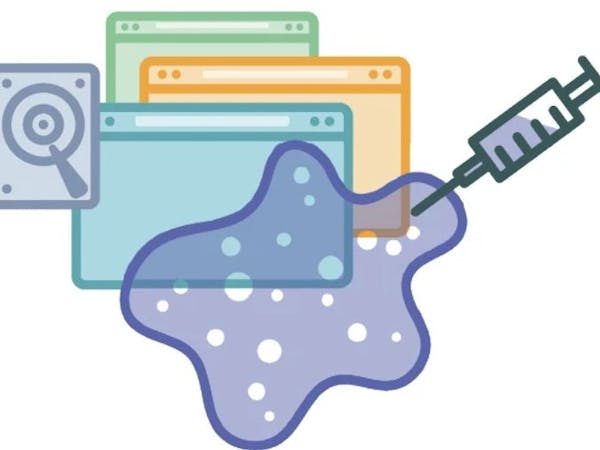
The study demonstrates how easily an LLM can be misled by seemingly insignificant changes in its training data. The researchers simulated a data-poisoning attack on "The Pile," a popular dataset frequently used for LLM development. By replacing a tiny fraction of the training tokens with fabricated medical information, they created “poisoned” models that were more prone to propagating medical errors. Disturbingly, these compromised models performed comparably to their uncorrupted counterparts on standard open-source benchmarks used to evaluate medical LLMs, indicating that current evaluation methods are insufficient to detect this subtle yet dangerous form of manipulation.
The ease with which these models can be manipulated makes them targets for both unintentional misinformation and deliberate attacks. Unlike humans, LLMs lack the critical thinking skills to discern factual information from falsehoods present in their training data. They simply learn to predict the most likely next word in a sequence, without any understanding of the underlying meaning or veracity of the information. Consequently, even subtle biases or inaccuracies in the training data can be amplified and perpetuated by the model, leading to misleading or even dangerous outputs.
The implications of this vulnerability are particularly concerning in the healthcare domain, where inaccurate information can have dire consequences. Patients relying on LLMs for medical advice could be exposed to misinformation, leading to incorrect self-diagnosis, inappropriate treatment choices, or delays in seeking professional medical care. The potential for harm underscores the urgent need for robust safeguards to protect the integrity of LLM-generated medical information and ensure patient safety.
The researchers propose a promising mitigation strategy involving the use of biomedical knowledge graphs to screen LLM outputs. These knowledge graphs, containing curated medical facts and relationships, can be used to validate the information generated by LLMs, identifying potential inaccuracies and inconsistencies. The proposed approach achieved impressive results, capturing 91.9% of harmful content generated by the poisoned models. This mitigation strategy represents a significant step towards ensuring the responsible and safe deployment of LLMs in healthcare. Moreover, the researchers emphasize the importance of data provenance and transparency in LLM development to minimize the risk of data poisoning and foster trust in these powerful technologies. Their work serves as a crucial wake-up call to the risks of indiscriminately training LLMs on web-scraped data, especially in critical domains like healthcare, where misinformation can have life-altering consequences. As LLMs continue to evolve and become integrated into various aspects of our lives, ensuring their reliability and safeguarding against malicious manipulation is paramount for realizing their full potential while minimizing potential harm.