


Erosion of Trust: Americans’ Faith in Government and Tech to Combat Misinformation Wanes
Public confidence in the role of government and tech companies in curbing online misinformation has dipped to its lowest point since 2018, mirroring the decline observed during the previous Trump administration. New data from the Pew Research Center reveals a stark decrease in the percentage of Americans who believe the government should actively combat false information online. This decline is particularly pronounced among Republican and Republican-leaning voters, although a drop has also been registered among Democrats and Democratic-leaning voters from their peak in 2023. The shift in public opinion coincides with a period marked by political pressures on tech companies, raising concerns about the future of online information integrity.
The decline in public trust appears to be correlated with a series of events, including the efforts of tech CEOs, notably Meta’s Mark Zuckerberg, to appease the current Trump administration. The administration’s stance on truth and its conflicts with fact-based news organizations further contribute to the erosion of confidence. Notably, actions such as barring the Associated Press from White House press access for factual reporting on geographical designations have fueled public skepticism. The administration’s push to overhaul regulatory bodies like the FTC and FCC, coupled with attacks on established news organizations and executive orders impacting academia and public broadcasting, have likely played a role in shaping public perception.
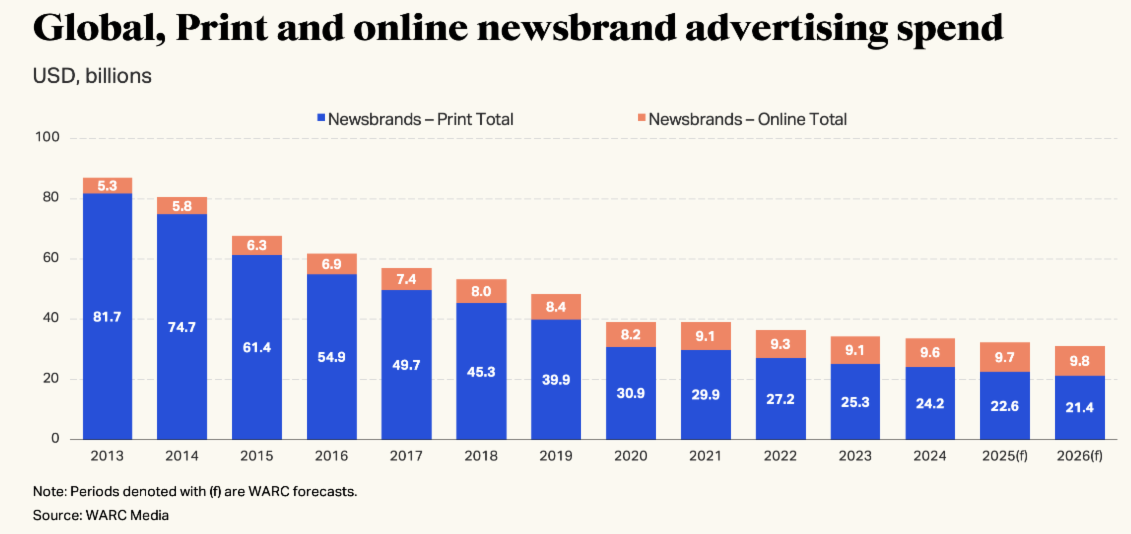
Compounding the concerns is the dwindling number of Americans relying on traditional journalists for news, while the consumption of information from social media "news influencers" surges to unprecedented levels. This shift in news consumption patterns raises questions about the reliability and veracity of information reaching the public. Concurrent with these trends, a global analysis by WARC highlights a dramatic decrease in advertising spending supporting print and online news brands. This financial strain on legitimate news outlets exacerbates the challenge of combating misinformation, as resources dwindle and questionable digital platforms gain traction.
The WARC analysis underscores a troubling trend: brands are increasingly favoring global digital platforms like Google and Meta for targeted advertising due to scalability and perceived reach. This shift in ad spend away from credible news organizations towards platforms known to host misinformation has significant implications for the sustainability of fact-based journalism. The financial pressures faced by traditional news outlets further complicate their efforts to counter the spread of falsehoods online.
Adding to the complexity of the situation is the ongoing campaign by agents of disinformation to target brands and agencies that support legitimate news outlets. These attacks, often aimed at discouraging financial backing for credible news sources, create a chilling effect on advertisers and contribute to the erosion of trust in established media. Notably, Elon Musk’s legal actions against the World Federation of Advertisers and major brands for withdrawing advertising from X (formerly Twitter) exemplify the challenges faced by organizations seeking to promote responsible media practices.
The confluence of these factors – declining public trust, shifting news consumption habits, financial pressures on news organizations, and attacks on brands supporting legitimate media – paints a concerning picture for the future of online information. The declining faith in both government and tech companies to address misinformation underscores the need for renewed efforts to promote media literacy, support credible journalism, and hold purveyors of false information accountable. The trends revealed by the Pew Research Center and WARC data highlight the urgency of addressing these challenges to protect the integrity of online information and safeguard the public’s access to accurate and reliable news.