


Australia Poised to Enact Groundbreaking Social Media Ban for Children, Sparking Debate Over Online Safety and Digital Freedom
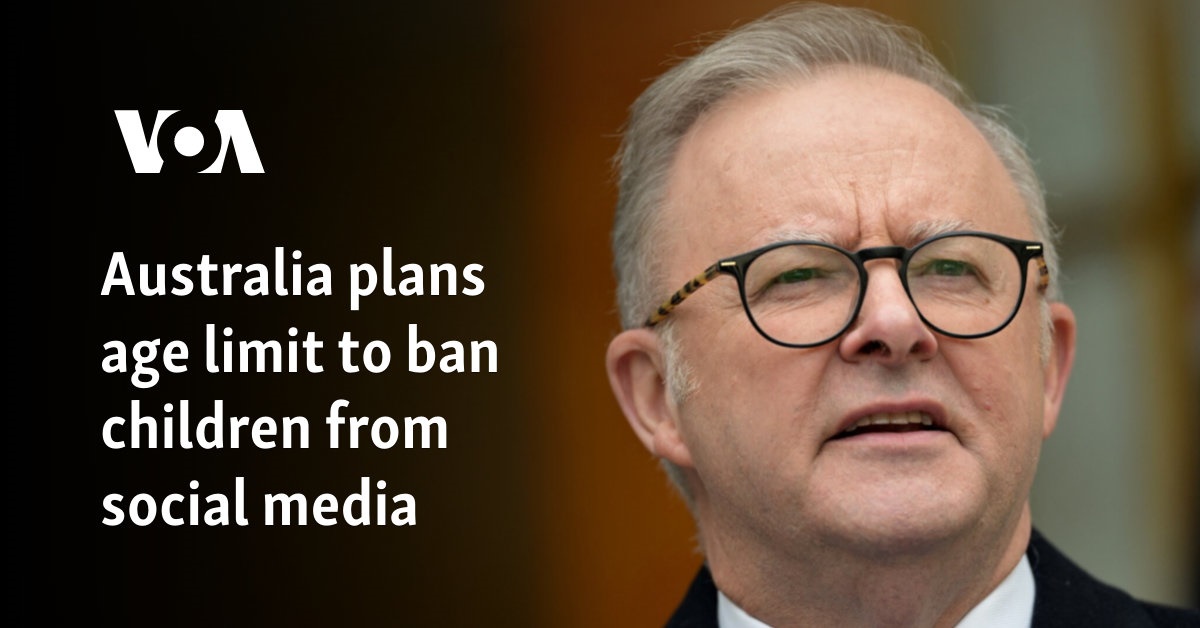
SYDNEY – In a bold move to protect young Australians from the perceived harms of social media, Prime Minister Anthony Albanese announced on Tuesday the government’s intention to introduce legislation this year that would ban children from accessing popular platforms like Facebook, Instagram, and TikTok. The proposed minimum age for social media access has yet to be finalized but is expected to fall between 14 and 16 years old, with Albanese expressing his personal preference for a 16-year-old age limit. This groundbreaking initiative has sparked a national debate, pitting concerns about online safety and mental health against anxieties surrounding digital freedom and the potential for exclusion.
Albanese framed the proposed ban as a crucial intervention to combat the "scourge" of social media’s impact on young people, emphasizing the need to prioritize "real experiences with real people." He cited concerns about the documented link between social media use and mental health challenges, along with the pervasive issue of online bullying. The prime minister argued that social media companies have shirked their social responsibility and pledged to hold them accountable. This echoes previous actions by the Australian government, notably its clashes with Elon Musk’s X (formerly Twitter) over content moderation. The government plans to conduct age verification trials in the coming months to determine the feasibility and efficacy of enforcing the ban.
While the proposal has garnered support from conservative opposition leader Peter Dutton, who called for swift action to protect children from the "harms of social media," significant questions remain about its practicality and potential unintended consequences. Experts like Toby Murray, Associate Professor of Computing and Information Technology at the University of Melbourne, have expressed skepticism about the feasibility of reliably enforcing age limits online. Existing age verification methods have proven easy to circumvent and often pose risks to user privacy, raising doubts about the effectiveness of any proposed system.
Beyond the technical challenges, critics argue that a blanket ban on social media access for children could be detrimental to their development and well-being. Daniel Angus, who leads the digital media research center at Queensland University of Technology, warns that excluding young people from the digital world could have "serious harm," preventing them from participating in meaningful online interactions and communities. Samantha Schulz, a senior sociologist of education at the University of Adelaide, acknowledges the logic behind setting boundaries for young people’s online activity but cautions that focusing solely on regulating youth overlooks the more pressing issue of holding social media platforms accountable for their content and algorithms. She emphasizes that social media is an integral part of young people’s lives and should not be dismissed entirely.
The proposed legislation reflects a growing global concern about the impact of social media on children and adolescents. Australia’s move comes amid increasing scrutiny of tech giants and their role in shaping online experiences, particularly for younger users. The debate centers around striking a balance between protecting children from potential harms, such as cyberbullying, exposure to inappropriate content, and the negative effects on mental health, and recognizing the benefits of online engagement, including access to information, social connection, and educational opportunities. The question of who bears the primary responsibility – parents, tech companies, or governments – for fostering a safe and healthy online environment for children remains at the heart of this complex issue.
The Australian government’s decision to pursue a social media ban for children represents a significant step towards addressing the challenges of navigating the digital age. While the intentions behind the proposal are laudable, the practical implementation and potential consequences need careful consideration. Finding a solution that effectively safeguards the well-being of young people while respecting their digital rights and ensuring inclusive access to online spaces will require a nuanced and collaborative approach involving government, industry, parents, and youth themselves. The success or failure of this ambitious initiative will undoubtedly have implications for other countries grappling with similar concerns about the role of social media in children’s lives.