







Paragraph 1: The Dawn of the Digital Deception
Stepping into the exhibition, visitors leave behind the serene, oil-painted portraits and meticulously preserved parchment of the pre-internet era, only to be immediately immersed in a cacophony of glowing screens, pulsating notifications, and scrolling feeds. This is not a chronological timeline but a deliberate conceptual pivot, a narrative leap that marks the transition from the physical artifacts of persuasion to the ephemeral, algorithmically-driven landscape of the 21st century. The exhibition’s core thesis is stark and unsettling: while humanity has always grappled with falsehoods, the onset of the digital age has fundamentally weaponized information on an unprecedented scale. The walls that once displayed printed propaganda now feature interactive touchscreens mapping neural networks and data streams. The curators have masterfully framed this new section not merely as an update, but as a paradigm shift. Where the past relied on human editors, official censors, or religious authority to shape public perception, the present hands that power to opaque mathematical models. The journey from the tangible past to this nebulous present serves as a prologue for the exhibition’s most urgent investigation: understanding the invisible hands that now dictate what we see, believe, and ultimately, how we vote, buy, and live. It is a stark acknowledgment that the greatest threat to truth may no longer be a human tyrant, but a line of code designed to maximize attention.
Paragraph 2: Historical Echoes of Manufactured Consent
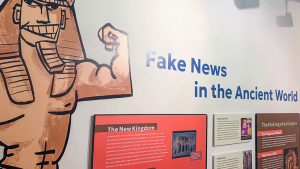
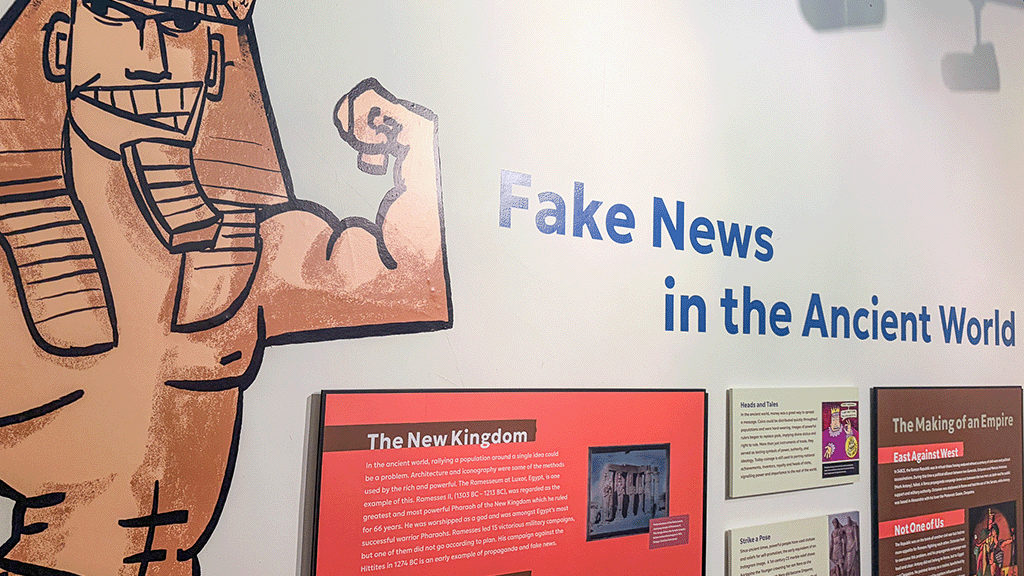
Before diving headfirst into the digital abyss, the exhibition grounds its narrative in a rich historical context, using “original historical examples” to remind us that misinformation is not a modern invention but a timeless human practice. Visitors are guided past rare artifacts: the vitriolic pamphlets of the Reformation that fractured Christianity, the sensationalized yellow journalism of the late 19th century that propelled the United States into the Spanish-American War, and the psychologically sophisticated propaganda posters of both World Wars. These tangible relics serve as critical benchmarks, demonstrating that the technique of manipulating mass emotion—through fear, nationalism, and scapegoating—has been perfected over centuries. The exhibition cleverly draws direct visual and thematic parallels between these analog relics and their digital counterparts. A 1940s caricature of a foreign enemy is juxtaposed with a modern meme; a Soviet-era photo manipulation is placed beside a contemporary deepfake. This historical grounding triggers a profound realization: the technology has changed, but the visceral psychology of the human target remains remarkably static. By establishing this historical baseline, the curators, however, set the stage for their pivotal argument—that while the intent remains ancient, the scale, speed, and sophistication of digital deception represent a qualitative leap that makes the past look like child’s play. The analog examples are no longer just historical curiosities; they are the primitive ancestors of a vastly more resilient and terrifying species of falsehood.
Paragraph 3: The Invisible Architects: Algorithms and the Attention Economy
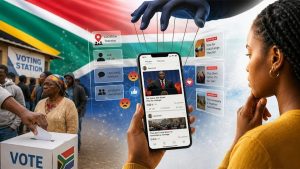
The exhibition’s narrative turns sharply toward the present with a deep dive into the mechanical heart of the internet: the algorithm. Through engaging visualizations and interactive models, it deconstructs the “black box” of recommendation engines, revealing how they operate not as neutral librarians, but as profit-driven prediction machines. These mathematical frameworks, the exhibition demonstrates, are engineered to maximize engagement, often prioritizing outrage, fear, and sensationalism over nuance and veracity. They create inescapable filter bubbles and echo chambers, where a user’s existing biases are continuously fed and amplified, effectively isolating them from conflicting viewpoints. Adjacent to this technical analysis, the exhibition investigates the phenomenon of the influencer—the modern-day pied pipers of consumer culture and ideology. Unlike traditional celebrities who were defined by talent or film roles, influencers are manufactured entirely by algorithmic virality. The exhibition argues that these figures operate on a dangerous precipice of authenticity and advertisement, blurring the lines between genuine opinion and paid sponsorship. Their parasocial relationships with millions of followers make them incredibly powerful vectors for spreading both benign trends and malignant conspiracy theories. The combination of these two elements—the algorithmic amplifier and the human figurehead—creates a powerful engine that can manufacture consensus, shift stock markets, or topple governments, all while remaining staggeringly invisible to the average user who simply believes they are “just scrolling.”
Paragraph 4: The Prometheus Paradox: AI and the Erosion of Truth
If algorithms are the engines of the digital age, then Artificial Intelligence is the supernova that has fundamentally altered the gravitational pull of reality itself. The exhibition arrives at its crescendo, focusing on the rise of generative AI, which it accurately describes as taking misinformation to “a whole new level.” Gone are the days of easily debunked fake news articles riddled with spelling errors. We have entered the era of the deepfake, where a politician’s face can be seamlessly grafted onto a fabricated body speaking words they never uttered, and synthetic audio can clone a loved one’s voice with chilling precision. The curators highlight this “whole new level” through a visceral installation: a high-resolution video of a world leader announcing a nuclear war, broadcast as “fake” for the audience, followed by a survey asking if the distinction truly mattered anymore. The artificial scarcity of tampering has been replaced by absolute abundance. AI allows for the creation of bespoke falsehoods at a scale matching the speed of a server farm. More insidiously, AI has introduced the “Liar’s Dividend,” where the mere existence of sophisticated forgery provides plausible deniability for genuine recordings. The exhibition starkly warns that we are rapidly approaching an “epistemic apocalypse,” where the very concept of objective truth becomes a casualty, buried under a landslide of machine-generated synthetic realities that are impossible to distinguish from authentic human experience.
Paragraph 5: Art as a Critical Lens: The Syndicates of Syd Murphy
Navigating this dense, often abstract, digital wilderness requires a guide, and the exhibition brilliantly employs the work of artist Syd Murphy to bridge the gap between cold data and human emotion. The exhibition features newly commissioned animation and illustrations by Murphy that serve as the interpretive keystone of the digital section. Murphy’s animations transform dry statistical graphs about algorithmic bias into fluid, nightmarish rivers of red and blue data streams that morph into tentacles ensnaring faceless avatars. Her illustrations provide a surreal visual lexicon for the invisible complexity of AI, often depicting human brains intertwined with neural networks, synapses sparking alongside microchips. This artistic collaboration is not merely decorative; it is essential in translating the technical jargon of machine learning into a visceral, intuitive sense of unease and awareness. Murphy’s work cleverly juxtaposes the “original historical examples” with their digital futures, reimagining Goya’s “The Sleep of Reason Produces Monsters” with a tablet in the sleeping figure’s hand, or re-drawing a 1930s propaganda radio as a modern smartphone emitting a glowing, hypnotic aura. Through her animation loops, the movement of data becomes a living creature, a sublime and terrifying entity that neither good nor bad, but inherently unstoppable. Her art acts as the emotional core of the exhibition, allowing visitors to feel the weight of the existential threat rather than just informational overload.
Paragraph 6: A Call to Digital Literacy and the Future of Truth
The exhibition closes not with a solution, but with a profound and urgent call to action, leaving visitors seated in a darkened auditorium for a final, haunting piece by Murphy: a slow-motion animation of a grain of sand falling onto a scale, only to be matched by a digital pixel, the balance perfectly tipping into uncertainty. The curators explicitly frame the fight against digital misinformation as a new form of civil defense. The concluding section shifts focus from the technical to the human, offering interactive workshops on media literacy, reverse-image searching, and the “cognitive gym” exercises designed to build resilience against manipulation. The exhibition makes the critical point that while AI and algorithms are powerful, they are ultimately tools deployed by humans and countered by humans. The “whole new level” of threat demands a whole new level of skepticism and digital rigor. It argues that in a world where synthetic images look hyper-real, the burden of proof has shifted onto the receiver. The journey from ancient pamphlets to contemporary deepfakes encapsulates a stark paradox: we have more access to information than at any point in history, yet we trust less. As visitors emerge back into the glare of their phone screens, the exhibition’s intended effect lingers—a persistent, anxious filter that prompts them to question the source, the intent, and the reality of everything they scroll past. The exhibition stands as a definitive, sobering memorandum for the 21st century, affirming that the preservation of democratic truth now lies as much in the hands of vigilant citizens and visionary artists like Murphy as it does in the technology that seeks to undermine it.


