


Poland Accuses Social Media Giants of Being ‘Silent Allies’ of Russian Disinformation
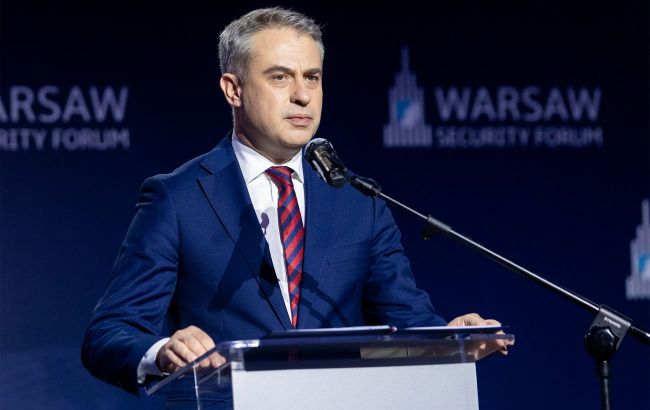
Poland’s Minister of Digital Affairs, Krzysztof Gawkowski, has accused leading social media platforms of becoming complicit in Russia’s disinformation war against Europe, calling them “silent allies” of the Kremlin and its military intelligence agency, the GRU. In a statement reflecting the growing urgency of the information-security crisis in Eastern Europe, Gawkowski described the current moment as a digital war in which disinformation represents one of the deadliest fronts. “A digital war with Russia is underway, and within this digital war lies a front of disinformation. On this disinformation front, there is a silent ally to the Russian bots and the Kremlin’s GRU: social media platforms,” he said. The minister’s remarks are not merely rhetorical; they touch on a central vulnerability of modern democratic societies. Social media has become the primary arena for Russia’s information operations, offering an unrivaled ability to target millions of users with fabricated stories, manipulated images, and coordinated falsehoods. Poland, with its long shared history of Russian aggression and its current role as a critical logistical hub for Western military aid to Ukraine, is one of the primary targets. Gawkowski argued that the platforms have failed to act with the speed and seriousness that the threat requires. Instead of aggressively policing disinformation, they allow bots and fake accounts to operate freely, amplifying messages that serve the Kremlin’s geopolitical interests. The platforms’ inaction, he said, makes them de facto participants in the digital war—not as victims, but as facilitators. His comments are likely to intensify pressure on technology companies to reform their moderation practices, especially in countries on the front line of hybrid warfare. At its core, his accusation is simple: when the world’s most powerful information networks knowingly permit the spread of war-inspired lies, they are no longer neutral hosts but silent allies to a hostile power.
To quantify the scope of the problem, Gawkowski pointed to data from NASK, the Polish state research institute that oversees cybersecurity and online safety. In the first half of 2026 alone, NASK sent more than 65,000 notifications to social media platforms regarding fake accounts, bot networks, obvious disinformation, and other content suspected of violating platform policies. That equals an average of more than 10,000 serious reports every month—a staggering number for a country of roughly 38 million people. Yet the platforms’ responses were disproportionately weak. According to the NASK data, less than a quarter of the 65,000 notifications received any response from the platforms. Even more troubling, only 7 percent of the reported cases resulted in content removal, while just over 17 percent were subjected to any form of moderation. This means that about three-quarters of the reports were effectively ignored, and that more than 90 percent of the suspicious content flagged by NASK remained live, visible, and potentially harmful. For Gawkowski, these figures point to a systemic failure rather than an occasional lapse. He noted that if 65,000 signals of Russian-backed information activity are not enough to trigger robust action, then the platforms’ internal systems are either broken, bypassed, or deliberately configured to allow disinformation to circulate. The minister also stressed that these are not borderline cases; many involved coordinated networks, malicious accounts, and clearly fabricated content. In the context of a real, ongoing war—where disinformation has been used to justify military action, undermine refugee solidarity, and erode trust in democratic institutions—the failure to act on such a high volume of warnings becomes a security issue. The NASK data, therefore, is not simply a customer-service problem; it is evidence of an unmet responsibility. Gawkowski argued that if the platforms had any serious commitment to the safety of their users and to the integrity of public debate, the removal rate would be far higher. Instead, the numbers suggest that Russian disinformation operators can operate with near impunity on the most influential media channels in the world.
Gawkowski did not stop at calling the platforms inefficient. He went further, accusing them of deliberate complicity and of profiting from the very disinformation they are supposed to suppress. “The data points not merely to a failure, but to deliberate action by the platforms—which profit from disinformation, use it, and treat it as a source of their revenue,” he said. This accusation cuts to the heart of the business model employed by the world’s biggest digital companies. Social media platforms generate revenue through advertising, and advertising prices are tied to engagement. Disinformation is engineered to engage; it is emotional, provocative, and often shocking. It generates likes, shares, comments, and outrage, all of which keep users on the site and expose them to more ads. In this sense, the algorithms that recommend content are not passive vehicles for hate or lies; they are active participants in their spread. Content that sparks anger or fear tends to travel much farther than calm, factual journalism. The companies have repeatedly denied that they deliberately promote falsehoods, but the persistent gap between their public statements and their enforcement data suggests otherwise. Gawkowski’s statement implies that the platforms are not victims of a difficult technical problem but are acting with a commercial incentive to tolerate disinformation. They use it, he said, and treat it as a source of revenue. In other words, the Kremlin’s bots and fake accounts are not merely tolerated; they are monetized. The implications are profound. If true, the business model of the digital economy is directly at odds with the requirements of national security and democratic resilience. A platform that earns money from divisive content cannot also be trusted to protect the public from disinformation. Gawkowski’s remarks are likely to fuel growing calls for greater transparency in how platforms handle reports, how their algorithms rank content, and how their financial incentives shape content moderation decisions. He framed the matter in stark terms: this is not a negligence problem but a deliberate choice to profit from chaos.
Against this alarming backdrop, Gawkowski announced a series of demands that Poland intends to impose on social media platforms. His first demand is the establishment of effective moderation teams that operate in the Polish language. Many global platforms rely on centralized review hubs where content is assessed by staff who do not understand Polish cultural, historical, and political contexts. This has led both to the survival of dangerous Russian narratives and to the removal of legitimate Polish content. The minister insisted that platforms must hire or train teams capable of understanding the local information environment. Second, these teams must maintain direct, real-time communication with Polish organizations and authorized entities that report suspicious content. This would replace the slow, ticket-based reporting systems currently in place, which are wholly inadequate for fast-moving disinformation campaigns. By the time a platform responds to a report, the fake story has often been shared millions of times and achieved its objective. Third, Gawkowski demanded the elimination of what he called “sham appeal procedures.” These procedures, he argued, are widely exploited by disinformation operators. When a bot network is identified, its operators can file appeals that delay takedowns for days or weeks, giving the content time to spread. In some cases, the appeals are successful—not because the content was legitimate, but because the platform has no understanding of the local context. Fourth, he called for the immediate removal of any detected bot networks, rather than the slow, case-by-case deletion of individual accounts. Bot networks are the delivery system for coordinated disinformation; removing one account at a time is like emptying the ocean with a spoon. Finally, he demanded a significant reduction in response times for all reports related to state-sponsored disinformation. To enforce these demands, he threatened financial penalties. “Furthermore, I have made it clear that any state request left unfulfilled by these platforms will trigger proceedings to impose financial penalties upon them,” he concluded. This statement transforms the demands from gentle requests into legally binding requirements, and it signals a new willingness among European governments to challenge the power of big tech in the name of public security.
The timing of Gawkowski’s statement is crucial. It comes ahead of Poland’s Independence Day, a date of deep patriotic meaning that has become a favorite target for Russian influence operations. According to intelligence and cybersecurity officials, Russia has intensified its disinformation campaign against Ukraine in this period, spreading fakes about deteriorating relations between Poland and Ukraine and about Polish fatigue with supporting Kyiv. These narratives are carefully designed to exploit real tensions and to create a sense of hopelessness among Western publics. The central theme of the recent operation is that Poland, exhausted by the presence of millions of Ukrainian refugees and by the economic cost of the war, is secretly preparing to abandon its neighbor. Russian media and bot networks amplify stories of conflicts at the border, strained public services, and political disputes between Warsaw and Kyiv. Even when these stories are denied by both governments, the repetition of the narrative across social media creates a cumulative effect. The Center for Countering Disinformation (CCD), a Ukrainian government body tasked with tracking and debunking Russian disinformation, has assessed that the Kremlin’s goal in these operations is to weaken European unity and to diminish international support for Ukraine. By turning Poland, the most important frontline ally of Ukraine, into a symbol of war-weariness, Moscow hopes to convince other European nations that further support is futile. The CCD has documented a notable increase in the volume of anti-Ukrainian and anti-Polish content in the run-up to the holiday, much of it coordinated and spread through fake accounts. The problem, as Gawkowski sees it, is that these campaigns are successful only because the platforms fail to act. If a coordinated bot network can push a disinformation narrative to millions of users before being reported, and if the platform then does nothing for weeks, the damage is already done. This is why he has demanded not just a moderate improvement in moderation, but a fundamental reorientation of how platforms treat state-backed information warfare.
Gawkowski’s statement is a landmark moment in the debate over the responsibility of social media companies in modern conflicts. It goes beyond the usual diplomatic language of urging cooperation and exposes a harsh reality: the platforms have become a key battleground in a war that is being fought as much with data as with weapons. The Polish minister’s call for financial penalties is especially significant. It suggests that voluntary measures by companies are no longer considered sufficient, and that national governments must be prepared to use their regulatory powers to enforce accountability. The European Union’s Digital Services Act already provides a legal basis for such enforcement, requiring large platforms to assess and mitigate risks related to election integrity and public security. But the Polish case highlights a critical implementation gap: the law is only as strong as its enforcement. If the European Commission and member states are unwilling to levy fines against platforms that systematically ignore legitimate state reports, the law will remain a paper tiger. Poland’s determination to impose penalties may serve as a test case for the rest of the Union. It may also encourage other frontline states—particularly in the Baltic region and in Scandinavia—to adopt similarly aggressive approaches. The broader implication of Gawkowski’s argument is that social media platforms must stop treating disinformation as an acceptable cost of doing business. They have become central to how billions of people understand the world, and with that power comes an unavoidable duty to defend the public space from manipulation. By labeling them “silent allies” of Russia, the minister has issued a stark warning: if the platforms continue to facilitate Russian sabotage, they should be treated as adversarial actors, not neutral technology companies. Whether they heed the warning, or face the financial consequences, will determine the future not only of Poland’s information security, but of democratic resilience across the entire continent.