








Paragraph 1: The Alarming Call to Vigilance in the Swedish North
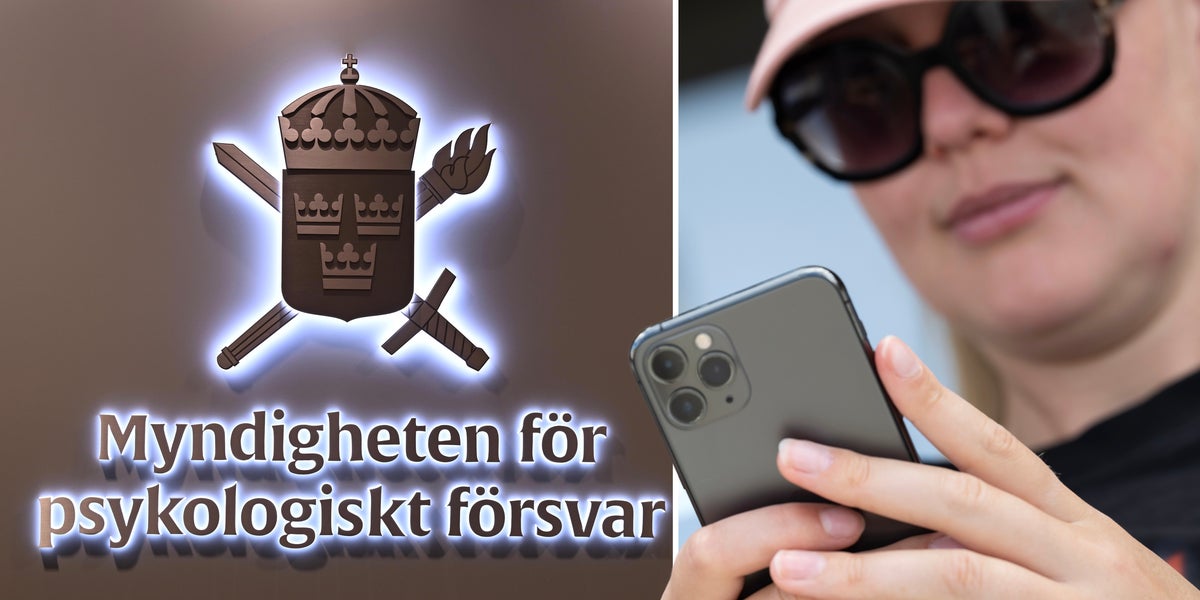
In a striking editorial that resonates far beyond the northern Swedish municipality of Skellefteå, the local newspaper Norran has issued an urgent warning to its readership: watch out for Russian meddling in Sweden’s elections. This admonition, while framed for the readers of a regional publication that typically focuses on local commerce, municipal politics, and community affairs, has been elevated to a matter of national security. The article does not present a vague hypothetical scenario; instead, it synthesizes the stark intelligence briefings provided by Sweden’s Security Service (SÄPO), the Swedish Civil Contingencies Agency (MSB), and the newly established Psychological Defence Agency (MPF) to paint a detailed picture of an active, ongoing hybrid threat. Historically, Sweden has long prided itself on a robust and transparent democratic process, evident in consistently high voter turnout and a deep-seated cultural trust in public institutions. However, the geopolitical landscape has been irrevocably transformed since the Russian annexation of Crimea in 2014 and the constant saber-rattling in the Baltic Sea region. Norran‘s editorial underscores that this threat is not confined to the corridors of power in Stockholm or the spires of the Riksdag; it directly targets the hearts and minds of ordinary Swedes in the northern counties, often overlooked by national security discourse. The article emphasizes that the Kremlin’s strategy is not necessarily to manipulate the final vote count in a wildly overt way, but rather to corrode the perceptual foundation of democracy itself. By sowing confusion, amplifying extreme rhetoric, and fostering deep cynicism, the goal is to ensure that a significant portion of the electorate questions the legitimacy of the final results, regardless of which party wins. This sophisticated form of information warfare aims to destabilize society from within, creating a permanent state of distrust that weakens Sweden’s internal cohesion and its ability to stand united against broader pan-European security challenges. The specific timing of the Norran article is crucial, as it precedes the national elections, a period during which the vulnerability to disinformation spikes exponentially, and the newspaper places its own journalistic weight behind the state’s warnings to effectively bridge the gap between national intelligence assessments and the daily concerns of the local population.
Paragraph 2: The Arsenal of Digital Deception and Bot Proliferation
Delving into the specific methods detailed in the Norran piece, the article outlines a multi-layered arsenal of digital deception that the Russian state deploys with surgical precision. The primary weapon of choice is the ubiquitous bot farm and troll network, famously associated with the Internet Research Agency in St. Petersburg, which coordinates massive networks of fake social media accounts across platforms like Facebook, Twitter (now X), Instagram, and the increasingly relevant TikTok. These automated and semi-automated profiles do not necessarily create entirely false narratives from scratch; rather, they excel at amplifying existing, often fringe, opinions to a mainstream magnitude. The article explains how these bots meticulously identify flashpoint issues within Swedish society—such as the controversial integration of immigrants, the volatile price of electricity in the northern regions, and the debates surrounding Sweden’s potential NATO membership—and then flood the digital ecosystem with highly emotional, often fabricated posts. The journalism in Norran highlights a critical algorithmic vulnerability: social media platforms reward engagement, so outrage and polarizing content naturally achieve higher visibility. Russian operatives exploit this inherent bias, deliberately seeding hashtags and sharing doctored videos or “deepfakes” that are designed to go viral, bypassing traditional editorial gatekeeping. Furthermore, the article describes the use of “hack and leak” operations, where legitimate political party communications, emails, and campaign strategies are stolen and selectively released to the media at precisely timed moments to cause maximum damage to particular candidates or coalitions. The intelligence community has noted that these operations are often conducted by the Russian military intelligence agency, the GRU, rather than civilian troll farms, indicating a state-level commitment to destabilization. For the local readers of Norran, the key takeaway is that these attacks are not esoteric; they appear in the comment sections of local news sites, in community Facebook groups discussing the opening of new mines or wind farms, and in private messaging apps. The traditional distinction between “real” voters and “bot” voters is becoming impossible to discern, making the average citizen an unwitting amplifier of foreign intelligence objectives. The article urges readers to be skeptical of any content that elicits an immediate and visceral emotional reaction, particularly if it aligns perfectly with pre-existing partisan grievances, as this is often the exact psychological hook utilized by foreign interference campaigns.
Paragraph 3: Exploiting Societal Fractures and the Achilles’ Heel of Polarization
The Norran article shifts its focus from the technological means to the psychological ends, arguing that Russia’s success hinges entirely on the existence of pre-existing fractures within Swedish society. The nation is not a monolith; it is a tapestry of distinct regional identities, socioeconomic classes, and ideological perspectives. The article specifically references the growing polarization between urban centers and rural municipalities like Skellefteå itself, where residents often feel that the political elite in Stockholm fails to understand their unique challenges regarding harsh winters, long distances, and infrastructure maintenance. Russian influence operations aggressively exploit this urban-rural divide, painting metropolitan Swedes as out-of-touch elites and portraying rural residents as neglected patriotic heartlands. This narrative is reinforced by coordinated disinformation regarding EU funding, climate change policies—with specific allegations that rural industries like forestry and mining are being maliciously dismantled by globalist agendas—and the handling of immigration, where false stories about welfare abuse or violent crime in smaller towns are circulated to stoke fear and resentment. The article emphasizes that Medvedev’s and Putin’s strategists are experts in asymmetric warfare, understanding that promoting extremism on both ends of the political spectrum is more effective than pushing a single, singular agenda. They simultaneously fund and amplify far-left Antifa movements and far-right nationalist groups, aiming to force citizens into mutually antagonistic camps that no longer converse. When citizens see their political opponents as existential threats rather than fellow Swedes with differing opinions, democratic compromise becomes impossible, and the country’s legislative process grinds to a halt. The editorial points out that this internal paralysis is a victory for Moscow, as it weakens Sweden’s ability to participate effectively in NATO, the EU, and other collective defense pacts. For the readership, the call is to recognize that anger at their neighbors is being weaponized. The write-up calls for a conscious effort to distinguish between legitimate political debate between Swedish citizens and the artificially manufactured outrage that stems from carefully constructed foreign narratives—a challenge that requires considerable media literacy and a willingness to engage with differing viewpoints constructively.
Paragraph 4: The Nexus of Military Intimidation and Psychological Operations
Connecting the information warfare tactics to broader physical security, Norran‘s comprehensive analysis explains that Russian election meddling does not occur in a vacuum; it is intrinsically linked to an aggressive military posture in the Baltic region. The article reminds its readers of recurring incidents involving non-EU aircraft violating Swedish airspace, suspected underwater submarine activity in the Stockholm archipelago—most famously the 2014 “whiskey on the rocks” search off the coast near Gotland—and the constant shadowing of Swedish naval vessels by Russian corvettes. This tangible military pressure serves a dual purpose. Firstly, it directly intimidates the population, creating an atmosphere of anxiety that makes citizens crave “stability” and potentially gravitate towards authoritarian or populist figures who promise a simplistic, hard-line solution, regardless of their democratic credentials. Secondly, it provides a foundation for narrative manipulation. If Russia can trigger a heightened state of alert, it can then accuse Sweden of “hysterical Russophobia” and propaganda, casting skeptics of the security agencies as the rational moderates. The Norran article highlights the strategic importance of the island of Gotland, frequently referred to as an unsinkable aircraft carrier; Russian trolls have actively spread disinformation that Swedish military exercises on the island are actually provocations intended to escalate tensions, thereby undermining public support for defensive deployments. The piece also touches upon the situation of Swedish-speaking residents in Finland and the broader Fennoscandian identity, noting that Russia has targeted media ecosystems in these border areas with alternative narratives about ethnic discrimination to create friction. This physical and psychological nexus is perhaps the most dangerous aspect of hybrid warfare because it ensures that military responses cannot be viewed in isolation. The intelligence community cited in the article suggests that the Kremlin’s calculations view a destabilized, internally divided Sweden as a weaker opponent than a militarized, united one. By creating a population that is skeptical of its own government’s security assessments, Russia creates strategic ambiguity, giving their own military planners a freer hand in the region. Ultimately, the Norran piece urges readers to understand that the fake accounts posting inflammatory comments online are not just nuisances—they are the vanguard of a military-adjacent operation designed to erode the psychological resilience of the Swedish state and its people.
Paragraph 5: The Swedish Institutional Response and Democratic Defense
Amidst the detailing of threats, the Norran article provides a thorough overview of the countermeasures Sweden has implemented to fight back, framing it as a united front of state, civil society, and private citizens. The creation of the Psychological Defence Agency (MPF) in 2022 is highlighted as a landmark shift, taking over responsibilities from the MSB and given a permanent mandate to identify, analyze, and counter foreign influence campaigns. The MPF has launched public awareness campaigns, partnering with news media outlets—including small regional papers like Norran—to establish fact-checking protocols and rapid-response networks that can debunk viral falsehoods before they take root. The article discusses the enhanced powers granted to SÄPO, including increased surveillance of coordinated inauthentic behavior online, though it carefully notes the delicate balance between security and the protection of free speech and civil liberties, a debate that rages in the Swedish political sphere. Furthermore, the government has actively collaborated with tech giants like Meta and Google to increase transparency in political advertising, requiring clear labels for paid posts and implementing “break glass” mechanisms that allow rapid takedowns of identified troll networks. The piece also praises the resilience of the Swedish media ecosystem itself—the high public trust in traditional news sources like national broadcaster SVT and regional papers—which serves as a natural firewall against fabricated news. However, the article issues a critical warning that these institutions cannot do it alone. It stresses the importance of local faktaskolor (fact schools) and digital literacy programs that have been introduced into the Swedish education curriculum, teaching students from a young age how to critically evaluate sources and recognize logical fallacies. In the context of Skellefteå, which is rapidly industrializing due to the Northvolt battery factory and experiencing massive population influx, the Norran article emphasizes a unique vulnerability: the new residents, many of whom are immigrants or international workers, may not yet share the same cultural familiarity with Swedish public institutions, making them potentially more susceptible to disinformation narratives that question the Swedish democratic model or over-simplify complex multicultural issues.
Paragraph 6: The Ultimate Call to Action for Citizens and Local Communities
In its concluding paragraphs, the Norran editorial transforms from a bleak analysis of threats into an inspiring call to arms for its readership, emphasizing that the ultimate defensive bulwark against Russian meddling is not technology or intelligence agencies, but the engaged, vigilant citizenry of Sweden. The article directly addresses the people of Skellefteå and the wider Västerbotten region, reminding them that their democratic rights—hard-won through decades of universal suffrage and social progressive struggles—are being actively targeted by a foreign autocracy. It argues that apathy is the greatest ally of disinformation; if citizens disengage from the political process out of cynicism or exhaustion caused by endless online nastiness, then the meddlers have already achieved their goal. Concrete, actionable steps are offered: readers are urged to verify information received through social media forwarded from unknown sources, to check the original URL of any news story, to be wary of unverifiable screenshots, and to refrain from sharing emotionally charged content without clicking through to the source article. Community engagement is emphasized—attending local political town halls, speaking directly to candidates, and maintaining trust in public institutions such as the Election Authority and the Police. The article reminds readers that democracy thrives in the physical world—in the coffee rooms of communal homes, in the queues at Systembolaget, and in the bleachers of local ice hockey matches—spaces that remain largely immune to bot manipulation. Norran positions itself as a trusted anchor, promising its readership that its journalistic integrity will not waver in the face of foreign attempts to corrupt the information environment. The final paragraph asserts that Sweden has endured the Cold War, the Soviet nuclear threats, and the harsh realities of a rigid bipolar world, and has remained a glowing example of high-trust societal governance. This latest challenge, while sophisticated in its methods, does not fundamentally outweigh the inherent strength of a well-informed, historically rooted, and socially cohesive population. The warning is clear, but so is the assurance: by remaining skeptical, compassionate, and engaged, the citizens of northern Sweden—and the nation as a whole—can ensure that the only hands that determine their political future are their own, and that the dark clouds of foreign influence will not overshadow the bright northern lights of their enduring democracy.


