








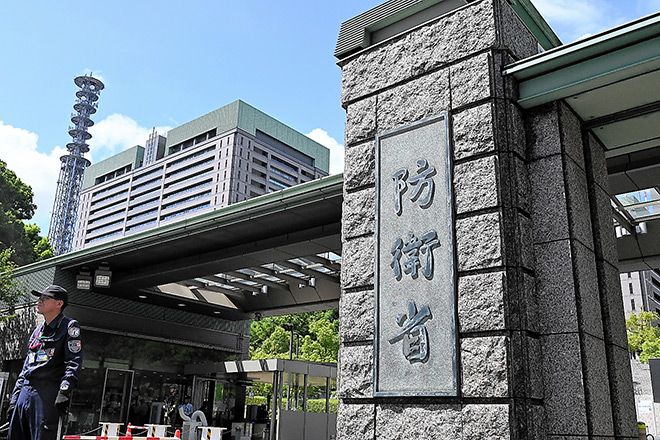
Paragraph 1: The Establishment of a Specialized Counter-Disinformation Division
The Japanese Defense Ministry is taking a significant and unprecedented step to fortify its defenses against the modern battleground of information warfare by establishing a new, dedicated division tasked with swiftly identifying and neutralizing foreign disinformation campaigns. This move is a direct response to the escalating narrative propagated by Beijing that Japan is embracing what it calls “new militarism,” a label employed to cast Japan’s defensive posture in a negative and threatening light across the international community. According to multiple sources close to the government, this new division will be housed within the ministry’s influential Bureau of Defense Policy, positioning it at the strategic core of Japan’s national security decision-making apparatus. The division is envisioned to serve as a centralized command center, a nerve center for all efforts aimed at monitoring, analyzing, and rebutting attempts by foreign actors to manipulate public opinion and distort Japan’s security intentions. The funding for this ambitious initiative is slated to be included in the ministry’s budget request for the fiscal year 2027, signaling a long-term commitment to institutionalize counter-influence operations. This development comes at a time when nations worldwide are increasingly weaponizing false information, deepfakes, and coordinated social media campaigns to sway public sentiment, undermine trust in democratic institutions, and gain strategic advantages without resorting to kinetic military force. For Japan, which has traditionally been cautious in its public communications, this marks a paradigm shift in how the nation intends to engage with the global information ecosystem, recognizing that in the contemporary era, the battle for public perception is often as critical as the readiness of its self-defense forces. The establishment of this division underscores a growing recognition within Tokyo that passivity in the face of hostile narratives is a vulnerability, and that proactive, agile communication is now an integral component of national security strategy.
Paragraph 2: The Operational Mandate and Strategic Function of the New Division
The core operational mandate of this new division is to consolidate the entire lifecycle of information management—from collection to dissemination—into a single, efficient unit. Currently, the Defense Intelligence Division, also under the Bureau of Defense Policy, is responsible for gathering and analyzing intelligence on international military affairs and the security developments of foreign nations. However, the subsequent handling of this information regarding public messaging has been fragmented, with various sub-divisions coordinating public relations efforts on a case-by-case basis, largely under the direct and personal leadership of the Defense Minister. This disjointed approach has proven slow and reactive, ill-suited for the lightning-fast velocity of modern social media disinformation campaigns. The new division aims to rectify this deficiency by centralizing the collection, analysis, assessment, and public dissemination of information related to influence operations. Crucially, it will be vested with the authority to make tactical decisions regarding whether a specific narrative circulating on social media platforms requires an official response, and if so, determine the precise timing, intensity, and content of that rebuttal. This grants the defense establishment a rapid-response capability previously lacking. The division will likely employ advanced analytical tools, including AI-driven sentiment analysis and network mapping, to trace the origins of disinformation and gauge its spread. By centralizing these functions, the ministry intends to eliminate bureaucratic bottlenecks and ensure that Japan’s voice is heard in the current “information space” before falsehoods can take root. The success of this unit will depend on its ability to integrate intelligence from various sources—open source intelligence, cyber intelligence, and diplomatic channels—and transform raw data into clear, persuasive counter-messaging that resonates with both domestic and international audiences, effectively pushing back against hostile state narratives.
Paragraph 3: Catalysts and Immediate Historical Context of the Counter-Offensive
The urgency behind establishing this new division is not abstract; it is rooted in specific, recent geopolitical flashpoints. Following remarks made by Prime Minister Sanae Takaichi in the National Diet in November regarding the potential for a conflict involving Taiwan, Beijing immediately launched a voluminous and vitriolic propaganda offensive, accusing Japan of resurrecting past imperialist ideologies, specifically citing “new militarism” and a “revival of militarism.” This narrative is deliberately aimed at delegitimizing Japan’s defensive military adjustments in the eyes of Southeast Asian nations and the global south, painting Tokyo as a destabilizing force akin to its pre-war history. The Defense Ministry has already taken preliminary steps to push back, reflecting a more proactive posture. Since June, the ministry’s spokesperson and the chief of the Joint Staff have established official accounts on X (formerly Twitter) to directly engage with public narratives and correct misinformation in real-time. However, these efforts have been isolated and insufficient to counter the massive volume of state-sponsored bot networks and amplified propaganda. Furthermore, the government is scheduled to revise its three key national security documents by the end of the year, which will formally endorse a substantial increase in defense spending, likely breaching the threshold of 2% of GDP for the first time. These revisions are certain to draw intense criticism and distorted narratives from China. The new division is expected to be central to managing the information fallout from these security shifts. It will be tasked not merely with responding to differing opinions, but with proactively framing Japan’s defense build-up as a necessary, transparent, and defensive response to deterrence gaps, thereby inoculating international public opinion against Chinese characterizations.
Paragraph 4: The Critical Question of Government-Wide Coordination and Leadership
Despite the ministry’s initiative, a significant strategic ambiguity persists concerning the overall coordination of Japan’s response to information warfare at the whole-of-government level. The Defense Ministry’s creation of a specialized division is a vertical strengthening of its own capacity, but the horizontal integration across various cabinet agencies remains unclear. The government implemented the National Intelligence Bureau on July 31, intended to enhance intelligence-gathering and analysis capabilities across the board. Alongside this new bureau, the National Security Secretariat relies on the Cabinet Public Affairs Office to manage crisis communications. The existence of multiple authoritative bodies—the new Defense division, the NIB, the NSS, and the Cabinet Office—raises the critical, unresolved question: which single body will serve as the supreme command center for orchestrating national counter-disinformation policy? This ambiguity is leading to significant internal debate and concern. Without a clearly designated “lead agency” that holds authority over all others, efforts risk deteriorating into fragmented, bureaucratic turf wars where messaging is inconsistent and strategic goals are diluted. Strategic communication, to be effective against a sophisticated adversary like China, requires a unified message driven from the highest political level, presenting a cohesive front where military, diplomatic, and economic messages are aligned. Currently, there is a prevailing sentiment that the government is operating in a siloed manner, reacting to individual crises rather than directing a coordinated surge. The Defense Ministry’s initiative, while positive, could exacerbate this fragmentation if not subordinated to a broader, cabinet-level direction.
Paragraph 5: Proactive Strategy and the Challenge of Preventing Narrative Inoculation
The new division’s strategy is expected to go far beyond simple reactive rebuttals, shifting instead towards a model of pre-bunking and predictive communication. Rather than waiting for the next disinformation narrative to emerge, the ministry intends for this division to anticipate likely responses from neighboring countries to future Japanese security policies, allowing the ministry to share informational content in advance. This involves projecting potential disinformation vectors and building a reservoir of factual data, historical context, and persuasive messages that can be frequently released to preemptively shape the narrative space. By communicating Japan’s defensive rationale proactively—for example, detailing the necessity of counter-strike capabilities in a transparent manner—the ministry hopes to deny adversaries the opportunity to define the terms of the debate. This approach recognizes a fundamental principle of modern information warfare: it is exponentially easier to prevent false information from gaining traction than to correct it after it has spread. However, this proactive approach faces inherent challenges. Domestically, the Japanese public has a complex relationship with the Self-Defense Forces due to historical sensitivities, requiring careful rhetoric that reassures citizens while deterring adversaries. Internationally, Japan lacks the massive state-funded media apparatus that nations like China possess. Simply releasing additional information is not a guarantee of acceptance; the information must be trusted. This necessitates the cultivation of long-term relationships with international media outlets, think tanks, and civil society organizations to serve as validators of Japan’s messaging. The new division must become experts not only in security policy but also in cultural nuance, ensuring that its messages translate effectively across disparate global audiences, steering clear of propaganda sounding generic and instead communicating consistent truth that withstands scrutiny.
Paragraph 6: Internal Skepticism, Systemic Gaps, and the Path to Effective Deterrence in the Information Domain
Despite the momentum, there is palpable skepticism within the Japanese defense establishment regarding whether the creation of a new division will substantively solve the systemic deficiencies in the government’s information warfare posture. As one Defense Ministry official candidly remarked, “The government is still playing whack-a-mole on individual issues. It will be too late once China’s narratives have spread throughout the international community. Yet, the Japanese government still lacks a sense of urgency.” This stark internal critique highlights the foundational issue: organizational structures alone cannot substitute for political will and interagency cooperation. The creation of a dedicated unit within one ministry, while a step forward, does not resolve the deep-seated lack of a cohesive national security communications strategy that transcends ministerial borders. The propensity to treat disinformation as a mere military defense issue rather than a national political, economic, and cultural threat may render the new division a somewhat isolated outpost in a broader battlefield it cannot fully see. For Japan to effectively wield informational power, the Prime Minister’s Office must take direct ownership, empowering a senior official to cut across bureaucratic lines and issue binding directives. Without this integrated whole-of-government approach, Japan risks remaining step behind diplomatic information offensives, perpetually on the back foot defending accusations rather than shaping the international security dialogue. The new division can serve as a crucial component of the solution, providing the analytical and content creation capabilities necessary to push back against adversaries. However, its effectiveness will ultimately be determined by Tokyo’s broader commitment to an aggressive, coordinated, and preemptive strategy that views public communications not as a liability to be managed but as a primary weapon in the fight to preserve national security and freedom in the digital age.


