








Paragraph 1: The Parliamentary Showdown Over Moldova’s Media Code
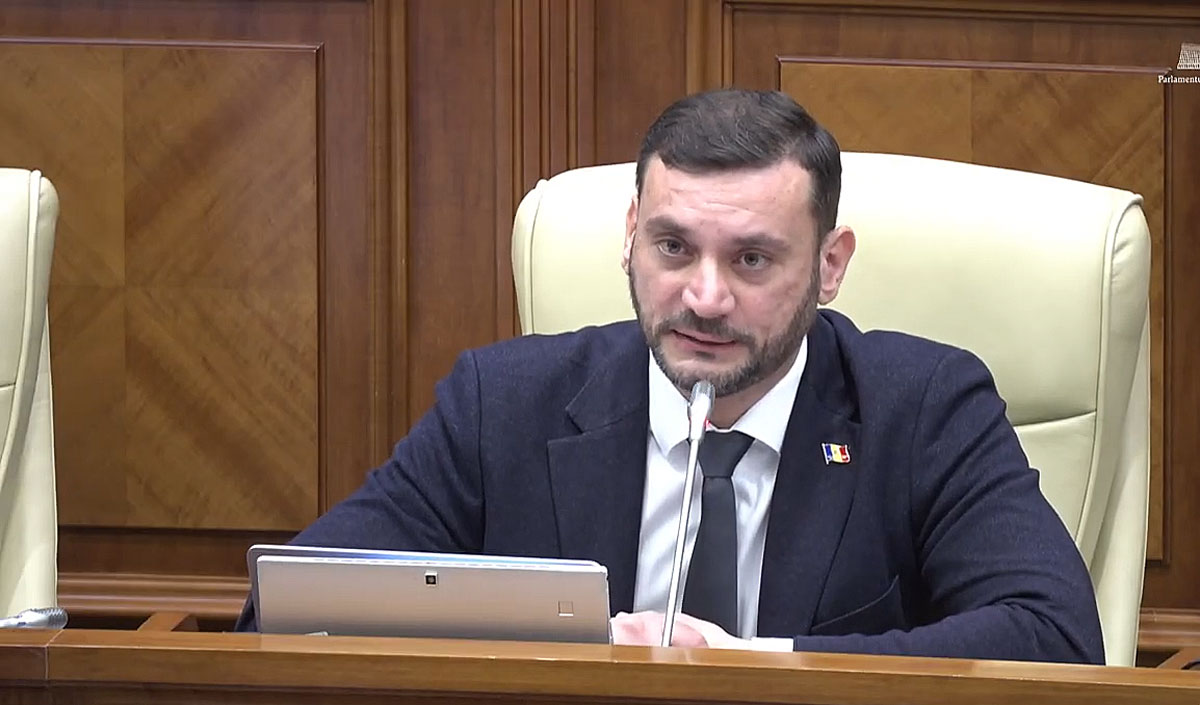
In a tense session of the Moldovan Parliament, deputy Nicolae Margarint launched a scathing critique of a sweeping legislative package aimed at amending several national regulatory acts, most notably the Code on Audiovisual Media Services. During the plenary debate regarding the bill, Margarint positioned himself as a staunch guardian of press freedom, warning that the proposed modifications, as currently drafted, risk providing the state with an unchecked mechanism to silence critical voices. The amendments were presented to the legislature under the guise of modernizing the media landscape and enhancing the fight against disinformation, but the parliamentarian immediately flagged a series of dangerous legal ambiguities. Margarint specifically anchored his dissent in official warnings issued by the National Anti-Corruption Center (NAC), a key independent institution. According to his reading of these warnings, the newly introduced definition of “disinformation” provided within the code lacks objective, measurable standards, thereby allowing authorities to adopt a highly differentiated and, ultimately, arbitrary approach toward different media content providers. This, he argued, violates the principle of legal certainty, opening the door for political favoritism and the quashing of independent journalism, all under the guise of maintaining national security and electoral integrity.
Paragraph 2: The Menace of Ambiguous Definitions and Differential Treatment
Central to Margarint’s oral submission was the chilling comparison to how vague legislation is weaponized over time. The MP delved deeply into the NAC’s findings, highlighting that the definition of “disinformation” contained in the new regulations could easily be stretched to encompass opinions, satire, and critical commentary, thus creating a legal environment rife with subjective interpretation. Rather than establishing a clear, fact-based threshold, the provision effectively empowers regulators to perform a “differentiated approach” toward providers based on their editorial line or business model. This would mean that large, state-aligned outlets could escape sanction while smaller, independent online platforms, or critical television newsrooms, become favored targets for investigation. The lawmakers’ professional responsibility, Margarint argued, is to scrutinize these vague legal frameworks, because a broad definition of ambiguous harm is the classic hist loam in which censorship grows. The parliamentary session thus became a stark illustration of the struggle between crafting robust anti-propaganda laws and maintaining a vibrant, diverse journalistic ecosystem that is free to challenge institutional power without fear of administrative battery.
Paragraph 3: The Removal of the Falsity Requirement – An Evidentiary Void
Perhaps the most alarming technical detail raised by the MP was the outright deletion of the obligation to prove that the offending information is unequivocally false. Historically, any prosecution or sanction against a media outlet for spreading disinformation requires them to establish a standard of intent and, crucially, demonstrate the falsity of the claims in question. This serves as necessary safeguard, preserving the journalistic imperative to publish preliminary, yet obviously sourced, information or to offer critical interpretations of events. By removing this requirement, the bill implicitly shifts the burden—public authorities or regulators could now designate a statement as disinformation merely because it disagrees with official policy or because it fails a subjective test of truth-value associated with editorial choice, rather than objective falsity. Margarint center-stage asked a pointed, direct question to the bill’s framers: “Why was it decided to remove the requirement to prove that the information is false? And what guarantees provides we have that this provision will not be used against unwelcome media outlets and critical opinions?” The query reinforced the notion that without the “knowledge of falsehood” criterion, the regulation became a tautological tool—a proposition where anything authorities dislike is legally arbitrary.
Paragraph 4: The Shadow of Unwelcome Media and The Chilling Effect
Beyond the technical amendments, the delegate addressed the broader psychological ramifications on journalists and editors. Any law that gives sweeping powers without rigorous procedural checks inherently fosters an environment of suspicion, leading media operators to self-censor their more difficult reporting to avoid scrutiny. Margarint explicitly warned that the structure, matched with the power of new regulatory mechanisms, could be directly tapped by the executive authority to sanction “unwelcome media and critical opinions.” This language spoke pointedly to previous cases where political pressure emerged in Moldova, reminding his colleagues that while the tools for clamping down on propaganda are legal, fairness must not turn into a cloak for curtailing legitimate dissent. The removal of evidence requirements creates a bulliard’s office in which truth is weaponized; a legal fight against one anchor can collapse an entire newsroom’s finances and credibility. The distribution of risk becomes severely asymmetric, allowing powerful and wealthy interests to litigate or threaten journalists by invoking this code, effectively silencing critical inquiry long before it reaches a court of law.
Paragraph 5: Safeguarding Democracy and Institutional Trust
The deeper implication of Margarint’s speech rides on the symbiotic relationship between a nation’s trajectory and its media law. Moldova, urgent working toward European integration, often finds itself balancing its security against emerging hybrid threats, including Russia’s active disinformation campaigns. Achieving this equilibrium requires robust laws that do not diminish public trust in the rule of law. Margarint nonetheless drew that these provisions must be examined “with particular care,” calling on his fellow legislators to withstand public and political pressure to pass them without sufficient deliberation. By prioritizing those those who are in power to punish critics under the “disinformation” label, the government risks alienating citizens who rely on independent press to hold it accountable. Striking a careful dualism, he maintained that the authorities must never turn new regulatory tools into instruments for exerting pressures; if they do, the democratic pillars are damaged beyond repair, replacing an information free-market with state-enforced conformity. The regulation’s lack of verifiable evidence therefore represents a direct threat not just to journalists work, but to the institution’s integrity in an open society.
Paragraph 6: The Call for Prudent Governance and Future Legal Oversight
In concluding his written statement before the assembly, Nicolae Margarint adorned his thesis and called for the need for significant amendments—stipulating that the removal of falsity requirement must be reversed, and the definition of disinformation must be narrowed to prevent the ideological targeting of dissent. The parliamentarian proposes that any coercive regulation must incorporate strict transparency protocols, including a duty for regulators to publish the reasoning behind any categorization of media content as “disinformation”, allowing for judicial review. The episode underlines continuing tension in Eastern European states between executing aggressive policies against foreign interference and domestic censorship. Margarint’s uncompromising stance is a reminder that while policing informational space is legitimate, it can never be used to wrongly annihilate the advent of opinion homolgation. As the bill progresses, the MPC posits that the seminal challenge for the legislature remains one of supervised equilibrium: how to protect the Republic’s geopolitically suffered orders without annihilating the critical conscience that journalists provide. The risk of overreaction is as great as the threat of underreaction; being vigilant is paramount, and the public as well as the legal community must hold the chamber, Ministers, and the regulator to that litmus test of principled restraint. Without those exact guarantees, democratic debate ironically suffocates in the air which believes it seeks to clean.


