


Reform UK Leader Breaks Ranks to Condemn Government’s New Anti-Disinformation Unit as Censorship Threat
LONDON — A new political battle has erupted over the government’s plan to establish a dedicated national centre to counter Russian misinformation and foreign interference, with Nigel Farage emerging as the only senior political figure to denounce the initiative. The Reform UK leader claimed the proposed body would be used to clamp down on free speech and was “targeted directly” at his party, prompting an angry rebuttal from ministers who insisted the unit would not police domestic dissent. The announcement was made by Prime Minister Andy Burnham in his first address to the United Nations General Assembly, where he set out plans for the National Centre for Information Defence. The centre is intended to tackle online lies, deepfakes and coordinated disinformation campaigns that damage British interests, with the prime minister warning that the growing sophistication of artificial intelligence would make the problem far worse unless urgent action is taken.
The prime minister’s speech painted a stark picture of the threat facing democratic societies in the digital age. He described the spread of false information as an “insidious campaign” that reaches into people’s homes and distorts their sense of national identity and community. According to Mr Burnham, these campaigns are designed to create a “narrative of decline, stoking division and sowing despair” across the country. He argued that the combination of state-backed actors and new generative AI tools, which can produce convincing but fabricated images, audio and video content, represented one of the most significant challenges to democratic resilience in a generation. The proposed National Centre for Information Defence is intended to be the UK’s flagship response, bringing together expertise from across government, intelligence agencies and civil society to detect, expose and rebut hostile information operations. The prime minister’s decision to announce the plan at the UN underlined his belief that the challenge is not solely domestic but requires international co-operation to defend the integrity of democracies worldwide.
The plan was immediately welcomed by senior MPs from all three major opposition parties, with the notable exception of Reform UK. Labour MP Emily Thornberry, chair of the foreign affairs select committee, said the government’s move addressed a long-standing weakness in the UK’s national security apparatus. She argued that successive governments had approached disinformation in a “disjointed” manner, allowing states like Russia to amplify lies about the UK and exploit social divisions. Ms Thornberry said the new unit represented an opportunity to finally take on a very serious threat that had been left unpunished for too long. Conservative MP John Whittingdale, who also sits on the foreign affairs committee, echoed those sentiments, saying it was welcome that the prime minister had now shared the committee’s assessment that Russia is conducting information warfare against the West and taking concrete action. Liberal Democrat MP Richard Foord also expressed strong support, saying his party looked forward to helping ensure the centre was a success and that it demonstrated a new, robust response to hostile state information warfare.
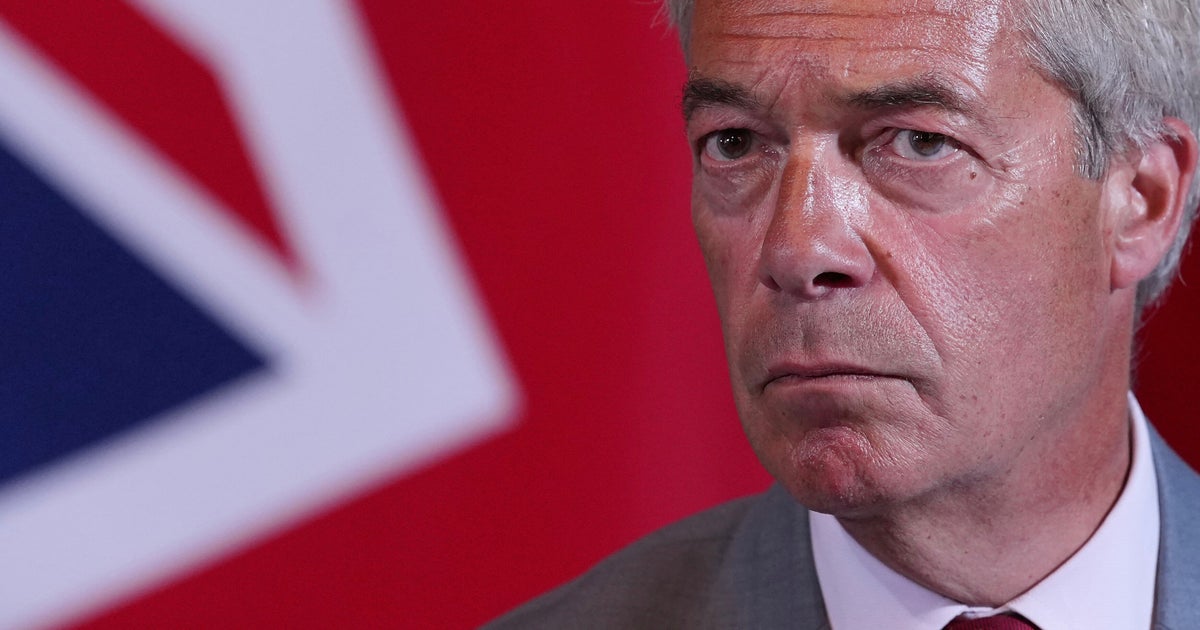
Despite this broad cross-party consensus, Mr Farage broke decisively with the political mainstream in a fiery statement attacking the government’s intentions. He compared the proposed National Centre for Information Defence to the Ministry of Information in George Orwell’s dystopian novel Nineteen Eighty-Four, and accused the government of seeking to control and suppress legitimate political speech. Mr Farage said the centre would be used not to protect national security but to silence dissenting voices, warning that it represented yet another step towards an authoritarian state. He cited what he described as growing patterns of behaviour, including changes to party funding rules and proposals to cancel elections, as evidence that the government could not be trusted with such powers. His comments were significant because they marked him out as the only senior political figure to oppose the plan, placing his party in direct opposition to a measure that has otherwise received broad parliamentary backing.
The government moved quickly to reject Mr Farage’s accusations, with Defence Secretary Wes Streeting insisting that the new unit would not be used to police political dissent or stifle legitimate debate. In a carefully worded response, Mr Streeting said one of the great strengths of the UK was its long democratic tradition, including the freedom to challenge government policy and criticise those in power. He said he had a personal responsibility to defend those freedoms, which included the right of people to disagree with the government and to mount robust criticism without fear of sanction. Mr Streeting stressed that the centre’s focus would be firmly on foreign-backed disinformation and interference, not on the ordinary rough-and-tumble of democratic politics. He rejected Mr Farage’s characterisation of the policy as a censorship tool, insisting that the government had no interest in silencing legitimate dissent and that the centre would operate within clear legal boundaries designed to protect civil liberties.
The dispute highlights a fundamental philosophical disagreement about the best way to defend democracy in the age of artificial intelligence and weaponised information. Supporters of the centre argue that passive responses to hostile state propaganda are no longer adequate and that democratic governments must actively contest the information environment in order to protect their citizens from manipulation. They point to Russia’s record of interference in elections, its use of bot networks and deepfakes, and its ability to exploit existing social tensions as evidence that the threat is real and escalating. Critics, however, including Mr Farage, contend that state bodies claiming to fight disinformation can easily become instruments of political control, particularly when governments define what counts as harmful content. With the National Centre for Information Defence now announced, the coming months will likely see intense scrutiny of its mandate, its limits and the safeguards around its operation. For now, the prime minister has secured broad support from across the political spectrum, but the split opened by Mr Farage’s intervention ensures that the debate over how to balance security and free speech will remain firmly on the political agenda.