








KATHMANDU — Nepal’s government has taken a firm stand against online misinformation by formally demanding that Meta and TikTok immediately remove AI-generated engineering videos, horrific images, misleading uploads, and fake donation QR codes that began circulating widely after reports of flash floods and landslides devastated parts of the country. In a decisive move to curb disinformation, the government’s Task Force for Regulation and Management of Social Media coordinator, Bijay Kumar Roy, confirmed that authorities have already held urgent meetings with representatives from both social media giants. During these discussions, the Nepali government pressed the companies to treat flagged material with the highest possible priority, stressing that allowing harmful content to remain online even for a few hours can magnify chaos, endanger rescue efforts, and inflict emotional trauma on families already grieving. The request comes amid an unfolding humanitarian crisis in which heavy rainfall has swelled the Bhotekoshi and Trishuli rivers, causing widespread damage across northern and central Nepal. Officials fear that fabricated videos and manipulated visuals could mislead rescue teams, divert critical resources, and undermine public trust in official communication. The government’s appeal is not merely about cleaning up social media feeds; it is about preserving the integrity and effectiveness of the entire disaster response. By bringing platform representatives to the table, Nepal is testing whether a developing country can successfully negotiate digital governance priorities with some of the world’s most powerful technology companies.
Beyond the general call for urgent action, authorities have identified three dangerous categories of disinformation that are complicating the emergency response. First, old video recordings from previous floods are being re-uploaded and presented as fresh footage of the current disaster. This recycled imagery inflates the perceived severity of the crisis in specific locations and can confuse rescue planners who waste time verifying nonexistent damage. Second, artificially intelligent visuals represent a far more sophisticated threat. Generative tools now enable users to produce highly realistic images and videos within seconds, making it almost impossible for ordinary people to distinguish real events from digital manipulation. Some of these fabricated clips are said to depict catastrophic bridge collapses and entire villages submerged in impossible detail, creating unnecessary hysteria and contradicting official updates from disaster management agencies. Third, fraudulent donation QR codes have been widely circulated, exploiting public empathy and generosity. People genuinely trying to help victims are being redirected to unverified payment links, with proceeds going directly to anonymous scammers. The government warns that this kind of fraud could severely damage public trust in legitimate charity channels and ultimately reduce the level of assistance reaching those who need it most. Roy stressed that the combined effect of these fake uploads is triggering public panic, disrupting evacuation processes and relief distribution, and adding immeasurably to the grief of victims’ families. These patterns are not entirely new; during Nepal’s 2015 earthquake, unverified casualty figures flooded social media, and during the COVID-19 pandemic, manipulated videos and fake prescriptions went viral. But the current flood crisis is different because advanced AI tools have made deceptive content creation cheaper, faster, and more convincing than ever before.
According to a report by The Kathmandu Post, the government used the meeting to ask Meta and TikTok to optimize their algorithms so that they become more proactive in detecting and blocking engineered visuals and false information from the very beginning. Instead of waiting for users or government agencies to flag problematic content, the platforms are being urged to use advanced pattern recognition, image hashing, copy detection, and automated similarity searches to identify recycled videos and AI-generated material before it can spread. Equally important, authorities demanded a dramatic reduction in response time. Currently, Meta and TikTok reportedly take between 24 and 48 hours to respond to user reports and official government flags. In the fast-moving context of a flash flood, that delay can be fatal. During those precious hours, a false donation code could collect thousands of dollars, an AI-manipulated video could encourage a family to travel into a dangerous zone, or a misleading post could distract emergency workers away from the communities that need them most. Nepali officials are arguing that social media platforms should activate a rapid “break-glass” protocol for disaster-related content, shortening the review window to a few hours or even minutes. The task force also emphasized that the companies must build stronger capacity for handling content in Nepali and other local languages, since many algorithmic moderation systems are trained primarily on English and other major languages. The meeting reportedly ended with platform representatives acknowledging the concerns and promising to review emergency protocols, but no firm public commitments have been made. Digital rights advocates have cautiously welcomed the government’s initiative, while insisting that Meta and TikTok must be held accountable not just by private citizens but by governments representing the public interest.
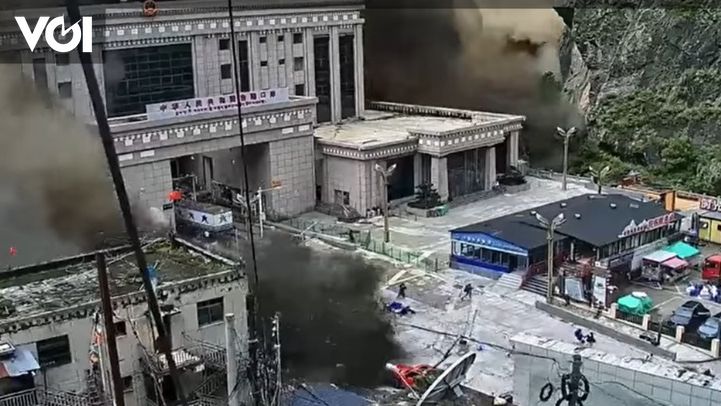
The urgency behind the government’s demand comes from the scale and severity of the disaster unfolding in the Himalayan nation. Heavy rainfall triggered flash floods and landslides across northern and central Nepal beginning Wednesday, causing major river systems to overflow their banks. The Bhotekoshi and Trishuli rivers, both powerful waterways in the mountainous Himalayan foothills, have inundated settlements, destroyed homes, and severely damaged critical infrastructure. The flooding has paralyzed bridges that are vital for connectivity, cutting off roads and isolating remote villages in a region where terrain already makes transportation difficult. Rescue operations have been continuously complicated by debris-laden currents, unstable slopes, and damaged access roads. The disaster’s impact has also spilled across the border into southwestern China, where mud and landslides hit Gyirong Port in Gyirong County, within the Tibet Autonomous Region. Communication networks, road access, and the electricity supply in that border area were interrupted, isolating the port and disrupting trade and travel routes between Nepal and China. Hundreds of local residents, construction workers, and tourists in the affected area have been evacuated to safer locations, while joint search-and-rescue teams from both countries continue to conduct operations along the river corridors. Weather forecasts indicating further rainfall have raised fears that the situation could deteriorate even more in the coming days. This catastrophe underscores the inherent vulnerability of a region characterized by steep mountains, fragile geology, and intense seasonal rainfall, but it also highlights the vital role of accurate cross-border information. When a river spans an international boundary, misinformation in one country can easily spill over and cause harm in the other, which is precisely why Nepal has framed the fight against fake content as an integral part of the emergency response.
This episode highlights a global problem: social media platforms remain largely ill-equipped to handle emergency disinformation in developing countries. Nepal has one of the highest social media penetration rates in South Asia, yet digital literacy remains uneven, particularly in rural and mountainous areas where users often depend on forwarded messages and viral videos for news. During the current crisis, the government has repeatedly had to issue public denials of online rumors, draining time and energy from relief coordination efforts. The challenge is especially acute for foreign tourists and migrant workers who may not understand Nepali and rely on visual information that can be easily doctored. Nepal’s efforts to regulate social media also unfold within a broader regional context. India, Bangladesh, and Sri Lanka have all demanded faster content removal from platforms during emergencies, electoral violence, and civil unrest. But in Nepal, enforcement is particularly difficult because Meta and TikTok do not maintain significant corporate offices in the country. There are no direct lines of accountability, no local personnel with authority to make quick decisions, and no on-the-ground mechanisms for urgent legal requests. At the same time, any emergency regulation of social media must be carefully balanced against the fundamental right to freedom of expression. The government has insisted that it is not attempting to silence journalists or critical voices, but rather to suppress false, malicious, and dangerous content during a humanitarian emergency. Nevertheless, digital rights organizations are likely to monitor the situation closely, concerned that pressure from authorities could prompt platforms to over-remove legitimate reporting or public commentary. Adding another layer of complexity is the fact that harmful content may be uploaded in Nepal but stored on servers abroad, placing it outside national jurisdiction. Experts increasingly argue that the only viable solution lies in a combination of transparent platform enforcement, international cooperation, and sustained investment in public education about verifying information before sharing during emergencies.
In the end, Nepal’s official request to Meta and TikTok represents a crucial test of corporate responsibility and government resilience in the age of generative AI. The same platforms that enable rapid dissemination of vital warnings, live updates, and global crowdfunding for relief are now being weaponized to spread manipulated visuals and fraudulent schemes. The coming days will reveal whether Meta and TikTok will respond with the same speed they apply to commercial matters or whether ordinary citizens affected by disaster will continue to face an invisible enemy of lies and deception. For now, officials in Nepal have made their position unmistakably clear: the removal of harmful uploads cannot wait for ordinary business hours or a conventional 24-to-48-hour content moderation queue. With evacuation centers reaching capacity, rescue teams searching along unpredictable riverbanks, and a neighboring border region still struggling to restore roads and electricity, every hour genuinely matters. In a broader sense, Nepali authorities are not only asking for a technical fix; they are challenging the world’s social media giants to build comprehensive emergency response systems that are localized, multilingual, and operationally rapid. If they succeed, Nepal may emerge as a model for other disaster-prone countries seeking to assert control over the digital public sphere during crises. If they fail, the consequences will echo far beyond a single flood season, deepening public cynicism and distrust toward platforms that are too often seen as prioritizing engagement over human safety. The floodwaters may eventually recede, but the challenge of regulating misinformation in an age of increasingly convincing artificial intelligence will only continue to grow. The world will be watching to see whether Meta and TikTok meet that challenge with meaningful action or merely empty promises.


