


Paragraph 1: The Genesis of Controversy and the Initial Gathering
In the quiet, tree-lined suburbs of Mooresville, North Carolina, a modest commercial storefront along Brawley School Road has become the epicenter of a bitter local dispute. For the past two years, this unassuming space has served as a temporary prayer hall for a small, diverse congregation of Muslim families. However, when the Al-Rahman Islamic Center formally submitted a zoning application to build a permanent mosque and community hub on a five-acre plot near the Lake Norman area, a vocal segment of the community reacted with immediate, explosive hostility. WBTV’s reporting reveals that the initial public hearings were chaotic affairs, with packed municipal chambers featuring often-angry residents citing fears of traffic congestion, plummeting property values, and other logistical concerns. Yet, beneath these legitimate civic anxieties, a darker current of misinformation surged—mostly propagated via private Facebook groups and forwarded chain texts. Muslim leaders, including Imam Salahuddin Ahmed and community president Dr. Fatima Zahra, say they were caught off guard by the sheer scope of falsehoods, ranging from absurd claims of secret training camps to allegations that the mosque would impose Sharia law upon the surrounding neighborhoods. The subsequent fight was not merely about land use; it became a battle against a tidal wave of digital disinformation, forcing a small, relatively quiet community to launch a comprehensive counter-offensive to defend their fundamental American right to worship.
Paragraph 2: The Specific Campaign of Misinformation and Its Vectors
According to interviews conducted by WBTV, the misinformation campaign followed a formula familiar to communities across the United States. The false narratives escalated in three distinct phases. Initially, there were benign but fabricated logistical fears—that the mosque would include a loudspeaker broadcasting the call to prayer five times a day, violating local noise ordinances. Though the congregation had explicitly agreed to forgo any external amplification in their proposal, the rumor persisted across Nextdoor, where residents shared screenshots of a minaret that looked nothing like the proposed architectural renderings. The second phase involved toxic geopolitical associations: flyers mysteriously appeared on windshields at the local Food Lion, falsely claiming that the mosque was funded by a shadowy Saudi globalist network intent on “colonizing” Iredell County. This was flatly contradicted by public financial records showing the funds were raised via local bake sales and private donations from the 40 congregant families. The most damaging phase, however, involved dangerous criminal allegations. A viral TikTok video claimed that the mosque’s basement would house a “child bride” facility and that the organization had ties to a designated terrorist group. This specific lie, originating from a single anonymous account, was traced and debunked by the FBI’s local field office—which confirmed that Al-Rahman had no connections to any criminal enterprise. Yet, the damage was done. Local political candidates, running for the county commission, seized on the hysteria, distributing pamphlets that stoked fears of a demographic takeover, turning what should have been a routine municipal approval process into a heated referendum on the community’s character.
Paragraph 3: The Proactive Counter-Offensive: Transparency and Interfaith Outreach
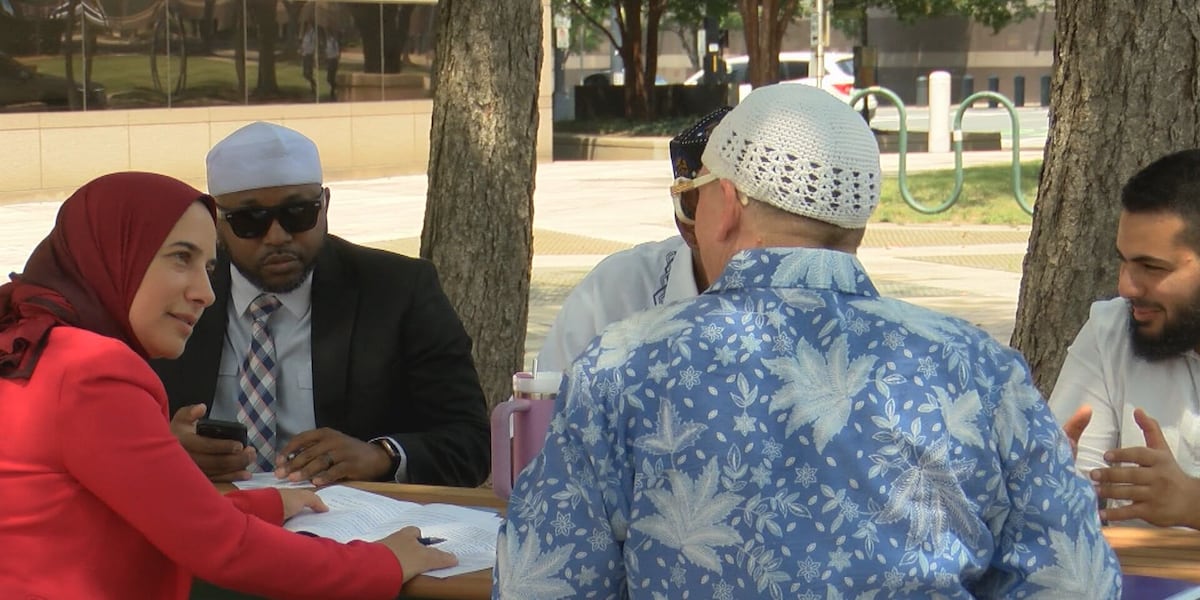
Rather than retreating behind closed doors, the Muslim leadership launched a sophisticated, multi-pronged public relations strategy rooted in radical transparency. Imam Salahuddin Ahmed told WBTV that their first step was to invite every skeptic to see the truth. They organized three consecutive “Open Mosque Weekends,” opening the temporary storefront to the public, complete with coffee, pastries, and guided tours explaining Islamic prayer rituals. They placed a large banner outside the proposed site displaying the phone numbers of all five board members, encouraging direct calls. Furthermore, they retained the legal services of a prominent Charlotte civil rights attorney to preemptively address the legal threats. The center’s leadership also forged strategic alliances with established Christian and Jewish congregations in the area. Reverend Mark Douglas of the nearby Unity Presbyterian Church publicly co-signed an op-ed in the Mooresville Tribune, decrying the hateful rhetoric and testifying to the Muslim community’s extensive voluntary work at the local homeless shelter. The mosque members also launched a “Service First” campaign, organizing community trash pickups around the proposed site and offering free English as a Second Language (ESL) classes to Spanish-speaking residents. In a masterstroke of direct engagement, they invited the most vocal opponent from the zoning board to a private dinner at a local Peruvian restaurant, where a long and emotional dialogue defused many of his specific concerns, turning a fierce adversary into a lukewarm, but human, skeptic.
Paragraph 4: The Legal and Zoning Battlefield and the Limits of Data
Despite the warming of interfaith relations, the hard legal and political terrain remained fraught. At the second formal zoning hearing—held after a months-long delay requested by the county to allow “tempers to cool”—the board heard hours of testimony. Opponents, represented by an out-of-state attorney funded by a national anti-Islam advocacy group, argued that the mosque would increase surface water runoff. They also attempted to use traffic data to claim that the area could not support the additional vehicles, despite a county-hired traffic engineer stating that the mosque’s peak attendance would generate roughly 20% less traffic than the previous commercial tenant. The board voted 3-to-2 to deny the permit, citing “incompatibility with the rural character of the neighborhood.” In response, Muslim leaders, backed by the ACLU of North Carolina, filed a federal lawsuit citing the Religious Land Use and Institutionalized Persons Act (RLUIPA)—a law specifically designed to protect congregations from discriminatory zoning practices. WBTV noted that the legal strategy was heavily publicized, not to intimidate, but to educate the public on the constitutional guarantees at stake. The leaders released a succinct, plain-language video explaining the First Amendment and RLUIPA, emphasizing that if their proposed site had been a church, the approval would have been a foregone conclusion. This legal maneuvering shifted the narrative from “what are they hiding” to “why are they being treated differently,” successfully putting the county itself on the defensive.
Paragraph 5: The Human Toll: Stories of Resilience and Fear
Beyond the legal briefs and zoning maps, the human cost of the misinformation campaign began to surface. WBTV interviewed several congregants whose daily lives had been upended by the controversy. Aisha Hassan, a pediatric nurse at Lake Norman Regional Medical Center, recounted how a patient’s parent recognized her from a widely-shared meme depicting the mosque as a “terrorist den” and refused her care, resulting in a formal complaint to the hospital—which ultimately vindicated her. Her husband, Omar, a small business owner who sells plumbing supplies, described how three clients canceled contracts after seeing his name on a leaked donor list, fearing they would be blacklisted. Most poignantly, they discussed their children. A 14-year-old son at Lake Norman High School was told by a classmate to “go back to his desert,” despite having been born in Charlotte, while his younger sister stopped eating lunch in the cafeteria due to constant stares. These personal testimonies were videotaped and shared on a dedicated website, “HumanizeMooresville.org.” The site featured not lectures on theology, but simple, empathetic stories—a veteran who praised his Muslim neighbor for shoveling his driveway, a teacher who lauded the community’s tutoring program for at-risk youth. This storytelling technique proved immensely powerful, effectively undermining the dehumanizing narratives by forcing people to see the faces and hear the voices of their actual neighbors, moving the debate from abstract fear to relatable human stories.
Paragraph 6: The Resolution, the Aftermath, and a Blueprint for the Future
After months of litigation and public negotiation, the case reached a turning point. Rather than pursue a costly federal suit that would poison the community for generations, the county commission—pressured by a growing coalition of moderate residents and business owners concerned about the town’s reputation and economic development—proposed a compromise. They offered a new parcel of land in a commercial-industrial zone, zoned for places of assembly, with a mitigated traffic agreement. The mosque board agreed to relocate their project, not as a surrender but as a pragmatic path to peace. In the final paragraph of WBTV’s feature, the focus shifts to the broader lesson. Imam Ahmed reflected that while they lost the specific piece of land they wanted, they won the battle for public opinion and permanently legitimized their presence in Mooresville. The new site received quick approval, and construction is underway. More importantly, the Al-Rahman Center has become a model for other Muslim congregations in the Southeast, offering a playbook on how to respond to disinformation: radical transparency, aggressive interfaith coalition-building, unwavering legal defense, and a powerful emphasis on local civic participation. As Ahmed stated, “We didn’t just break ground on a building; we broke ground on the hearts of this town.” The mosque, slated to open next spring, now serves as a testament that even in the age of viral falsehoods, persistent truth, community service, and the resilience of American pluralism can ultimately prevail.