


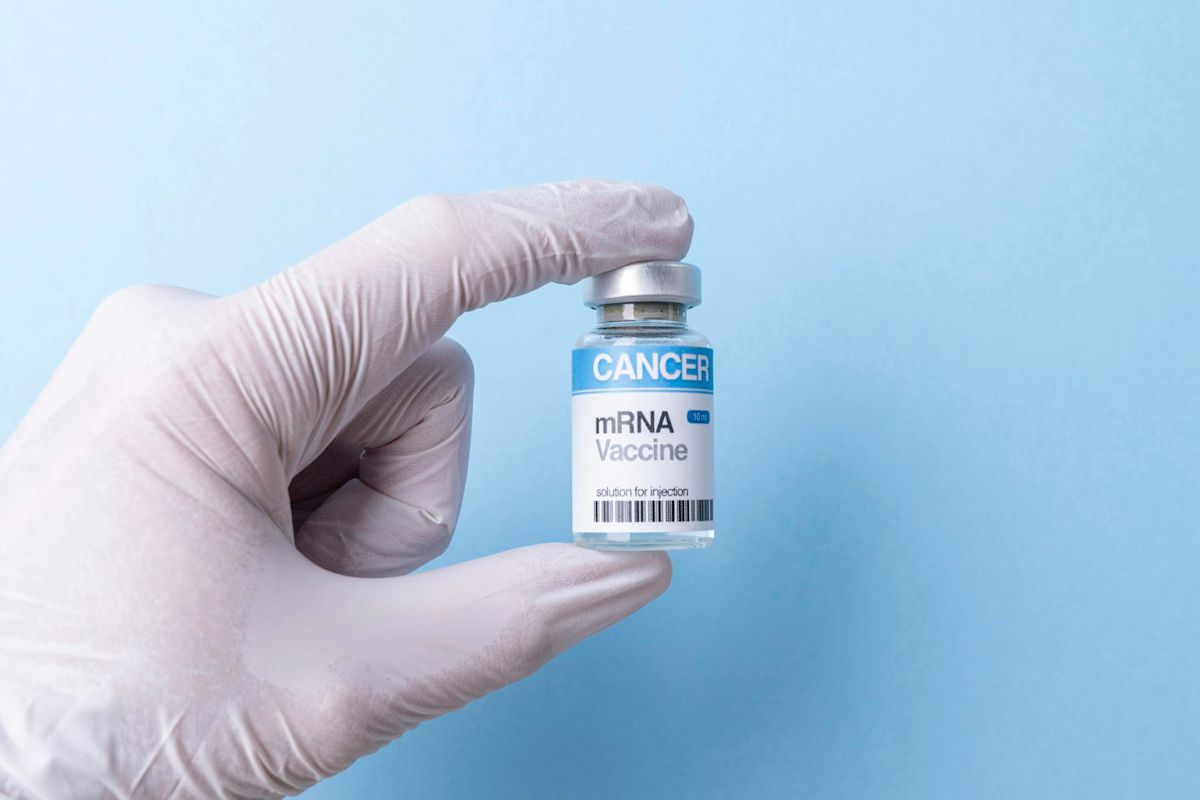
Scientists are making rapid progress toward a long-awaited goal that could reshape cancer care: messenger RNA vaccines with the potential to significantly boost the immune system’s ability to fight and eliminate tumors. The scientific foundation for this effort has been building for decades, but only recently have results begun to approach the hopes of researchers. Since the early 2000s, more than 120 clinical trials have tested mRNA vaccines for multiple cancer types, including melanoma, brain, breast, lung and prostate cancer. The same platform technology that was used to develop COVID-19 vaccines in record time can be applied to oncology. In theory, an mRNA cancer vaccine works by delivering instructions to cells, prompting them to produce a protein that is found on tumor cells. The immune system then learns to recognize that protein as a threat and mounts an attack against cancer cells displaying it. This approach has important advantages. It is precise, because the vaccine can be designed to target antigens specific to a patient’s tumor. It is adaptable, because mRNA sequences can be changed relatively quickly if a tumor evolves. And it is potentially less toxic than chemotherapy or radiation, since healthy tissues are not the primary target. One of the most dramatic examples of this potential involves glioblastoma, a notoriously aggressive brain tumor. In early clinical trials, a personalized mRNA vaccine rapidly activated patients’ immune systems and produced signs of improved survival. The body of evidence is growing, but scientists caution that more research is needed. There is a sense of cautious optimism that mRNA vaccines could become a standard component of cancer treatment. However, as Dannell D. Boatman, a health communication researcher at West Virginia University, points out, medical advances only help people who are willing to use them. And the public discussion about mRNA technology has become clouded by misinformation, including the false claim that COVID-19 mRNA vaccines cause so-called turbo cancer. That narrative could not only damage confidence in existing vaccines, but also jeopardize the future of mRNA cancer vaccines.
The therapeutic concept behind mRNA cancer vaccines is fundamentally different from traditional cancer treatments. Standard approaches often try to kill rapidly dividing cells, but they can harm healthy tissue and miss cancer cells that hide from the immune system. mRNA vaccines aim instead to teach the body’s own immune system to identify and attack malignant cells. The process begins with the sequencing of a patient’s tumor to identify mutations or proteins that set it apart from normal tissue. Those tumor-specific antigens are used to create a customized mRNA vaccine. Once injected, the vaccine instructs cells to produce the antigen, and immune cells are trained to recognize it. The result is an immune response that can seek out cancer cells anywhere in the body, including sites that might not be detectable by scans or surgery. This strategy has been explored across a wide range of cancers. Melanoma, one of the most immunogenic tumors, has been a major focus. Clinical trials have also investigated mRNA vaccines in patients with brain tumors, breast cancer, lung cancer and prostate cancer. The early results have been especially encouraging in glioblastoma, where a personalized vaccine was found to produce rapid immune activation and better-than-expected survival outcomes. But researchers are careful to note that large randomized trials are needed before these vaccines can enter regular practice. They are also investigating whether mRNA vaccines can be combined with other immunotherapy agents, such as checkpoint inhibitors, to produce even stronger responses. The flexibility of the mRNA platform is another advantage: once a vaccine design is ready, it can be produced quickly using established manufacturing processes. This could allow doctors to adapt vaccines to changes in a patient’s tumor over time. While the scientific hurdles are substantial, so is the level of investment and interest. The central challenge may be not only in the laboratory, but in the minds of patients. If people are frightened by misinformation about mRNA, they may reject a technology that could extend or save their lives.
The rise of the “turbo cancer” narrative is the clearest example of this threat. The term, which has spread largely through social media, refers to the baseless idea that COVID-19 mRNA vaccines cause unusually aggressive and rapidly advancing cancers. Mainstream media first reported on the phenomenon in late 2022, and anti-vaccine advocates have used it heavily since then. Boatman, who studies online cancer conversations, has documented the ways this false story travels. It often emerges in emotional anecdotes about healthy individuals who were diagnosed with cancer shortly after vaccination. It is supported by misinterpretations of medical studies and by misuse of adverse event reporting systems. It borrows older myths, such as the false claim that mRNA vaccines alter a person’s DNA, and presents them in new packaging. The narrative is not limited to the internet. In September 2025, a controversial British cardiologist publicly claimed that COVID-19 vaccination had contributed to cancer diagnoses in the U.K. royal family. The medical community immediately rejected the claim, but the episode demonstrated how misinformation can migrate from fringe accounts into mainstream headlines. Boatman defines health misinformation as false or misleading claims that lack scientific support, rely on unverified personal stories, or are presented as fact without credible evidence. Her earlier research on social media discussions about the HPV vaccine found similar dynamics: widespread safety fears, deep mistrust of government and medical authorities, and a proliferation of conspiracy theories. The COVID-19 pandemic made these problems more acute, creating what researchers call an infodemic—a flood of accurate and inaccurate information during a public health crisis. The infodemic complicated health decision-making and left lasting impressions on public attitudes. Turbo cancer is one of those lasting impressions. Despite a lack of evidence, the term has taken on a life of its own.
Boatman’s social listening research, which involves systematically monitoring large volumes of online content, found that posts about turbo cancer appeared steadily between July 2023 and early 2026. These posts shared common rhetorical techniques. Many used personal narratives to generate sympathy and fear. Others cited animal studies that were taken out of context or misrepresented. Some pointed to rising rates of cancer among younger adults, claiming that mRNA vaccines were responsible. But large population studies have found no evidence that mRNA vaccines increase cancer risk. Cancer incidence trends among younger people are complex and long predate the COVID-19 vaccine program. Adverse event reports, often cited by misinformation purveyors, are intended to capture any health problem following vaccination; they do not establish that the vaccine caused the problem. The information ecosystem that spreads turbo cancer content is difficult to counter because it mimics legitimate communication. It uses scientific terminology, cites real studies selectively and responds quickly to current events. At the same time, it appeals to emotion and distrust. Misinformation of this kind is especially dangerous in oncology, where patients are often scared, exhausted and searching for answers. Research has shown that inaccurate information about cancer is common online and can influence patient choices. Patients who abandon effective treatments in favor of unproven remedies may face substantially higher risks of death. Doctors report fielding questions about vaccine safety and cancer risk in their clinics. They describe patients who are reluctant to start recommended treatments because of something they read online. Oncologists must now spend time untangling webs of misinformation alongside their regular duties. The researchers behind this analysis note that the full scope of the problem is still unknown, but the trend is clear: misinformation has become a public health issue that can no longer be ignored.
The consequences of misinformation extend far beyond individual clinic visits. They could shape the future of mRNA cancer vaccines in profound ways. This technology is at a pivotal stage. It has moved from experimental platforms to promising clinical trials, but it is not yet widely available. The way mRNA is publicly perceived during the coming years will affect how quickly it is approved, adopted and funded. If the turbo cancer myth continues to circulate, some patients may decline therapeutic mRNA vaccines when they are offered. Some may refuse to enroll in clinical trials, making it harder for researchers to generate the evidence needed for regulatory approval. Public opposition may influence policymakers and insurers. Even physicians can be affected if they absorb hostile narratives about mRNA from professional or social networks. Trust that has been undermined is difficult to restore. Unlike science, which can correct itself with new data, public trust tends to follow emotional narratives and social cues. Once a community becomes convinced that mRNA vaccines are dangerous, more information alone may not change minds. The result could be a technology that works beautifully in clinical trials but is underused in the real world. In a disease like cancer, underuse has direct consequences. A vaccine that could prevent recurrence or extend survival would be ineffective if patients refuse it. Medical history offers many examples of evidence-based treatments that were delayed by fear and misinformation. Boatman argues that the advance of mRNA technology cannot be separated from the way it is communicated. The science is moving faster than public understanding, and the gap between the two may determine whether the promise is fulfilled.
The solution, according to health communication researchers, lies in early and persistent engagement. By the time misinformation becomes entrenched, it is very difficult to correct. The better strategy is to prevent it from becoming entrenched in the first place. This requires monitoring social media for early warning signs and responding quickly to false claims. It also requires equipping clinicians with the skills and time to talk about vaccines and cancer treatments. Doctors are trusted messengers, but they need support to explain complex science in simple language. Public health campaigns should be designed around the psychological and emotional drivers of belief, not only around statistics. They should acknowledge uncertainty honestly, because credibility depends on transparency. They should build on existing relationships with community leaders and local organizations to reach people who distrust institutional messages. Communication cannot be an afterthought to scientific research; it must be integrated into the development and launch of new therapies. Boatman’s analysis, originally published by The Conversation, concludes that scientific innovation alone is not enough. The public needs to be able to evaluate new tools like mRNA cancer vaccines through the lens of evidence, not misinformation. That task is as important as the laboratory research that produced the tools. The future of cancer care depends not just on molecular biology and clinical trial design, but on public understanding and trust. If that trust is protected, the next generation of cancer treatments may live up to its promise. If it is allowed to erode, the consequences could be measured in lives that cannot be saved. The message for researchers, health authorities and media is urgent: keep communication in lockstep with discovery.