


Japan’s ‘Hometown’ Initiative for Africa Sparks Confusion and Misinformation
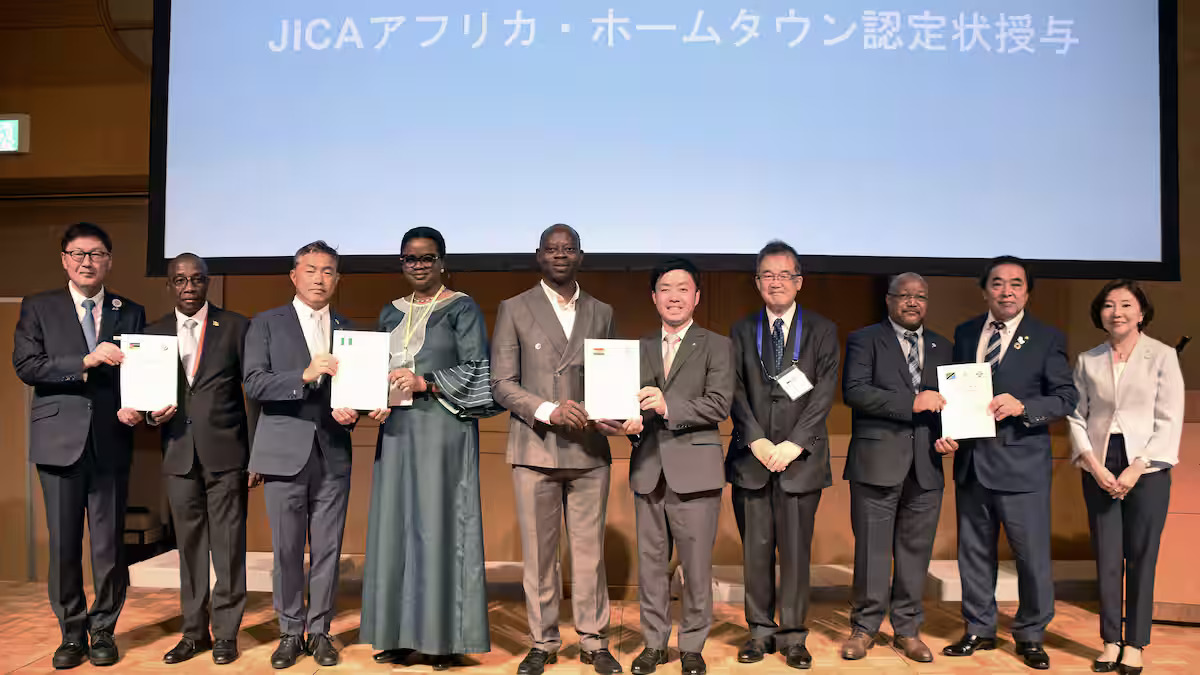
The Japan International Cooperation Agency (JICA) recently launched a “Hometown” initiative, pairing four Japanese municipalities with African countries to foster cultural exchange and talent circulation. Nagai City partnered with Tanzania, Kisarazu City with Nigeria, Sanjo City with Ghana, and Imabari City with Mozambique. The program, announced during the Tokyo International Conference on African Development (TICAD) in Yokohama, aims to strengthen ties between Japan and Africa. However, the initiative has been plagued by misinformation and online pranks, generating confusion and fueling anxieties, particularly regarding immigration.
Misleading reports from several media outlets, including The Punch, BBC, and The Guardian, falsely claimed that Japan would issue special work visas for Nigerians to work in Kisarazu City under this program. These reports quickly spread on social media, igniting fears about a potential influx of immigrants. These concerns prompted Kisarazu City’s mayor to issue a statement clarifying the initiative’s purpose and denying any plans for special visas.
JICA also issued a statement debunking the misinformation and requesting corrections from the media outlets responsible for the misleading reports. The Ministry of Foreign Affairs emphatically denied the existence of any special visa program connected to the initiative and reiterated the program’s sole focus on promoting cultural exchange. The speed at which misinformation spread highlights the challenges posed by unverified reporting in the digital age and the potential for misconstrued information to fuel public anxieties.
Adding to the confusion, several online pranksters exploited Google Maps’ edit function to rename the city halls of the participating Japanese municipalities to those of their African counterparts. Sanjo City Hall was temporarily renamed “Ghana City Hall,” Imabari City Hall appeared as “Imabari City Hall (Mozambique),” and Kisarazu City Hall was briefly listed with variations incorporating “Nigeria.” These alterations, though corrected, underscored the vulnerability of online platforms to manipulation and the potential for such actions to further complicate an already sensitive situation.
These incidents are not isolated, reflecting a broader trend of online mischief targeting prominent locations or businesses embroiled in controversies. Past examples include the mislabeling of the Hiroshima Atomic Bomb Dome as a “nuclear testing site.” The ease with which such changes can be made, combined with the often delayed verification processes of online platforms, creates an environment ripe for misinformation and the spread of harmful narratives.
The “Hometown” initiative, while intended to strengthen Japan-Africa relations, has become a case study in the rapid spread of misinformation and the challenges of maintaining accuracy in the digital age. The combination of inaccurate media reports, social media amplification, and online pranks created a climate of uncertainty and fueled unwarranted concerns. The incident underscores the need for responsible reporting, fact-checking, and robust verification mechanisms on online platforms to counter the spread of misinformation and prevent the distortion of well-intentioned initiatives. Furthermore, it emphasizes the importance of clear communication from government agencies and participating organizations to address public concerns and preempt the spread of false narratives.