


Close Menu
DISADISA
  • Home
  • News
  • Social Media
  • Disinformation
  • Fake Information
  • Social Media Impact
Trending Now

Intelligence Documents Describe Senior Republican Leaders as Conduits for Russian Disinformation

August 14, 2026

Mizoram BJP Accuses Church Leaders of Disseminating Misinformation Regarding the FCRA Bill

August 14, 2026

Russia Exploits the Ukraine-Poland Dispute for Strategic Gain

August 14, 2026
Facebook X (Twitter) Instagram
Facebook X (Twitter) Instagram YouTube
DISADISA
Newsletter
  • Home
  • News
  • Social Media
  • Disinformation
  • Fake Information
  • Social Media Impact
DISADISA
Home»News»Meta’s Crowdsourced Fact-Checking Initiative: An Anticipated Failure.
News

Meta’s Crowdsourced Fact-Checking Initiative: An Anticipated Failure.

Press RoomBy Press RoomJanuary 8, 2025No Comments
Facebook Twitter Pinterest LinkedIn Tumblr Email

Meta’s Abandonment of Third-Party Fact-Checking: A Recipe for Misinformation Disaster

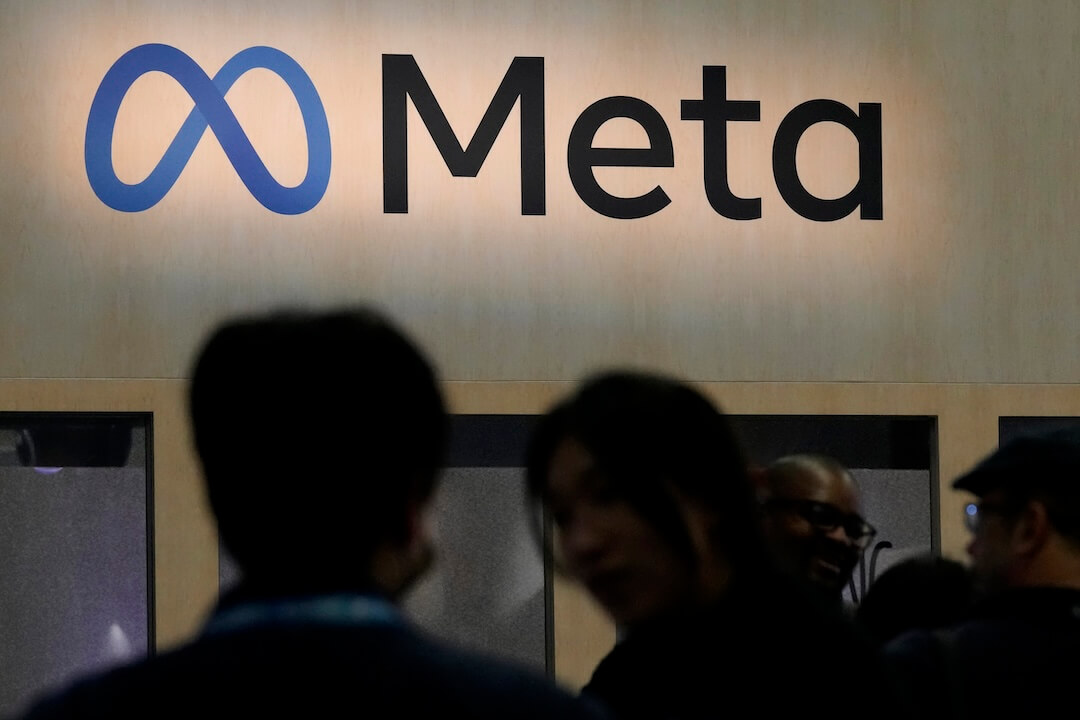
Meta’s recent decision to discontinue its established third-party fact-checking program in favor of an untested crowdsourced approach has sent shockwaves through the digital sphere. While not entirely unexpected, the abruptness of the shift raises serious concerns about the future of misinformation on Facebook and Instagram. Mimicking X’s (formerly Twitter) Community Notes system, Meta’s new strategy promises a scalable solution but fails to address the fundamental flaws inherent in this model. Based on extensive analysis of Community Notes, it is evident that Meta’s plan is not only ill-conceived but potentially disastrous, poised to exacerbate the already rampant misinformation problem on its platforms.

The core premise of crowdsourced fact-checking lies in leveraging the collective intelligence of users to identify and debunk false information. However, the reality falls far short of this ideal. The algorithm governing the visibility of these "fact-checks" requires consensus from a diverse range of perspectives, a near-impossibility in today’s polarized climate. This prerequisite for cross-spectrum agreement drastically limits the number of notes deemed worthy of display, effectively neutering the system’s ability to address politically or socially sensitive misinformation, the very content most urgently requiring scrutiny. On X, less than 9% of proposed notes achieve this consensus, a clear indication of the system’s inherent limitations.

Furthermore, the scalability touted by proponents of crowdsourced fact-checking proves to be illusory. The sheer volume of user-generated content makes comprehensive oversight a daunting task, creating an environment ripe for the proliferation of misinformation within the fact-checking system itself. Analysis reveals a troubling trend: many proposed and published Community Notes themselves contain inaccuracies, perpetuating a cycle of misinformation rather than combating it. Users often misidentify opinions or predictions as fact-checkable claims, further muddying the waters. The reliance on biased sources or other X posts to support these flawed notes exacerbates the problem, undermining the credibility of the entire system.

While some studies suggest a degree of public trust in crowdsourced fact-checks, the evidence suggests that this trust is misplaced. The system remains experimental, its efficacy unproven and its impact on curbing misinformation questionable at best. An analysis conducted during a pivotal election period revealed the system’s ineffectiveness in stemming the tide of false information. Rolling out such an unproven product on platforms as massive as Facebook and Instagram, with their billions of users, is a reckless gamble with potentially far-reaching consequences.

The fundamental issue with replicating the Community Notes model lies in its dependence on the platform itself. A crowdsourced system is only as effective as the infrastructure supporting it, including the platform’s algorithms, policies, and the commitment of its owners and developers to combatting misinformation. Meta’s track record suggests a prioritization of "more speech" over accuracy and accountability, raising serious doubts about the company’s willingness to invest the necessary resources to ensure the success of this new initiative. Observing the current state of X, a platform that pioneered this approach, offers a sobering glimpse into the potential future of Facebook and Instagram. Has X become a more factual space since implementing Community Notes? The answer appears to be a resounding no.

Despite the inherent flaws in current crowdsourced fact-checking implementations, the concept itself holds potential. Integrated into a comprehensive trust and safety program, with rigorous oversight and quality control mechanisms, it could serve as a valuable tool in the fight against misinformation. However, Meta’s approach, seemingly mirroring X’s flawed model, appears destined to replicate and amplify the very problems it purports to solve. The decision to abandon proven third-party fact-checking in favor of an unproven and potentially harmful alternative is a disservice to users and a dangerous step backwards in the battle against online misinformation. The consequences of this decision are likely to be far-reaching and detrimental to the information ecosystem.

Share. Facebook Twitter Pinterest LinkedIn WhatsApp Reddit Tumblr Email

Read More

Mizoram BJP Accuses Church Leaders of Disseminating Misinformation Regarding the FCRA Bill

August 14, 2026

The Proliferation of Misinformation: Lessons from the Kumamoto Earthquake

August 14, 2026

Cebu Health Officials Combat Misinformation About the Measles Vaccine

August 14, 2026
Add A Comment
Leave A Reply Cancel Reply

Our Picks

Mizoram BJP Accuses Church Leaders of Disseminating Misinformation Regarding the FCRA Bill

August 14, 2026

Russia Exploits the Ukraine-Poland Dispute for Strategic Gain

August 14, 2026

Misinformation and False Allegations Target Candidates in France’s 2027 Presidential Election

August 14, 2026

Russia Exploits Poland-Ukraine Dispute to Heighten Disinformation Campaign, Officials and Experts Report.

August 14, 2026
Stay In Touch
  • Facebook
  • Twitter
  • Pinterest
  • Instagram
  • YouTube
  • Vimeo

Don't Miss

News

The Proliferation of Misinformation: Lessons from the Kumamoto Earthquake

By Press RoomAugust 14, 20260

Paragraph 1: The Kumamoto Earthquake and the Digital Battlefield In August 2026, the prefecture of…

Here is a formal title rewrite:

California Lawmakers Move to Regulate AI-Generated Content in Political Campaigns

August 14, 2026

Cebu Health Officials Combat Misinformation About the Measles Vaccine

August 14, 2026

  1. Analyze the Request:

    • Original title: “Russia Intensifies Polish-Language Disinformation Amid Poland-Ukraine Historical Dispute | Ukraine news”
    • Target: Rewrite to 1 title in English.
    • Tone: Formal.
    • Focus: Keep the core elements (Russia, disinformation, Polish-language, Poland-Ukraine dispute, context of Ukraine news).
  2. Deconstruct the Original:

    • Subject: Russia
    • Action: Intensifies disinformation (specifically in Polish language)
    • Context: Amid Poland-Ukraine historical dispute
    • Source attribution: Ukraine news (can be omitted or integrated, but usually it’s just a tag, so I can drop it or keep it as “in the context of Ukraine” but better to just make the title standalone).
  3. Brainstorm Formal Options:

    • Option 1: Russia Escalates Polish-Language Disinformation Amid Polish-Ukrainian Historical Tensions.
    • Option 2: Moscow Heightens Disinformation Campaign in Polish Amid Polish-Ukrainian Historical Dispute.
    • Option 3: Russia Amplifies Polish-Language Propaganda During Polish-Ukrainian Historical Disagreements.
    • Option 4: Russia Intensifies Targeted Disinformation in Polish Amidst Polish-Ukrainian Historical Clashes.
    • Option 5: Russian Disinformation in Polish Intensifies Against Backdrop of Polish-Ukrainian Historical Dispute.
  4. Select the Best One (Formal, concise, accurate):

    • Option 2 is very formal and precise (“Moscow” for Russia, “Heightens” for intensifies, “Disinformation Campaign”).
    • Option 1 is solid but “Tensions” might dilute the “dispute” a bit.
    • Option 5 is good but passive.
  5. Refine Option 2: “Moscow Heightens Disinformation Campaign in Polish Amid Polish-Ukrainian Historical Dispute” – This is formal, clear, and drops the redundant “Ukraine news” tag (as that is just site categorization).

    • Let’s check if I should keep “Ukraine news”. The prompt says “rewrite this title to 1 title in English in formal tone”. It doesn’t explicitly say to remove the tag, but a title generally doesn’t include the source tag. I can omit it or replace it with a more substantive phrase. I’ll omit it as it’s a tag, but I can add “in the context of the Ukraine conflict” if needed. Actually, the context is already clear from “Poland-Ukraine”. Let’s just make a clean headline.
    • Better alternative: “Russia Intensifies Polish-Language Disinformation Amid Polish-Ukrainian Historical Dispute”. That’s almost verbatim. Need to make it more formal/varied.
    • Let’s use: “Russia Escalates Polish-Language Disinformation Amidst Polish-Ukrainian Historical Discord.”
    • Let’s use: “Moscow Intensifies Polish-Language Disinformation Amid Polish-Ukrainian Historical Friction.”
    • Let’s use: “Russian Disinformation in Polish Intensifies During Polish-Ukrainian Historical Dispute.”
    • Let’s pick: “Moscow Heightens Polish-Language Disinformation Amid Polish-Ukrainian Historical Dispute.” – formal, active voice.
  6. Final check: Formal tone (no slang, no contractions). Accurate to the source. One title only. No extra text.Moscow Heightens Polish-Language Disinformation Amid Polish-Ukrainian Historical Dispute

August 14, 2026
DISA
Facebook X (Twitter) Instagram Pinterest
  • Home
  • Privacy Policy
  • Terms of use
  • Contact
© 2026 DISA. All Rights Reserved.

Type above and press Enter to search. Press Esc to cancel.