


Philippine Media Trust Rebounds Slightly Amidst Political Disinformation Surge
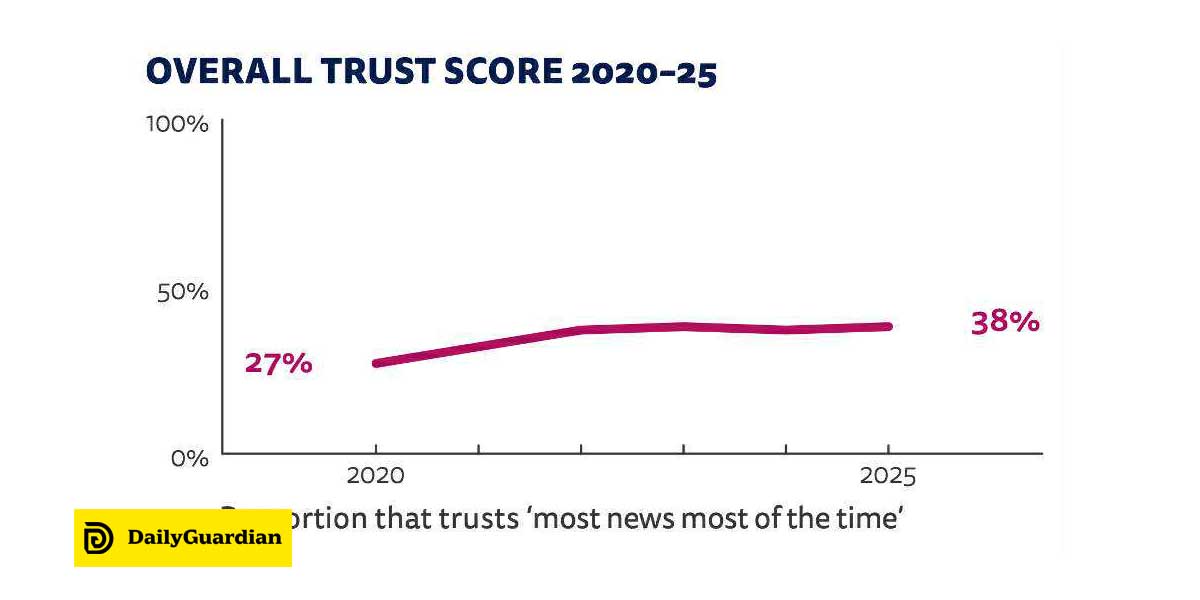
The Philippines’ media landscape is navigating a complex terrain, marked by a slight resurgence in public trust while simultaneously grappling with the pervasive challenge of disinformation. The 2025 Reuters Digital News Report reveals a modest rise in overall media trust to 38%, a marginal improvement from the previous year’s 37%. This upward trend signals a slow but steady recovery since the culmination of Rodrigo Duterte’s presidency in 2022, a period often criticized for its impact on press freedom. However, this fragile progress is threatened by the escalating spread of politically motivated disinformation, eroding public confidence in specific media outlets, particularly those critical of the current administration.
The report underscores a concerning trend: while overall trust in news has stabilized since Duterte’s departure, individual media brands have witnessed declining trust levels. This decline coincides with a surge in political disinformation, often targeting outlets that hold a critical stance towards those in power. This targeted disinformation, coupled with coordinated harassment campaigns against journalists and media organizations, creates a hostile environment for independent reporting and further fuels public distrust. The report highlights the vulnerability of media outlets critical of the government to orchestrated attacks, illustrating the precarious balance between press freedom and political influence.
The political landscape in the Philippines has become increasingly polarized, with tensions escalating between the camps of President Ferdinand Marcos Jr. and Vice President Sara Duterte. This divide, exacerbated by the International Criminal Court’s arrest warrant for former President Rodrigo Duterte in March 2025 on charges of crimes against humanity related to his controversial war on drugs, has become fertile ground for the proliferation of disinformation. The report explicitly links the surge in disinformation to this widening political rift, emphasizing the exploitation of these tensions by various actors seeking to manipulate public opinion and undermine trust in credible news sources.
Efforts to combat the spread of disinformation are underway, with various stakeholders, including the Commission on Elections (COMELEC), implementing initiatives to address the issue. The report highlights campaigns like GMA Network’s "Panata Kontra Fake News," partnerships with media organizations, academics, and COMELEC, and the relaunch of the fact-checking initiative Tsek.PH. Furthermore, the accreditation of several news organizations by the International Fact-Checking Network signals a growing commitment to verifying information and combating falsehoods. These initiatives, coupled with COMELEC’s efforts to address election-related disinformation and the misuse of generative AI, demonstrate a multi-pronged approach to tackle this complex challenge.
The dominance of online and social media as primary news sources for Filipinos continues, with mobile phones remaining the preferred device for accessing information. The report indicates that 85% of Filipinos consume news online, a figure consistent with 2020 levels. However, the usage of online news sources excluding social media has slightly declined, while reliance on social media platforms for news has remained steady. This shift underscores the growing influence of social media in shaping public discourse and the potential risks associated with its susceptibility to disinformation campaigns. This dependence on online sources, coupled with a decrease in paid online news subscriptions, raises concerns about the long-term sustainability of quality journalism and the potential for further fragmentation of the information landscape. The decline in traditional media consumption, reflected in the dwindling viewership of television and readership of print publications, further emphasizes the ongoing shift towards digital platforms.
The emergence of new digital platforms, such as news podcasts and AI chatbots, adds another layer of complexity to the Philippine media landscape. While these platforms offer alternative avenues for news consumption, they also present new challenges in terms of verifying information and combating the spread of misinformation. The growing popularity of news podcasts (12% usage) and the nascent but increasing use of AI chatbots (9% usage) signal a changing media consumption pattern, requiring further investigation and analysis to understand their impact on public perception and information dissemination. As these platforms gain traction, it becomes crucial to develop strategies for ensuring accuracy and accountability within these evolving digital spaces.