


Ukraine Says Russian Food Shortage Scare Is Disinformation, Vows Supplies Will Be Restored
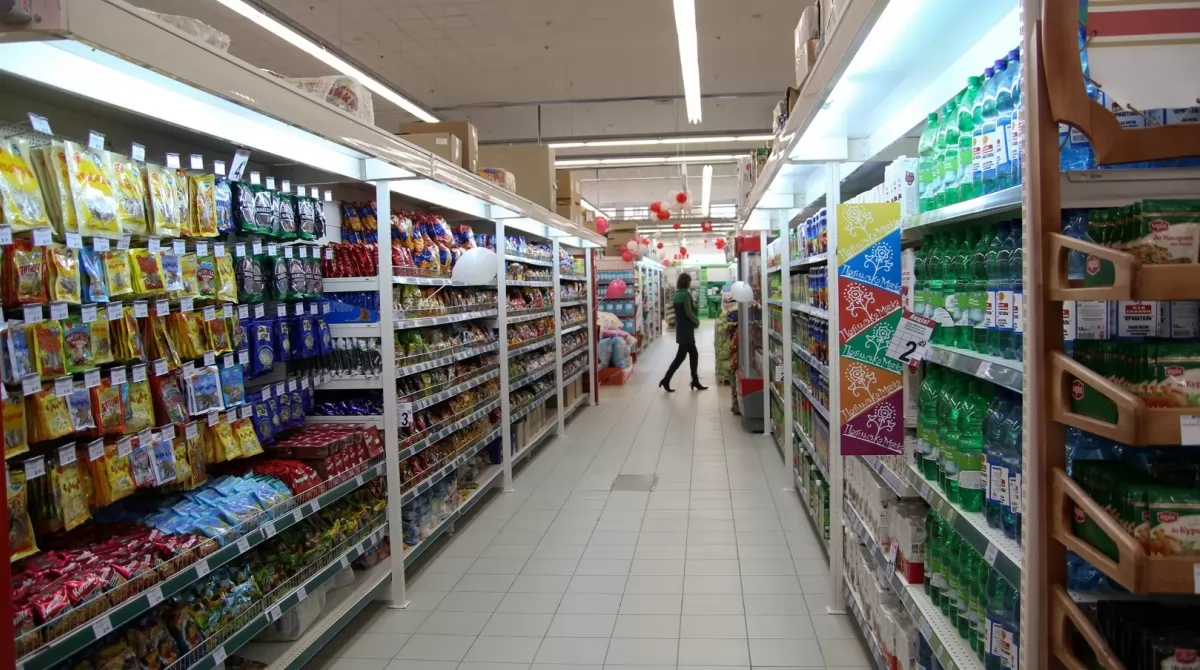
KYIV — Ukrainian authorities have moved quickly to counter a Russian disinformation campaign aimed at convincing the public that Ukraine is facing an imminent food shortage, dismissing the claim as a deliberate provocation designed to sow panic and destabilize the country from within. Andrii Kovalenko, head of the Center for Countering Disinformation at the National Security and Defense Council, said on Thursday, August 13, that there is no actual food crisis, as some recent empty shelves in Ukrainian supermarkets have been caused by temporary logistical disruptions from Russian attacks on infrastructure, not by a lack of food in the country. He warned that the aggressor is trying to scare citizens into buying up and hoarding goods, which would create artificial shortages and amplify the impression of an economic collapse. “Is there any reason to panic? No, there isn’t,” Kovalenko wrote on Telegram. “They are targeting logistics, but logistics are being reorganized. There will be no shortages. Some supermarkets have empty shelves, while others do not. Consequently, this is a logistical shortage, not a food shortage.” The official stressed that the situation is fully under control and that the necessary steps are being taken to restore normal supplies. At the same time, he sought to explain to the public the difference between a genuine food deficit and a manageable breakdown in the delivery system, noting that Russian forces are deliberately exploiting public anxiety by striking warehouses, retail centers, and transport routes. The goal, he said, is to make ordinary Ukrainians believe their country is falling apart, and then encourage them to help the enemy by emptying shelves through panic buying. His comments came after social media images of empty shelves in a number of stores triggered worried responses from Ukrainians, most of whom remember well the first weeks of the full-scale invasion in 2022, when queues and shortages became a painful part of daily life. But Kovalenko was unambiguous: the current disruptions will not turn into a food crisis, because the country’s food reserves are strong and the authorities are determined to keep supply chains working.
Kovalenko emphasized that the current situation should be seen in parallel with the fuel shortages that hit Ukraine in 2022 after Russian missiles and drones repeatedly attacked oil depots and distribution infrastructure. For a time, petrol stations across many regions ran out of fuel and long queues formed, leading to fears that Ukraine would lose its ability to supply the army and the economy. Yet the shortage was eventually solved through a combination of new import routes, restored facilities, and changes in consumer behavior. The same dynamic, the official argued, is now at work with food. “The logistical shortage—just as was the case with fuel in 2022—will disappear; logistics will be reorganized, and food will be back on the shelves. Everything will be fine,” he said. This comparison was chosen deliberately. In a country under invasion, supply disruptions can be emotionally overwhelming, and the 2022 fuel crisis remains a vivid example of how uncertainty can cause worse damage than the strikes themselves. But the memory of that period also offers hope: Ukraine fixed the problem, and it will fix this one as well. The military attacks on logistics are serious, but they are not unlimited. Routes can be changed, inventories can be redistributed, and damaged infrastructure can be repaired. The main danger is not the lack of flour, grain, vegetables, or canned goods, but the lack of calm. The core of Kovalenko’s message was that Russia is waging a test of nerves. It cannot defeat Ukraine on the battlefield, so it is trying to defeat it in the minds of civilians. Empty shelves, even if brief and localized, are a weapon because they create an immediate emotional reaction that can spread through social networks faster than any official clarification. Authorities in Kyiv are aware of this, and they have been actively working with retail chains, suppliers, and local administrations to ensure that the population does not lose confidence in the ability of the state to feed them. The general staff of the war effort includes not only soldiers at the front, but every civilian who refuses to be manipulated by fear.
Work is currently under way to redistribute warehouse inventory and reorganize logistics routes so that retail chains are supplied with food, Kovalenko said. He did not offer a precise timetable for when every supermarket would be fully stocked, but he made clear that the process had already begun and would continue in the coming days. The Center for Countering Disinformation, which operates under the National Security and Defense Council, is closely monitoring the situation and coordinating with ministers, military-civilian administrations, and representatives of major supermarket networks. In his Telegram post, Kovalenko also appealed to citizens to stay calm, to avoid panic, and not to purchase food in quantities that exceed their normal needs. He explained that panic buying is one of the main tools used by Russian information warfare: when enough people rush to stores, they themselves create the shortage that the propaganda says exists. Empty shelves, in many cases, are the result of sudden demand rather than insufficient supply. The authorities are not ignoring the inconvenience and stress that the recent Russian strikes have caused, especially in areas already suffering from constant shelling and prolonged air alerts. But the official response is focused on solving the problem, not on feeding panic. Additional deliveries are being arranged, inventories are being shifted from warehouses in safer regions to areas where supply has been interrupted, and repair crews are working where necessary. All of this, Kovalenko said, will eventually return the situation to normal. Meanwhile, the National Security and Defense Council recommends that regional authorities keep a close eye on the situation and promptly report any signs of empty shelves or panic demand. Officials realize that disinformation works best when it is not challenged quickly, and for that reason they are instructing local administrations to maintain open contact with citizens and to publish up-to-date information about store inventories. They are also asking media outlets and influential public figures to avoid amplifying unverified reports of food shortages, and instead help explain the nature of the problem. This coordinated approach is designed to make the Russian narrative less effective and to ensure that isolated images of empty shelves remain exactly what they are: isolated.
Russian disinformation around food shortages follows a well-established pattern used repeatedly since the start of the full-scale invasion. Moscow has sought to sow panic over electricity, heating, drinking water, and medical supplies, especially during periods of mass missile attacks on Ukrainian infrastructure. Last winter, Russian forces launched waves of strikes against power grids and thermal plants, causing rolling blackouts across the country. Ukrainian officials warned that Russia was betting on extreme hardship to weaken the civilian population. Yet the system survived, engineers repaired damage, and consumers adapted to life without constant electricity. Similar methods are now being used with food. The Kremlin is aware that Ukraine’s strong agricultural sector is a symbol of national resilience, especially as the country has managed to export millions of tonnes of grain despite the blockade of Black Sea ports and attacks on storage facilities. By inventing a food crisis, Russia hopes to undermine confidence in the government and to intimidate citizens into hoarding, thereby creating the very chaos it predicts. This approach, known in Kremlin propaganda circles as reflexive control, has been used in many conflicts: the enemy is first made to believe in a catastrophe, then acts in ways that make the catastrophe possible. Ukrainian officials are therefore treating the threat of a food shortage as primarily an information threat rather than a physical one. They recognize that the real danger is not a lack of grain in storage, but a lack of trust in public information. In their response, they are balancing two tasks: explaining the real logistical difficulties caused by Russian attacks, while simultaneously preventing these difficulties from turning into a psychological crisis.
Support for Kovalenko’s assessment came on August 10 from Andrii Zhuk, the head of the Association of Retailers in Ukraine, who stated that there will be no shortage of goods as a result of Russian shelling of businesses. His remarks, reported by the Ukrainian News agency, were intended to reassure suppliers and the wider public. Zhuk said that retail chains are in constant communication with the authorities and have developed contingency plans to keep stores supplied even under conditions of continuous attack. He also admitted that certain changes in delivery routes are inevitable, especially in areas closest to the front lines or under regular missile threat, but stressed that the overall system is functioning. Retailers have learned valuable lessons from previous crises, including the first weeks of the full-scale invasion and the 2022 fuel shortage. Many have increased buffer stocks, diversified suppliers, and installed generators to keep stores operating during power cuts. Warehouses have been moved or reinforced, and delivery schedules are updated daily according to security assessments. These preparations have made the retail network considerably more resilient than it was two years ago, which explains why Russian attacks, although disruptive, have not caused a nationwide collapse. Nevertheless, the psychological impact of empty shelves cannot be ignored. Even a small number of such images can go viral on social media and provoke unnecessary alarm. Ukrainian officials and retailers are therefore asking citizens to act responsibly, not to spread unverified claims, and to help prevent panic themselves. They point out that every act of panic-buying is, in effect, a gift to the enemy.
At the center of the authorities’ message is a simple but urgent call for calm. The war has entered a phase in which Russian attacks on civilian infrastructure are increasingly part of a psychological campaign. The occupiers cannot achieve a military breakthrough, so they are trying to break Ukrainian society by attacking its daily life: closing stores, cutting power, disrupting transport. The proper response, Ukrainian officials say, is resilience and adaptation, not panic. Ukraine has survived the occupation of vast territories, the blockade of its ports, and the systematic destruction of its energy system. It has rebuilt supply chains under fire and kept stores stocked even during the darkest days of the full-scale invasion. The recent empty shelves are a temporary inconvenience caused by physical attacks on logistics, not a sign of economic collapse. The government and businesses are already working to redistribute inventories and reroute deliveries. While Russian strikes may continue to cause localized disruptions and delays, the evidence so far indicates that Ukraine’s food supply remains secure. “Everything will be fine,” Kovalenko said, and his words reflect the determination of a nation that has become accustomed to surviving challenges that would bring many countries to their knees. Now, as the Russian information machine tries once again to frighten citizens into panic, the best response is to continue shopping normally, helping neighbors, supporting local producers, and refusing to allow fear to empty the shelves that the enemy failed to empty with its shells. Ukrainian authorities are confident that the country will overcome yet another challenge, and they ask every citizen to play a role in preserving stability.