








John Swinney Vows Action Over Possilpark Fire Misinformation
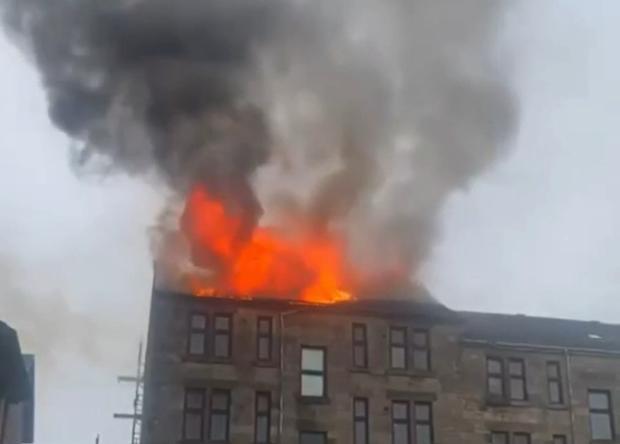
First Minister of Scotland John Swinney has issued a forceful pledge to take decisive action against the spread of misinformation surrounding the recent devastating fire in Possilpark, Glasgow, as the community reels from the aftermath of the blaze and grapples with an onslaught of false claims circulated online. In a hastily arranged statement outside Bute House, Swinney described the proliferation of inaccurate narratives as “an attack on the truth and an insult to the families who have lost everything,” vowing that those who deliberately engineer or amplify falsehoods will face the full force of the law. The fire, which broke out in a residential area of Possilpark, has already left a trail of destruction, with multiple families displaced and emergency services working around the clock to contain the damage and support survivors. But instead of focusing solely on the recovery effort, the First Minister was compelled to address a secondary crisis: the damaging spread of misinformation that has ranged from inflated casualty figures to baseless accusations about the cause of the fire, and even conspiracy theories alleging official cover-ups. Swinney warned that such disinformation is not merely a nuisance but a direct threat to public safety, community cohesion, and the ability of authorities to carry out their work effectively.
The First Minister outlined a multi-pronged approach to tackle the problem, including potential legislative measures, enhanced cooperation with social media platforms, and a renewed emphasis on media literacy. “We are examining every avenue at our disposal,” Swinney said, flanked by police and fire service officials. “This includes working with the Crown Office to establish whether existing laws on malicious communications and public order can be applied to the worst offenders, and if necessary, introducing new legislation to close the gaps that currently allow lies to flourish with impunity.” He confirmed that Police Scotland has been instructed to investigate the origin and dissemination of the most damaging posts, with a particular focus on accounts that have deliberately distorted the identities of victims, shared graphic or fabricated imagery, and encouraged public anger against emergency responders. The First Minister also revealed that he has spoken with representatives from major social media companies, urging them to act more quickly to remove content that incites hatred or spreads misinformation related to the fire. “There is a moral responsibility that cannot be outsourced to algorithms,” he said. “We will hold them to account if they fail to act.” This intervention marks one of the strongest responses by a Scottish leader to the growing phenomenon of disaster-related misinformation, and it signals a likely new chapter in the fraught relationship between governments and digital platforms.
In Possilpark itself, residents have expressed both gratitude and guarded hope in response to the First Minister’s words. Community leaders, clergy, and local councillors have been working tirelessly to provide temporary accommodation, clothing, food, and emotional support to those affected by the blaze. Yet many say the misinformation has added an unbearable layer of anguish to an already traumatic experience. “We are dealing with real people, real homes, real lives,” said a local volunteer coordinator, who asked not to be named. “It is heartbreaking enough to see families standing in the street watching their homes burn, but then to log onto social media and read that they are not really victims, or that the fire was started by someone they know, is absolutely devastating.” The emotional toll is compounded by the fact that some of the false claims have been amplified by individuals with large online followings, including influencers and self-styled commentators who have no connection to Glasgow. A community meeting held on the evening following the fire drew more than two hundred people, with many demanding that the authorities move beyond words and deliver tangible protection against online harassment. Swinney’s promise to act has been welcomed, but there is a palpable sense of skepticism born from years of unfulfilled pledges to regulate social media. “We need to see arrests, we need to see charges, we need to see platforms actually pulling this garbage down,” one resident said. “If that happens, then we’ll believe they mean it.”
The broader implications of the Possilpark misinformation scandal extend far beyond the boundaries of one Glasgow district. Experts in digital media and disinformation have noted a worrying pattern in which disasters, both natural and man-made, are used as arenas for political point-scoring, racial or religious hostility, and the promotion of pseudoscientific theories. The fire in Possilpark is no exception, with some online commentators attempting to link the blaze to issues of migration and housing policy, while others have suggested, without a shred of evidence, that the emergency response was deliberately delayed. These narratives are particularly dangerous because they exploit moments of vulnerability, when people are frightened, anxious, and searching for quick answers. Swinney’s response, which blends legal threat with a call for social media companies to be more proactive, reflects a growing recognition across Europe that existing regulatory frameworks are inadequate to address the speed and reach of online falsehoods. However, civil liberties groups have cautioned that any new legislation must be carefully calibrated to avoid stifling legitimate speech, including criticism of government responses to disasters. “We absolutely understand the need for action, and we support the goal of protecting victims and communities,” said a spokesperson for a Scottish human rights organization. “But we must not rush into sweeping powers that could later be used against journalists, whistleblowers, or ordinary citizens exercising their right to question authority.”
Amid the turmoil, a separate trend has captured the public imagination: sustainable construction. The phrase “sustainable construction” has been trending across social media platforms, as discussions about rebuilding Possilpark have shifted toward what kind of housing should replace the fire-damaged buildings. Architects, urban planners, and environmental activists have seized on the moment to advocate for a rebuild that prioritizes energy efficiency, low-carbon materials, and community-oriented design. The hashtag #RebuildGreen has been shared hundreds of thousands of times, with images of timber-framed housing, green roofs, and passivhaus projects circulating alongside tributes to the victims of the fire. In a strange way, the tragedy has opened up a broader conversation about the future of housing in Scotland’s deprived urban areas, many of which still rely on aging, poorly insulated structures that are vulnerable to both fires and the climate crisis. The Scottish Government has committed to ambitious net-zero targets, and sustainable construction is widely seen as the most viable path to achieving reductions in carbon emissions while simultaneously improving living standards. However, advocates caution that the trend must not remain ephemeral. “It is easy to post a hashtag, but it is much harder to build a genuinely sustainable home that people can afford to live in,” said a prominent Glasgow-based architect. “The real test will be whether the government, developers, and the community can come together to create regeneration models that are not just green in name but green in practice.” Swinney’s administration has indicated that any future rebuilding effort will incorporate environmental standards, but no concrete plans have yet been announced.
The convergence of these two stories—misinformation and sustainable construction—says something profound about the moment Scotland finds itself in. On the one hand, the digital age has given rise to an epidemic of falsehoods, where the truth is easily drowned out by vitriol, and where grieving communities must fight a second battle on the battleground of public opinion. On the other hand, there is a genuine hunger for progress, for rebuilding not just physical structures but also a more resilient and just society. The people of Possilpark have already suffered greatly, and the days ahead will be long and difficult. Rebuilding trust, in both institutions and in each other, will be just as challenging as rebuilding homes. The First Minister’s vow to take action over misinformation is a necessary and welcome step, but the proof will be in the implementation. If he is to truly honor the memory of those affected by the fire, he must ensure that the response is swift, transparent, and utterly unyielding in its defense of truth. Likewise, if the promise of sustainable construction is to be more than a passing trend, it will require sustained investment, political will, and genuine community engagement. As one local resident put it: “We don’t just want our street back; we want our dignity back, and we want to know that our future is safe. That means being told the truth, and it means having a home that will last.” Those are the words that should guide every decision in the weeks and months to come. The fire in Possilpark may have been contained, but the aftermath is only just beginning.


