


Close Menu
DISADISA
  • Home
  • News
  • Social Media
  • Disinformation
  • Fake Information
  • Social Media Impact
Trending Now

German Embassy Issues Formal Warning to Nigerian Nationals Regarding Unauthorized Visa Agents and Misinformation.

August 26, 2026

Social Media Addiction: Consequences, Risks, and Legal Remedies

August 26, 2026

ActionSA Lodges Formal Disinformation Complaint with IEC Against ANC’s Kgoši Maepa.

August 26, 2026
Facebook X (Twitter) Instagram
Facebook X (Twitter) Instagram YouTube
DISADISA
Newsletter
  • Home
  • News
  • Social Media
  • Disinformation
  • Fake Information
  • Social Media Impact
DISADISA
Home»Disinformation»Intelligence Report: Russia Accused of Disinformation Campaign to Undermine Ukraine’s Relations with Armenia and Azerbaijan
Disinformation

Intelligence Report: Russia Accused of Disinformation Campaign to Undermine Ukraine’s Relations with Armenia and Azerbaijan

Press RoomBy Press RoomMarch 2, 2025No Comments
Facebook Twitter Pinterest LinkedIn Tumblr Email

Kremlin Accused of Spreading Disinformation to Sow Discord Between Armenia and Azerbaijan

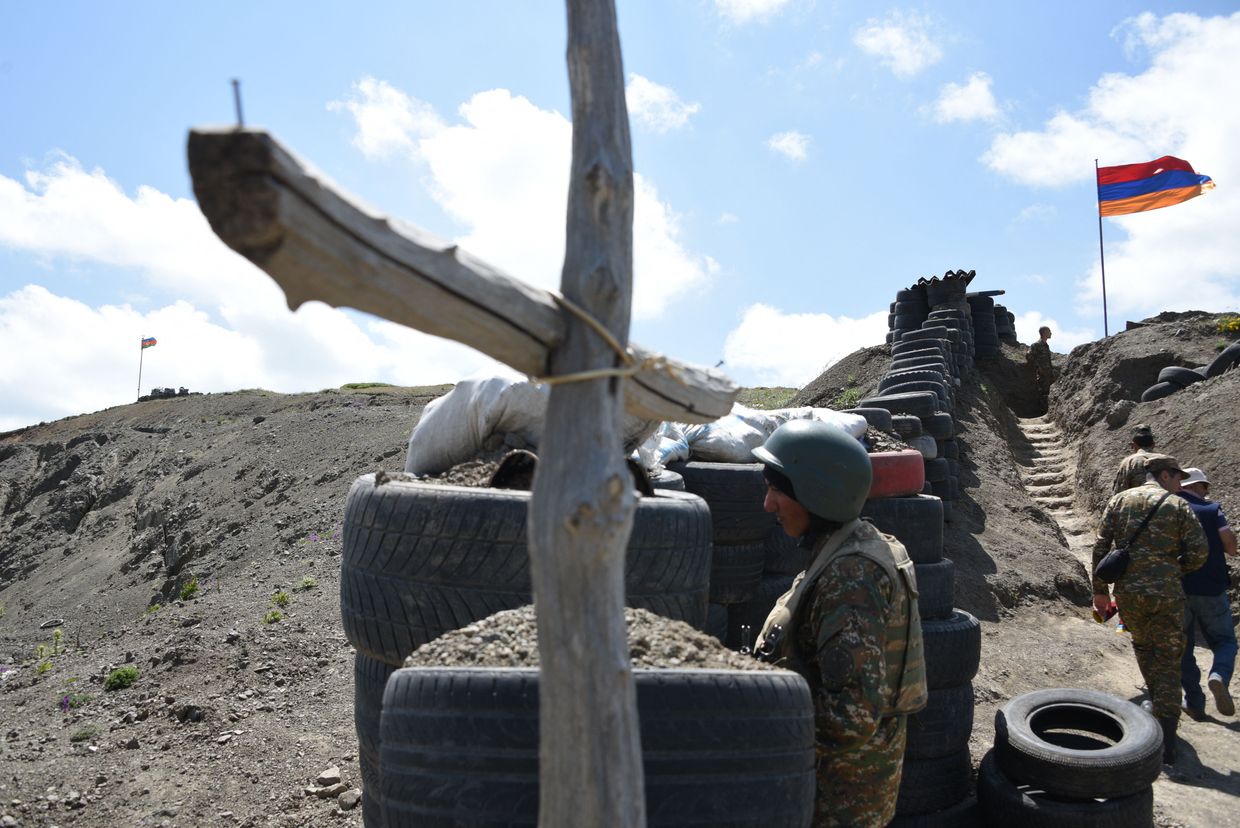
The Ukrainian military intelligence (HUR) has accused Russia of disseminating disinformation aimed at inciting conflict between Armenia and Azerbaijan. This disinformation campaign centers on a fabricated document purporting to be a report from HUR to Ukraine’s Deputy Defense Minister, which has been circulated on Armenian Telegram channels. The document falsely alleges that Ukraine’s intelligence is attempting to provoke a new war between Armenia and Azerbaijan to divert Russia’s military resources and relieve pressure on the Ukrainian front.

The timing of this disinformation campaign is significant, occurring amid heightened tensions between Armenia and Azerbaijan following the 2020 Nagorno-Karabakh war and Russia’s perceived failure to effectively mediate the conflict. The fabricated document, rife with spelling errors and lacking the hallmarks of official communication, is a clear attempt to undermine Ukraine’s relations with both Armenia and Azerbaijan, ultimately benefiting Russia’s strategic interests in the region.

HUR has categorically denied the authenticity of the document, highlighting its numerous flaws and inconsistencies. The intelligence agency has further warned that this disinformation campaign is part of a broader Russian strategy to discredit Ukraine and destabilize the South Caucasus region. The Kremlin’s motives are multifaceted, including diverting attention from its own aggression in Ukraine, undermining regional stability, and driving a wedge between Ukraine and its potential allies in the Caucasus.

The ongoing conflict between Armenia and Azerbaijan, rooted in historical territorial disputes and ethnic tensions, has been a source of instability in the South Caucasus for decades. Russia, traditionally seen as a key military ally of Armenia, has faced criticism for its handling of the 2020 Nagorno-Karabakh war, which resulted in significant territorial gains for Azerbaijan. This has strained Russia’s relationship with Armenia, creating an opportunity for disinformation and manipulation.

Ukraine, meanwhile, has maintained stable relations with both Armenia and Azerbaijan, despite the complex geopolitical landscape. Azerbaijan has provided humanitarian aid to Ukraine during the ongoing war with Russia, while Armenia’s growing disillusionment with Moscow has hinted at the potential for stronger ties with Kyiv. The spread of this disinformation seeks to disrupt these relationships and isolate Ukraine in the region.

The international community must be vigilant in identifying and countering disinformation campaigns, particularly those emanating from state-sponsored actors. Independent media outlets, fact-checking organizations, and social media platforms have a crucial role to play in exposing these attempts to manipulate public opinion and sow discord. By promoting media literacy and critical thinking, we can collectively resist the corrosive effects of disinformation and uphold the principles of truth and accuracy in the face of malicious propaganda. The attempt to create a rift between Ukraine and its Caucasus neighbors underscores the far-reaching impact of the ongoing conflict and the Kremlin’s willingness to exploit regional tensions for its own gain.

Share. Facebook Twitter Pinterest LinkedIn WhatsApp Reddit Tumblr Email

Read More

ActionSA Lodges Formal Disinformation Complaint with IEC Against ANC’s Kgoši Maepa.

August 26, 2026

The Threat of Anti-Disinformation Legislation to the Public Square

August 26, 2026

Identifying Ethnically Targeted Disinformation on Social Media Platforms

August 26, 2026
Add A Comment
Leave A Reply Cancel Reply

Our Picks

Social Media Addiction: Consequences, Risks, and Legal Remedies

August 26, 2026

ActionSA Lodges Formal Disinformation Complaint with IEC Against ANC’s Kgoši Maepa.

August 26, 2026

Health Experts Offer Evidence-Based Guidance for Navigating Online Nutrition Misinformation

August 26, 2026

The Threat of Anti-Disinformation Legislation to the Public Square

August 26, 2026
Stay In Touch
  • Facebook
  • Twitter
  • Pinterest
  • Instagram
  • YouTube
  • Vimeo

Don't Miss

News

NCIC and Faith Leaders Warn of Misinformation Threat Ahead of 2027 Elections

By Press RoomAugust 26, 20260

Kenya’s Peace Guardians Sound Alarm Over Hate Speech and Religious Weaponization Ahead of 2027 Election…

  1. Analyze the Request:

    • Original title: “How to spot ethnic disinformation on social media”
    • Task: Rewrite this to 1 title in English in a formal tone.
    • Constraints: Only 1 title, formal tone, must retain the core meaning (identifying/detecting ethnicity-based disinformation/falsehoods on social platforms).
  2. Evaluate the Original: The original is clear but uses “spot” (informal/colloquial for this context) and “ethnic” (slightly broad). “Disinformation” is a good formal term.

  3. Brainstorm Formal Alternatives:

    • “Identifying Ethnic Disinformation on Social Media Platforms” (good, formal, direct).
    • “Detecting Disinformation Targeting Ethnic Groups on Social Networks” (more specific, emphasizes targeting).
    • “A Guide to Identifying Ethnically-Focused Misinformation and Disinformation on Social Media” (too long).
    • “Recognizing Ethnic Disinformation in Social Media Environments” (wordy).
    • “Techniques for Uncovering Ethnic Disinformation on Digital Platforms” (practical).
    • Let’s synthesize. Formal titles usually prefer nouns like “Identifying”, “Detecting”, “Assessing”. The subject is specifically disinformation that is ethnic (based on ethnicity/race).
    • Option A: “Identifying Ethnic Disinformation on Social Media” (Best balance of formality, conciseness, and accuracy).
    • Option B: “Detecting Ethnic Misinformation and Disinformation on Digital Networks” (a bit longer).
    • Option C: “Strategies for Identifying Ethnic Disinformation in Social Media”.
  4. Select the Best Title: Option A is the most natural and formal direct translation. Let’s ensure it doesn’t sound like a casual tutorial. “Identifying” is academic/formal. “Ethnic disinformation” is precise. “Social Media” is standard.

    Let’s refine it slightly to be more impactful: “Detecting Ethnic Disinformation within Social Media Platforms” – a bit wordy. “Identifying Ethnic Disinformation on Social Media” – perfect.

  5. Final Check: Does it meet the criteria? 1 title (yes). English (yes). Formal tone (yes – “Identifying” is formal). Same meaning (yes). Let’s goIdentifying Ethnic Disinformation on Social Media

August 26, 2026

Identifying Ethnically Targeted Disinformation on Social Media Platforms

August 26, 2026

Identifying Health Misinformation

August 26, 2026
DISA
Facebook X (Twitter) Instagram Pinterest
  • Home
  • Privacy Policy
  • Terms of use
  • Contact
© 2026 DISA. All Rights Reserved.

Type above and press Enter to search. Press Esc to cancel.