


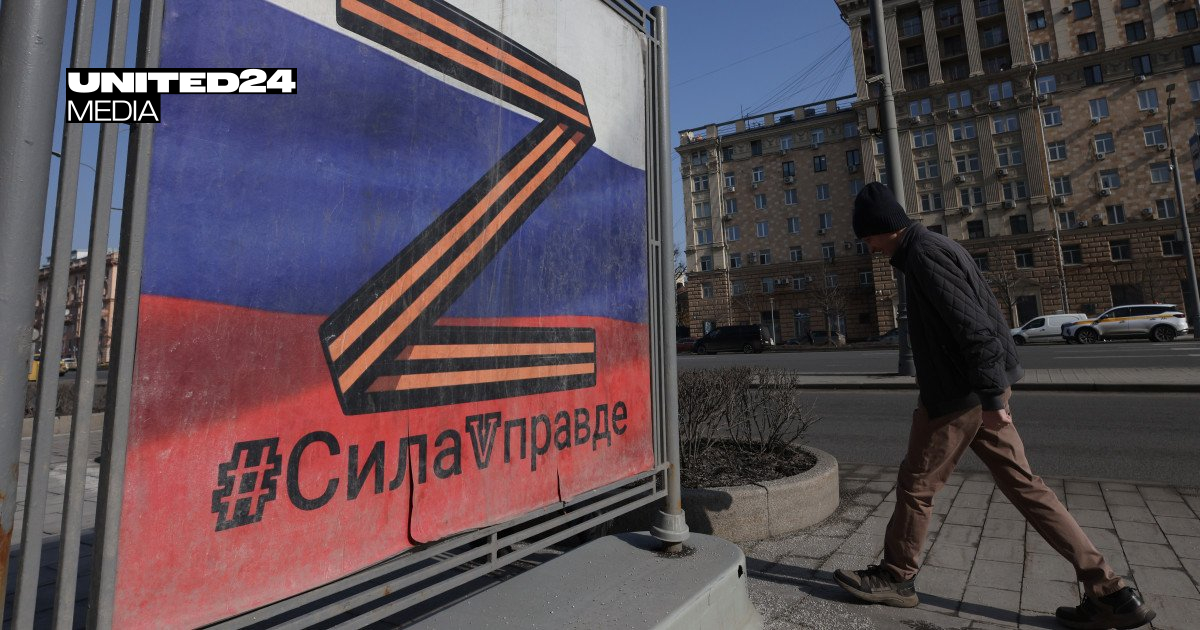
Russia has massively intensified its global influence operations, dedicating 185 billion rubles ($2.15 billion) to disinformation campaigns targeting NATO and European Union nations. Revealed by Detector Media on June 26, this expenditure represents a 50% increase over the previous year, signaling Moscow’s intent to broaden its reach beyond regional aggression. The funding is part of a calculated strategy to destabilize Western political discourse and erode support for Ukraine, a move that experts warn will likely persist even after the active, kinetic phase of the full-scale invasion is concluded.
These findings were presented by Ukrainian Member of Parliament Yevheniia Kravchuk during the Ukraine Recovery Conference (URC 2026) in Gdansk, Poland. Kravchuk cautioned that Moscow is already preparing for the post-war era, anticipating that as discussions pivot toward international investments and Ukraine’s integration into European structures, the Kremlin will escalate its efforts to nudge Western society toward abandoning Ukraine. By peddling narratives that romanticize the “old days” of pre-war relations with Moscow, Russia aims to create internal political friction within Western nations, potentially stalling the long-term reconstruction and security guarantees vital to Kyiv’s survival.
The Kremlin’s offensive is not limited to the digital realm; it is also characterized by a campaign of physical violence against media workers. A special investigative commission within the Verkhovna Rada has meticulously analyzed nearly 1,000 documented war crimes against reporters, concluding that these acts are not incidental. Instead, they represent a systematic policy to silence journalism. Kravchuk highlighted a chilling trend where reporters, even when clearly marked with “Press” insignia, are increasingly becoming intentional targets, frequently falling victim to FPV drone strikes in the front lines.
The human cost of this doctrine is profound, with at least 15 Ukrainian and four French journalists confirmed killed while performing their duties in the conflict zone. These tragedies have sparked a critical debate regarding the functional value of international legal frameworks. Kravchuk questioned the efficacy of global conventions intended to protect the press, noting that they remain toothless when confronted by a combatant that explicitly disregards the rules of engagement. This erasure of the “protected” status of journalists is a key component of Russia’s intent to control the narrative of the war by removing independent witnesses from the theater of conflict.
Beyond the front lines, Russia is engaged in an aggressive campaign of information warfare in occupied territories. Occupation authorities have been observed performing “identity theft” on legitimate media brands, hijacking the names and layouts of local publications to disseminate pro-Kremlin propaganda under the guise of familiar sources. Furthermore, Moscow is actively producing state-sponsored documentary “counter-films” intended to discredit authentic accounts of the conflict, such as the Oscar-winning 20 Days in Mariupol. By flooding the information space with fabricated realities, Russia hopes to overwhelm public opinion with confusion, forcing the media to compete with state-manufactured misinformation.
The revelations come as European leaders gather in Gdansk to outline a framework for continental security. European Council President António Costa reinforced the consensus that any future peace must be rooted firmly in international law and the UN Charter, emphasizing the necessity of preserving Ukraine’s sovereignty. However, the influence of Russian soft power continues to linger in the background; recent reports that Netflix extended its distribution agreement for the Russian animated series Masha and the Bear across 100 countries suggest that, despite the mounting evidence of state-sponsored media manipulation and war crimes, the disconnect between Moscow’s cultural export machine and the reality of the war remains a significant point of concern for anti-disinformation advocates.