









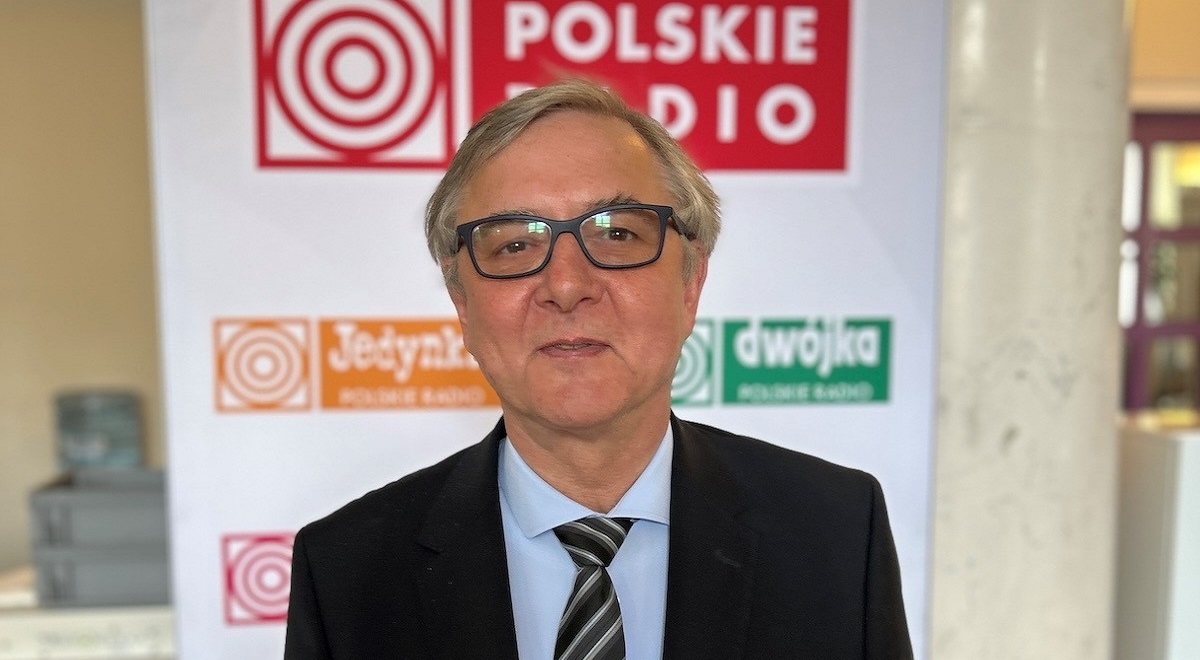
Tomasz Chłoń, Poland’s special envoy for countering disinformation, has issued a stark warning regarding the evolving threat of Russian hybrid warfare. In a recent interview with Polish Radio, Chłoń highlighted how the Kremlin is increasingly leveraging artificial intelligence to manufacture and disseminate deceptive narratives aimed at undermining Western stability. According to the diplomat, this technological shift has made the production of propaganda faster and more efficient, allowing Moscow to weaponize information with unprecedented precision.
The Kremlin’s strategy, Chłoń explained, relies on a calculated funneling process: false narratives are first introduced into marginal online channels before being systematically amplified until they permeate mainstream discourse. A particularly concerning development is Moscow’s deliberate attempt to influence the large language models (LLMs) that power popular AI tools and chatbots. By flooding the digital ecosystem with pro-Russian propaganda, these models are increasingly trained on biased data, leading to search results and AI-generated responses that are noticeably less critical of the Russian state.
Poland, due to its unwavering support for Ukraine and its strategic position on NATO’s eastern flank, has become a primary target for these operations. Chłoń noted that Russian disinformation efforts are specifically designed to evoke fear, resentment, and social division. These tactics have seen measurable success; public support in Poland for Ukrainian refugees and aid has notably declined, dropping from approximately 50 percent at the onset of the war in 2022 to under 30 percent today.
Chłoń lamented the difficulty of countering these emotional appeals with factual, positive information. Despite clear evidence that Ukrainian workers and businesses are a net benefit to the Polish economy—contributing significantly to the national budget and fueling growth—this data is consistently eclipsed by the emotive power of disinformation. Consequently, the Kremlin is finding that its information operations are a highly cost-effective “weapon” in hybrid warfare, as they require far fewer resources than physical sabotage while remaining difficult to detect or attribute in the sprawling digital landscape.
The envoy was also highly critical of digital platforms’ failures to curb these threats, despite the implementation of new European Union regulations. Chłoń pointed out that social media companies respond to only 12 percent of reported irregularities, and the administrative burden placed on those attempting to report violations is intentionally prohibitive. He cited research from Lithuanian experts, which suggests that the process of filing a comprehensive report regarding rule violations on platforms like Facebook could consume as many as 3,000 working hours, effectively discouraging oversight.
Looking ahead, Chłoń urged EU member states to recalibrate their security spending. While nations have ramped up their defense and conventional weapons budgets, he argued that efforts to counter hostile information operations remain chronically underfunded. He proposed a shift in strategy, suggesting that the EU should increase support for civil society groups involved in tracking disinformation and advocate for a system where fines levied against non-compliant technology platforms are directly reinvested into the defense against state-sponsored information aggression.


