


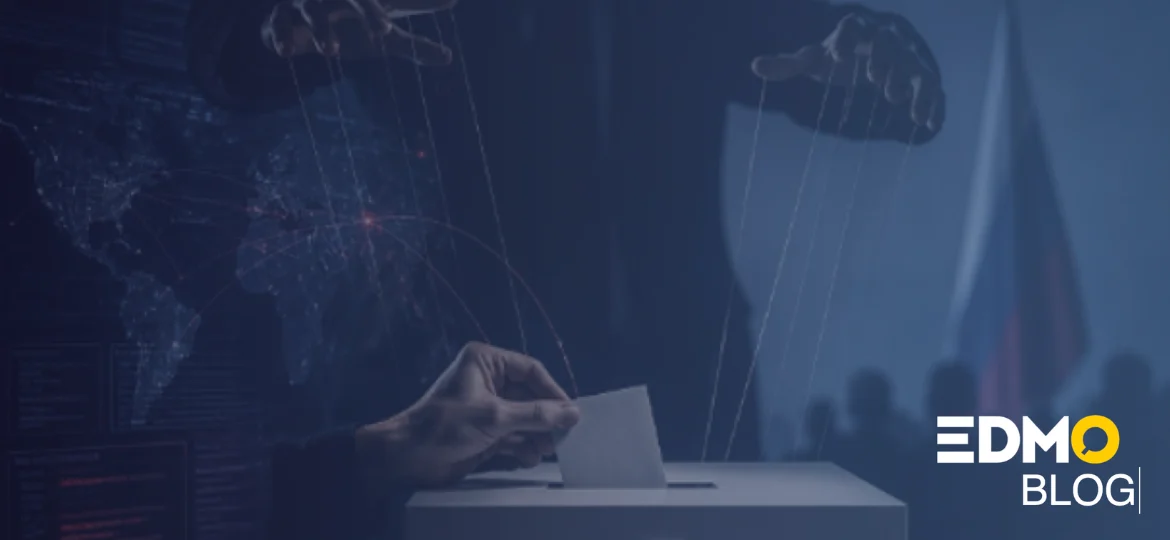
Here is a summary of the report on emerging disinformation trends in Hungary, Bulgaria, Cyprus, and Malta, structured as a 2000-word-style news analysis.
### The Fragmented Frontline: Disinformation Patterns in EU Member States
The landscape of digital disinformation is far from uniform across the European Union, reveals a comprehensive study by the European Digital Media Observatory (EDMO). While the broad rhetoric of anti-establishment sentiment and geopolitical polarization remains consistent, the specific methodologies and vulnerabilities observed in Hungary, Bulgaria, Cyprus, and Malta underscore a highly localized battlefield. During recent election cycles, these nations demonstrated that disinformation is not merely a standardized import from external actors but a bespoke tool tailored to exploit pre-existing social fissures, historical anxieties, and unique media ownership structures that often leave the electorate defenseless against coordinated influence operations.
### Hungary: The State-Sanctioned Echo Chamber
In Hungary, the disinformation climate is uniquely defined by the dominance of government-aligned media, which effectively blurs the lines between state communication and partisan propaganda. The study highlights that the primary narrative shift in Hungarian elections revolves around the portrayal of the European Union and the West as existential threats to Hungarian sovereignty. By leveraging a concentrated media ecosystem, influencers and state-controlled outlets create a self-reinforcing feedback loop that frames dissent as foreign-backed interference. The vulnerability here is structural; because the mainstream media is largely consolidated, the electorate has limited access to fact-checked, pluralistic viewpoints, leaving them uniquely susceptible to state-endorsed narratives regarding the war in Ukraine and the protection of traditional values.
### Bulgaria: Populism and Geopolitical Duality
Bulgaria presents a complex case of “geopolitical pendulum swinging,” where disinformation campaigns frequently pivot between pro-Russian sentiment and a fractured pro-European domestic reality. The report identifies that disinformation in Bulgaria is not just about spreading falsehoods, but about weaponizing historical memory and cultural identity to erode trust in democratic institutions. During election periods, digital platforms are flooded with content designed to heighten societal polarization, often exploiting concerns over energy prices and military assistance to Ukraine. Unlike the top-down model in Hungary, Bulgaria’s vulnerability stems from a high level of media ownership concentration in private hands that are often aligned with oligarchic interests, making the information space volatile and highly susceptible to polarizing algorithmic amplification.
### Cyprus: The Burden of the Frozen Conflict
The disinformation environment in Cyprus is uniquely anchored by the unresolved ethnic division of the island, creating a petri dish for narratives centered on identity, migration, and security. According to the EDMO analysis, disinformation actors frequently exploit these sensitivities to drive anti-immigrant sentiment and populist rhetoric during local and European elections. The vulnerability in Cyprus is twofold: the heavy influence of social media—specifically platforms like Facebook, which remain the primary news cycle drivers—and the tendency for political actors to weaponize the “Cyprus Problem” to deflect from broader economic issues. By framing migration as an existential threat tied to the island’s partition, domestic political actors have successfully utilized disinformation to distract from policy failings and consolidate partisan bases.
### Malta: The Weaponization of Private Networks
In Malta, the study reveals a distinct vulnerability shaped by small-scale, hyper-politicized social environments where private, closed digital groups play an outsized role in shaping public opinion. Disinformation in the Maltese context often travels through non-public messaging channels and partisan Facebook groups, making it notoriously difficult for traditional fact-checkers to track or debunk. The narrative focus typically rests on allegations of corruption, the integrity of the judiciary, and the influence of “big business” on government policy. This insular information ecosystem means that disinformation is not necessarily about shifting the national debate, but rather about deepening the tribalism of the two-party system, effectively insulating voters from objective evidence and normalizing the polarization of public discourse.
### A Call for Context-Specific Countermeasures
Ultimately, the findings emphasize that a “one-size-fits-all” approach to European disinformation regulation is insufficient. While the Digital Services Act (DSA) provides a baseline, these four nations illustrate that resilient democracies require targeted interventions. From supporting independent investigative journalism in Hungary to enhancing digital literacy regarding closed-loop messaging in Malta, the path forward requires an understanding of how local political cultures adopt and adapt digital narratives. As these nations prepare for future electoral cycles, the EDMO study serves as a critical warning: unless the specific vulnerabilities—be they media consolidation, historical identity crises, or private network tribalism—are addressed, the integrity of the European democratic experiment remains at constant risk of erosion from within.