


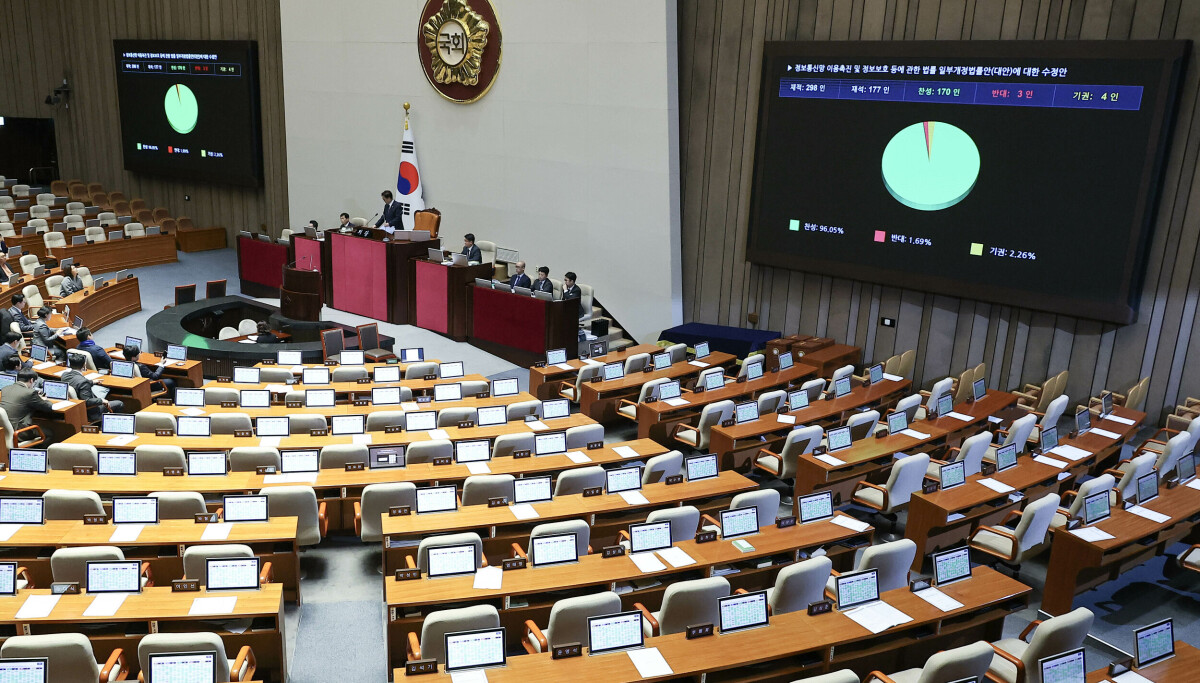
A controversial amendment to the Act on Promotion of Information and Communications Network Utilization and Information Protection is set to take effect in South Korea next Tuesday, sparking nationwide debate over the future of digital free speech. Nicknamed the “July 7 Act,” the legislation mandates that large online platforms with over 1 million daily users—such as Naver, Kakao, and Meta—must proactively remove or block content flagged as “false and manipulated information.” Furthermore, the law introduces a punitive damages scheme, allowing courts to impose financial penalties of up to five times the harm caused by such publications. Pushed through by the ruling Democratic Party (DP) last December, the law aims to mitigate the influence of “cyber wreckers” who profit from online harassment, but critics argue the language is dangerously vague.
The impending implementation has triggered a wave of self-censorship and anxiety across the Korean internet. On popular platforms and parenting forums, users are actively advising one another to swap assertive statements for hedging language, fearing that simple commentary could be misconstrued and lead to legal or financial repercussions. This climate of fear is compounded by recent political incidents, such as the public backlash against a high school baseball team for a chant referencing a brand promotion, which critics argue demonstrates how easily subjective “hateful” speech can be weaponized. Public pushback remains strong; a parliamentary petition to repeal the amendment gathered over 140,000 signatures, significantly exceeding the threshold for legislative review.
Political opposition to the bill has been fierce, with the People Power Party (PPP) labeling it an “online gag law” designed to stifle dissent. Even liberal civic groups that typically support the Democratic Party have voiced concerns, warning that the legislation undermines the foundations of public debate. Despite this outcry, the bill was passed during a plenary session following the end of an opposition filibuster. The primary concern is that the bill lacks clear, objective standards for defining “false information.” Instead, the law relies on private fact-checking organizations that receive government funding, creating a structural conflict of interest that many fear will lead to state-sponsored censorship.
The danger of political influence remains a focal point for experts, who warn that fact-checking entities might become pawns in the ongoing rivalry between the country’s major political parties. Researchers from organizations like Open Net emphasize that when official bodies are empowered to define truth, the process inevitably becomes a tool for political maneuvering rather than rigorous inquiry. As seen in the “Starbucks incident,” where political actors held diametrically opposed views on what constituted acceptable speech, the threat of these organizations becoming entangled in partisan battles and subsequently suppressing legitimate criticism is viewed as a significant democratic failure.
Technological implications are equally concerning, as large platform operators face intense legal pressure to comply with the new rules. Scholars like Professor Lee Seong-yeob suggest that to avoid the risk of severe punitive damages, tech giants will be forced to rely on AI-based pre-screening systems. Such automated systems are often blunt tools that struggle to distinguish between malicious misinformation and protected political satire or legitimate dissent. By outsourcing censorship to algorithms designed to prioritize liability avoidance, the law effectively creates an ecosystem where any content that risks offending those in power is systematically blocked, threatening to paralyze the public’s ability to hold officials accountable.
Calls for reform continue as legislators and experts scramble to address the law’s potential for systemic harm. PPP Rep. Kim Jae-sub has recently introduced an alternative bill that seeks to strike the clause regarding “false information” and introduces checks on AI moderation. While there is a broader consensus that some form of regulation is necessary to curb the harmful behavior of online provocateurs, experts like Professor Yoon Jong-bin stress that the current law was implemented with a reckless lack of public consultation. Without revision or stronger safeguards, the “July 7 Act” stands as a cautionary example of how poorly constructed legislation can impose significant social costs and inadvertently dismantle the open exchange of ideas.