


Bangladesh Government Committed to Liberal Free Expression, Says Information Adviser Amid Surge in Misinformation Campaigns
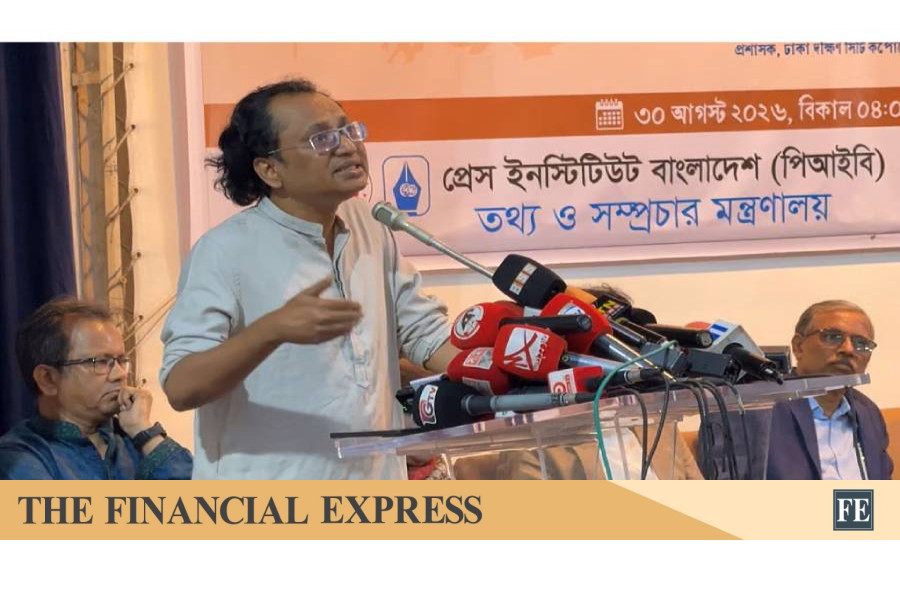
DHAKA — Prime Minister’s Information Adviser Zahed Ur Rahman has reaffirmed the government’s commitment to a “very liberal” approach to freedom of expression, asserting that the administration is prepared to accept criticism as an inherent part of democratic governance. Speaking at a discussion held at the Press Institute Bangladesh (PIB) on Sunday, Rahman addressed the growing challenge of misinformation while simultaneously underscoring the government’s tolerance for dissenting voices. He revealed that a fact-finding organisation had documented 464 major misinformation campaigns against the government over a span of just 180 days, a staggering figure that included 157 campaigns specifically targeting Prime Minister Sheikh Hasina. The disclosure highlights the intense information warfare facing the administration, even as it seeks to position itself as a champion of open discourse in a rapidly evolving media landscape. Rahman’s remarks come at a time when the relationship between governments and media worldwide is under scrutiny, with Bangladesh navigating its own unique set of pressures and priorities.
The adviser’s comments were notably personal in tone, as he acknowledged that the attacks against government figures extend well beyond the Prime Minister to include ministers, state ministers, and advisers. “Among the attacks against ministers, state ministers and advisers, I am also quite high on the list,” Rahman stated, offering a candid glimpse into the front-line role he occupies in the government’s communications strategy. Rather than expressing concern over his own prominence as a target, however, he appeared to embrace the scrutiny with a degree of wry amusement. “Since I happen to be the information advisor, nobody is really paying much attention. There is no need to pay heed to the government—I like it,” he said, suggesting a personal resilience and a philosophical acceptance of the criticism that comes with his position. This light-hearted yet pointed remark served to underscore his broader argument: that a healthy democracy must tolerate, and even welcome, a diversity of viewpoints, no matter how uncomfortable they may be for those in power.
Rahman used the platform to articulate a clear vision of democratic governance, arguing that a government seeking another democratic mandate has no interest in suppressing the voices of its citizens or the institutions that represent them. “A democratic government should remain open to differing views, and suppressing expression would serve no purpose for a government seeking another democratic mandate,” he explained, framing the administration’s tolerance as both a principled stance and a pragmatic calculation. He further reinforced this point by referring to a recent meeting between Prime Minister Sheikh Hasina and newspaper editors, during which she reportedly acknowledged that confrontation with the press would bring the government no benefit. This acknowledgment, according to Rahman, signals a mature understanding within the highest echelons of power that a thriving media landscape is essential to the nation’s democratic health, and that adversarial relationships with journalists would ultimately prove counterproductive to the government’s own long-term interests.
The occasion for these remarks was the commemoration of the 116th birth anniversary of Abdus Salam, the founding director general of the Press Institute Bangladesh, a figure whose life and work remain deeply relevant to contemporary debates about press freedom. Salam’s legacy, as Rahman noted, is inextricably linked to the struggle for a free and responsible press in Bangladesh, and his contributions continue to inspire journalists and media professionals across the country. The PIB, established under his leadership, has long served as a training ground and resource centre for journalists, embodying the ideals of professionalism and integrity that Salam championed throughout his career. By choosing this forum to articulate the government’s position on freedom of expression, Rahman drew a direct line between the historical struggles of journalists like Salam and the challenges facing the media today, invoking the past as a guide for navigating the complexities of the present.
In a broader philosophical vein, Rahman contrasted the government’s approach with that of authoritarian regimes, which he argued inevitably seek to restrict free expression as a means of consolidating power. He suggested that the life and work of Abdus Salam serve as a testament to the dangers of authoritarianism, and that journalism itself can transcend mere reporting to become a powerful form of activism. Citing Nobel laureates as examples, Rahman argued that journalists and writers who engage deeply with the issues of their time can effect profound social and political change, moving beyond the boundaries of conventional news-gathering to shape public consciousness and hold power to account. This perspective positions journalism not simply as a profession but as a vocation with civic and moral dimensions, a view that aligns with the democratic ideals he articulated earlier in his address and reinforces the government’s stated commitment to fostering an environment where such work can flourish.
Taken together, Rahman’s remarks paint a picture of a government seeking to strike a delicate balance between protecting the national interest and upholding the principles of free expression in an age of rampant misinformation. On one hand, the staggering statistics regarding misinformation campaigns—464 major incidents in just six months—point to a coordinated effort to undermine the government’s credibility and destabilise public trust. On the other hand, the adviser’s insistence on tolerating dissent, his light-hearted acceptance of personal attacks, and his invocation of democratic values signal a desire to avoid heavy-handed responses that could alienate the public and harm the government’s democratic credentials. This balancing act is fraught with challenges, and the coming months will test whether the government’s liberal rhetoric is matched by its actions on the ground. For now, however, the message from the PIB podium was clear: Bangladesh’s government intends to weather the storm of misinformation not by silencing its critics, but by embracing the messy, often uncomfortable, but ultimately essential practice of democratic dialogue.