


India Battles Disinformation Amid Heightened Tensions with Pakistan
The Press Information Bureau’s (PIB) Fact Check Unit has been working tirelessly to debunk a wave of fabricated videos and fake news circulating on social media platforms, particularly X (formerly Twitter), amidst escalating tensions between India and Pakistan. These disinformation campaigns aim to spread panic and mislead the public with false narratives regarding attacks, security measures, and military actions.
One prominent example involved a staged video purporting to show the destruction of an Indian army post by Pakistani forces. The video, shared by numerous unverified accounts, falsely claimed the involvement of a non-existent "20 Raj Battalion" within the Indian Army. The PIB swiftly identified the video as staged and part of a coordinated propaganda effort. Similarly, false claims of an entry ban at Indian airports were debunked, reassuring the public that no such government directive had been issued.
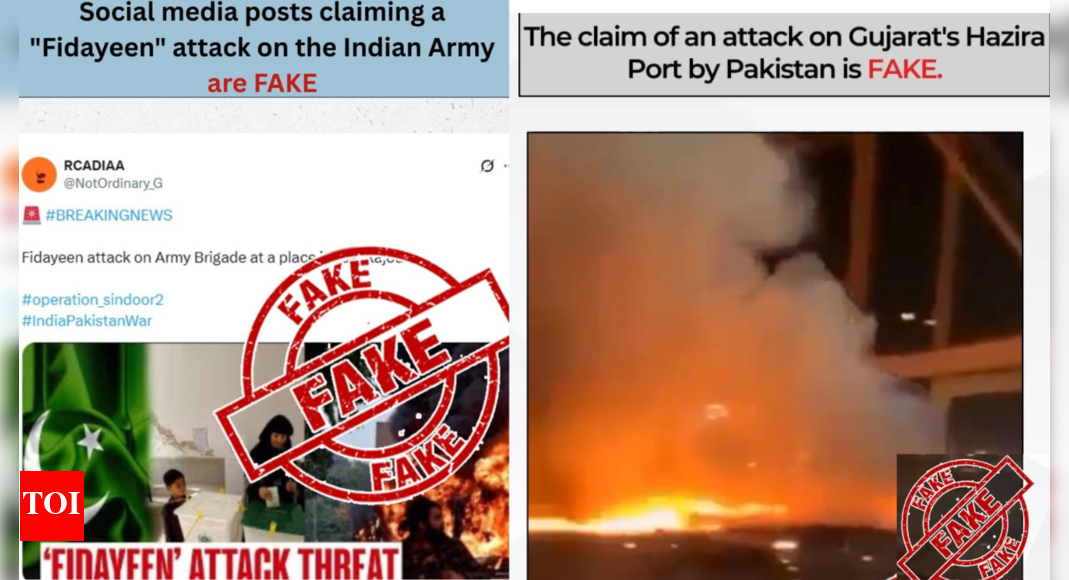
Further fueling the disinformation campaign were fabricated stories of a "fidayeen" (suicide) attack on an army brigade in Jammu and Kashmir’s Rajouri district. The PIB categorically denied these claims, confirming that no such attack had occurred. The spread of such misinformation underscores the deliberate attempt to sow discord and fear among the population. Another instance involved misrepresenting an old video of an oil tanker explosion as a recent attack on Gujarat’s Hazira Port. PIB clarified that the video was unrelated to any current events and urged the public to refrain from sharing it.
Adding to the fabricated narratives, a video circulating on social media purportedly showed a drone attack in Jalandhar. Upon investigation, the PIB revealed that the video actually depicted a farm fire and was not connected to the reported drone activity. Furthermore, an old video of the 2020 Beirut explosion was falsely presented as a missile attack by Pakistan on India. The PIB promptly exposed this disinformation, urging the public to rely on official sources for accurate information.
These disinformation campaigns come in the wake of heightened tensions between India and Pakistan following a series of cross-border incidents. On April 22nd, terror attacks in Jammu and Kashmir’s Pahalgam resulted in the tragic loss of 26 lives, including a Nepali citizen. In response, India launched "Operation Sindoor" on May 7th, conducting precision strikes against nine terror facilities in Pakistan-occupied Jammu and Kashmir (PoJK).
The Indian government has emphasized that these strikes targeted infrastructure associated with terrorist organizations such as Lashkar-e-Taiba and Jaish-e-Mohammed. Amidst this backdrop of heightened tensions, the surge in disinformation underscores the importance of critical thinking and reliance on verified sources of information. The PIB’s efforts to debunk these false narratives play a crucial role in countering the spread of misinformation and maintaining public order.