


Here is a detailed news article summarizing the content, structured across six distinct paragraphs, providing comprehensive context and analysis while adhering strictly to the reported facts.
Article: Gambia Participates Empowers 35 Youth with Digital Civic Advocacy Skills Ahead of Presidential Polls
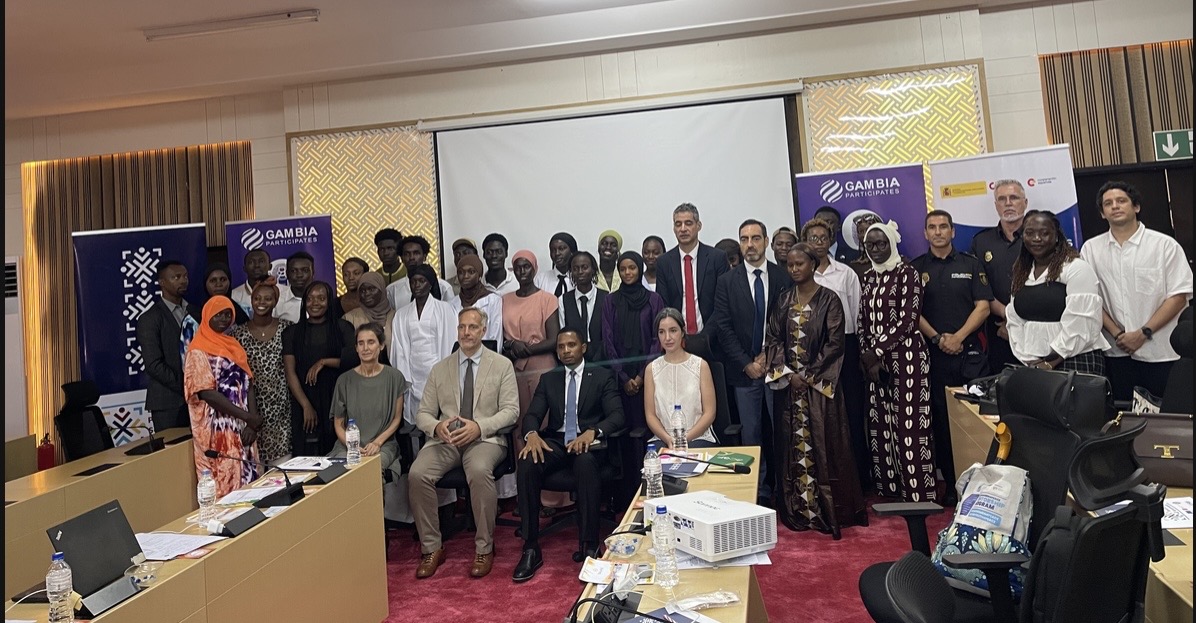
As The Gambia braces for the critical electoral period ahead of the upcoming presidential elections, a significant civic initiative has concluded in Bakadaji aimed at fortifying the democratic process from the grassroots level. Gambia Participates, a non-partisan civic organization dedicated to promoting transparent governance and public accountability, has successfully trained a cohort of 35 young women and men in the strategic use of social media for credible electoral information, civic education, and political advocacy. The intensive three-day training workshop represents a proactive step towards harnessing the immense power of digital platforms to foster a more informed, engaged, and peaceful electorate. By focusing on this demographic, the organization seeks to bridge the gap between technological adoption and meaningful civic participation, ensuring that the nation’s youth are not just passive consumers of political content but rather active, responsible architects of their democratic future.
The opening ceremony for the transformative workshop convened a distinguished assembly of stakeholders, bringing together representatives from the FIAP project, the European Union, Spain, and various other international partner organizations. This diverse attendance underscored the multilateral support for strengthening democratic institutions and civic space in the country. The presence of these international partners signals a shared recognition that citizen engagement, particularly among the youth, is essential for ensuring that the upcoming elections are credible, transparent, and peaceful. By facilitating this training, Gambia Participates and its partners are investing directly in the human capital required to navigate the complex digital information landscape. This collaborative effort highlights a coordinated approach to pre-election support, an acknowledgment that beyond legal and institutional frameworks, the off-screen behavior and on-screen conduct of citizens are pivotal in defining the quality and integrity of the national electoral process.
At the heart of the training’s impetus is a stark demographic and civic reality articulated by Ms. Annetta B.V. Mahoney of Gambia Participates. “The Gambia is a young country; close to seven in 10 of us are under the age of 35,” she noted, framing the workshop as a direct response to the nation’s youth-heavy population structure. However, despite their numerical strength, she lamented that “young people, particularly young women, remain underrepresented in decision-making.” This disparity is what the intensive training aims to rectify. Ms. Mahoney observed that while many young Gambians “already use WhatsApp groups, videos, and hashtags to discuss elections, governance, and service delivery,” there is a critical deficiency in their ability to use these tools strategically—they “often lack training and networks to make their efforts more effective.” Consequently, the curriculum was meticulously crafted to cover essential pillars such as storytelling, content creation, online safety, and the development of comprehensive campaign materials. By equipping these 35 individuals with these specific technical skills, the initiative seeks to transform their organic digital presence into a potent force for constructive political dialogue and advocacy, giving underrepresented groups a tangible platform to influence the national conversation.
The government’s perspective on the training was provided by Dr. Ismaila Ceesay, Minister of Information, who lent his official endorsement to the initiative. In his address, he stressed the importance of responsible civic participation and communication as the country approaches the elections. His presence and remarks serve as a crucial reminder that while the state must ensure a secure environment for expression, the ultimate responsibility for maintaining the decorum of public discourse lies with the citizens themselves. In an era where the information ecosystem is susceptible to misinformation and inflammatory rhetoric, the Minister’s call for responsibility aligns perfectly with the workshop’s goal of promoting credible information. The training, therefore, is not merely about teaching technical tricks but about instilling a democratic ethos where communication is used to build bridges rather than divide. This governance perspective reinforces the training’s role in contributing to a stable pre-electoral environment, where the integrity of the political conversation is maintained, reducing the likelihood of election-related conflicts fueled by digital falsehoods.
International support for the initiative was vocalized by Spanish Chargé d’Affaires Ms. Maria Dolores Artola, who articulated the rationale behind her government’s participation and cooperation. “This workshop matters because the Gambian population is a young one,” she stated, echoing Ms. Mahoney’s demographic observation. Her remarks drew a direct line between the youthfulness of the nation and the necessity of ensuring these young citizens have the tools to engage safely. “Young people should be able to speak up without compromising their safety or dignity,” she added, emphasizing the dual imperatives of freedom and security in the digital space. Ms. Artola affirmed that Spain was proud to support the initiative and described democratic governance as a growing area of cooperation between Spain and The Gambia. This statement reflects a broader European diplomatic strategy in West Africa, where supporting civil society and digital resilience is viewed as foundational to long-term stability. By focusing on the protection of individuals online, her remarks highlight that the project goes beyond political empowerment to cover the human rights dimension of digital citizenship, ensuring that the youth are equipped to navigate political participation without falling victim to digital harassment or intimidation.
Concluding the spectrum of perspectives, EU Deputy Head Mr. Raphael Brigandi placed the workshop within the larger context of contemporary democracy. He asserted that digital platforms have become a key space for political debate, mobilization, and accountability. However, Mr. Brigandi also warned of the inherent dangers, acknowledging that while social media can empower citizens, it can also spread hate, intimidation, and disinformation. He encapsulated the core democratic paradox of the digital age: “Democracy is not only about having a voice, it’s also about being able to use that voice safely, freely and with dignity.” By urging participants to use the training to promote responsible advocacy and peaceful, inclusive democratic participation, Mr. Brigandi framed the workshop as a micro-level intervention to address macro-level threats to democratic integrity. As The Gambia moves closer to the polls, this comprehensive training—spanning self-expression, safety, and social responsibility—positions this cadre of 35 young leaders as staunch defenders of a dignified political culture, ensuring that the nation’s future is shaped by informed voices contributing to a peaceful and inclusive democratic process.